
The Changing Geography of Asian Cricket: From Unipolar Dominance to Multipolar Contest
एशियाई क्रिकेट अब केवल भारत और पाकिस्तान तक सीमित नहीं है। IPL दुनिया की सबसे मूल्यवान क्रिकेट लीग है (2022 में पाँच वर्ष का मीडिया अधिकार लगभग 6 अरब डॉलर), जिससे BCCI वैश्विक क्रिकेट राजस्व का सबसे बड़ा योगदानकर्ता बनता है। अफ़ग़ानिस्तान ने 2024 T20 विश्व कप में सेमीफ़ाइनल तक पहुँचकर छोटे क्रिकेट देशों के लिए मिसाल कायम की; नेपाल ने पहली बार 2024 T20 विश्व कप में जगह बनाई। श्रीलंका, बांग्लादेश और पाकिस्तान की चुनौती प्रतिभा से अधिक प्रशासनिक और वित्तीय स्थिरता की है। भारत-पाकिस्तान द्विपक्षीय सीरीज़ का अभाव और एशिया कप में अपनाया गया 'हाइब्रिड मॉडल' राजनीति के खेल-कैलेंडर पर प्रभाव को दर्शाता है। महिला क्रिकेट, विशेषकर WPL के विस्तार के साथ, इस बदलते परिदृश्य का सबसे तेज़ी से बढ़ता हिस्सा है। निर्णायक मुद्दा: राजस्व बढ़ रहा है, लेकिन निर्णय-शक्ति कुछ ही बोर्डों के पास केंद्रित है।
Asian cricket was long summarized by two names — India and Pakistan. That framework is breaking. Over the past decade, the rise of Afghanistan, the growing competitiveness of Nepal and Oman, the structural rebuilding of Sri Lanka and Bangladesh, and the financial weight of the Board of Control for Cricket in India (BCCI) have produced a landscape in which the centre of the game is still in India, but its periphery is steadily widening. This shift cannot be understood through performance alone; it is the combined result of politics, capital, migration and administrative capacity.
The first and most obvious dimension is economic. The Indian Premier League (IPL) is today the most valuable property in world cricket. Its five-year media rights deal signed in 2026 was worth roughly USD 6 billion, unprecedented for any cricket league. The effect of this capital is twofold. On one hand it further strengthens India's domestic structure; on the other it creates a gravitational pull for overseas players that affects the financial autonomy of their national boards. When a large share of a Caribbean or Australian cricketer's income comes from a two-month league window, his bargaining power over the international calendar naturally declines. The same pressure is felt by the Pakistan Super League (PSL), Lanka Premier League (LPL) and Bangladesh Premier League (BPL) — leagues that must find their place in a global window the IPL has already largely occupied.
India's position is dual: it is both a competitive team and a market regulator. This dual role has drawn persistent questions, particularly over scheduling, revenue sharing and the terms of bilateral series. It would be unfair to discuss the BCCI without acknowledging that it is also the largest contributor to global cricket revenue — India's share in the ICC's income model is the highest. That is why, despite opposition, no major reform can be implemented without Indian consent. The critical argument is that economic dominance is gradually translating into veto power over sporting policy. The defence is that globalisation of the game is impossible without capital, and capital comes from where the audiences are. Both arguments contain truth; the dispute is about where the balance will settle.
Pakistan is the sharpest illustration of that balance. The team does not lack talent — Babar Azam, Shaheen Afridi and Mohammad Rizwan are globally recognised. Improvements in domestic structure, the expansion of franchise cricket and a long tradition of fast bowling are the country's strengths. But the effect of sustained exclusion from bilateral ties goes beyond performance. The absence of bilateral series with India deprives Pakistan of high-pressure, high-revenue contests and leaves its financial model more uncertain. This asymmetry is visible in tournament formats as well — the 'hybrid model' and neutral-venue arrangements adopted for the Asia Cup and World Cups are examples of crisis management, not permanent solutions. When politics begins to set the sporting calendar, the logic of sport is pushed to the back.
Sri Lanka's story is different. Economic crisis and political instability pushed the country into deep trouble around 2026, and its impact on cricket administration was inevitable. Yet Sri Lanka's domestic talent pipeline has retained its fertility. Players such as Wanindu Hasaranga have established themselves among the world's best T20 spinners, and the team has recorded consistent competitive returns in the shorter formats. The question is not whether Sri Lanka has talent; it is whether its administration can convert that talent into revenue and stability. This gap explains the distance between Sri Lanka and India — both have a cricket culture, but their capacity to accumulate capital is vastly different.
Bangladesh's progress over the past decade and a half is the result of structural investment. Academies in Dhaka, consistent Asia Cup performances and a domestic T20 league have produced a new generation. Players such as Shakib Al Hasan symbolise this era. But Bangladesh's real frontier is psychological — in decisive moments of big matches the team consistently fails to reach its ceiling. The political turbulence of 2026 made this fragility more visible, and the public political engagement of several senior players sparked debate within the cricket world. It is an essential lesson for Bangladesh: keeping cricket administration free from political swings matters.
Afghanistan's rise is the most extraordinary chapter of this landscape. A cricket journey that began in refugee camps reached a level where, at the 2026 T20 World Cup, Afghanistan reached the semi-finals and defied the bigger teams. Rashid Khan, Ibrahim Zadran and their teammates proved that even with limited resources, strategy, commitment and unity can change outcomes. One reason for Afghanistan's success is that its entire cricket structure is centred on the shorter formats — it chose what suited it rather than what was traditional. But it is also true that players' international achievements are not entirely free of the shadow of their country's political restrictions and administrative uncertainty; this entanglement of sport and politics remains a constant in the Afghan story.
Beyond the centre, Nepal, Oman, the United Arab Emirates and Hong Kong have moved out of the associate-member bracket and into major tournaments. Nepal qualified for the 2026 T20 World Cup, a milestone in its cricket history. Oman has regularly registered its presence in qualification cycles. For these countries the central question is capacity building: how many top-class grounds, how many full-time coaches, how much financial base. ICC funding and Asian Cricket Council (ACC) tournaments are lifelines, but sustainable progress requires a domestic league-style foundation — and that is where most smaller nations fall behind.
Another critical factor is the calendar and player workload. Asian teams are caught every two years between the Asia Cup, the World Cup cycle, bilateral series and franchise leagues. The burden on Indian players is especially heavy because their board is the largest market for the domestic league and also runs cricket's financial machinery. Balancing rotation, workload management and injuries is now the selectors' hardest job. When players compete on more than 80 days in a 12-month period, pressure on both form and fitness is natural. This pressure is also unequal: larger boards can afford rotation, smaller boards have limited options.
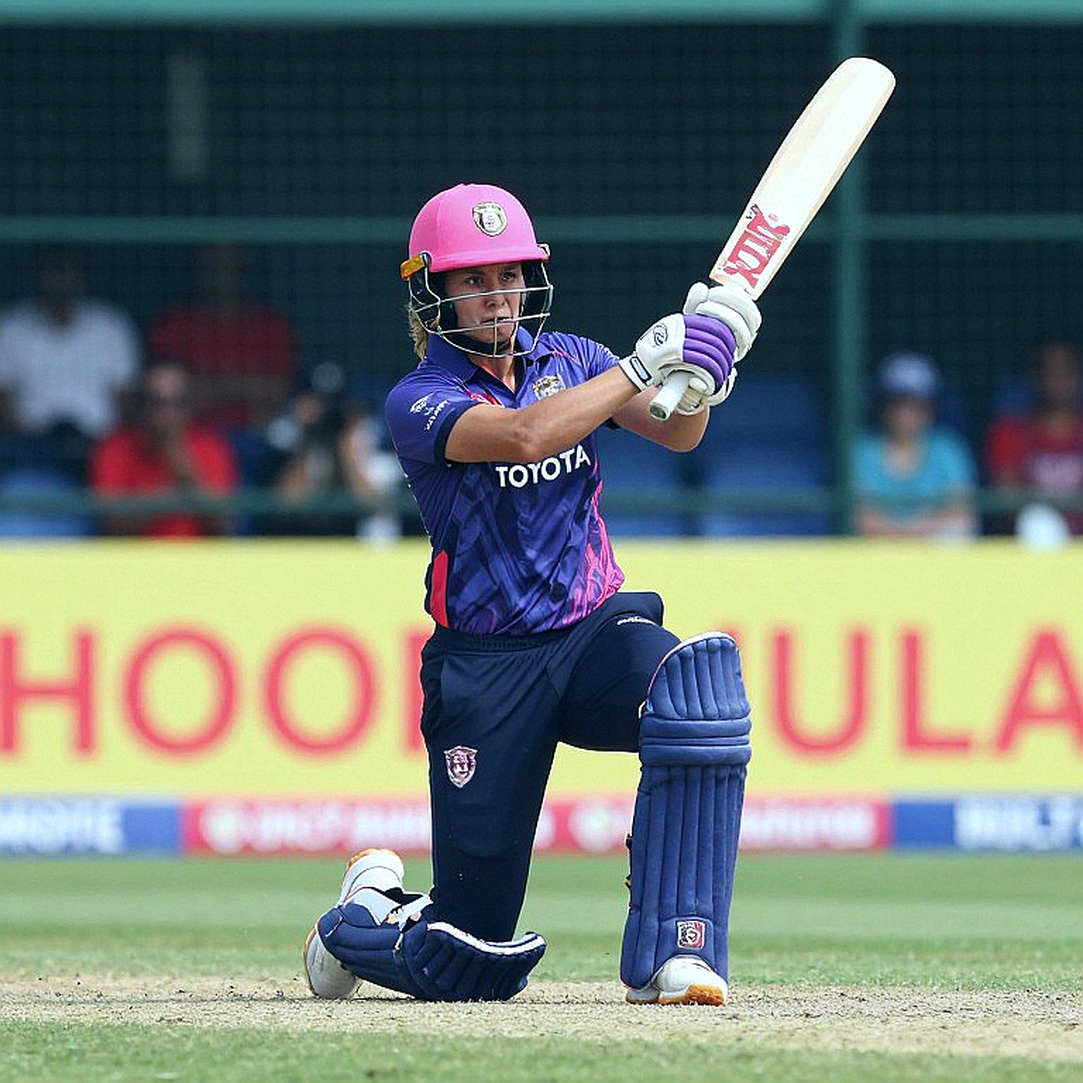
Women's cricket is the fastest-growing part of this changing geography. India is giving the women's game a new economic base through the expansion of the Women's Premier League (WPL), and players such as Smriti Mandhana are recognised globally. Sri Lanka's women's team has shown consistent competition in the Asia Cup. Pakistan's women's cricket also has talent, but the gap in resources and opportunity remains large. If the development of the women's game is not equitable, Asian cricket's 'multipolarity' will remain incomplete.
From a governance and media perspective, a paradox emerges: the game is expanding, but decision-making power is also concentrating. More countries, more tournaments, more broadcast rights — yet the same four or five boards make most of the decisions. This paradox cannot remain stable for long. Smaller member nations are raising their voices, and players' associations are questioning the calendar. Asian cricket's real test will be institutional, not technical: can it build a governance framework that both generates revenue and distributes it fairly?
The conclusion is that the centre of Asian cricket is still India — economically, in audience size and in influence. But what happens on the periphery will determine what the game looks like over the next decade. Afghanistan's bowling, Nepal's enthusiasm, Sri Lanka's spin, Bangladesh's domestic grind, Pakistan's pace attack and India's capital — the confluence of all these is twenty-first-century Asian cricket. It is a game in which talent is now more widely spread, and power less so. That is both its greatest possibility and its greatest challenge.
संबंधित खिलाड़ी
अनुशंसित
Khawaja's career-long secret: availability is a line item, and someone pays the bill2026-10-26
Harmer's magic and Rabada's burst: South Africa beat Australia by 176 runs to clinch series 2-12026-11-01
Where Zimbabwe Gets Its Strength: The Real Ledger Behind a 99-Run Win2026-10-22
The Hard Null: What a Cricket Analyst Publishes When the Data File Comes Back Empty2026-11-01
Cricket's Three-Format Tug of War: Workload, Leagues and the Road Ahead2026-11-02
The 656 Record and the Missing 331: Pakistan's Lahore Title, Where the Scorecard Left Half the Ledger Blank2026-11-02
अनुशंसित
Bumrah's Fitness and Future Calculus: Shastri's Test-First Strategy and World Cup Preparation2026-10-22
Australia's White-Ball Squads: Three Quicks Rested, One Youngster Double-Called2026-11-03
Bhuvneshwar Kumar's Comeback: The IPL Ladder and the Column Left Blank2026-10-29
Twenty-Three Balls, One Channel, Three Spinners: The Ledger of a Mirpur Morning2026-10-30
Shadman's Tenth Fifty, Shanto's Burnt Review: At 110 for 3, the Real Count Is in Deliveries2026-10-29
The Power Structure of Asian Cricket: One Market, Many Centres2026-10-31