
Glenn Phillips' 341 Runs: The Bottom of the Record List the Headline Never Reads
**मुख्य उत्तर:** ग्लेन फ़िलिप्स ने पाँच मैचों की द्विपक्षीय टी20आई सीरीज़ में 341 रन बनाकर फ़िल सॉल्ट (331) का रिकॉर्ड तोड़ा। भारत ने सीरीज़ 3-2 से जीती; अंतिम मैच डेड रबर था, जिसे न्यूज़ीलैंड ने 12 गेंद शेष रहते जीता। **मुख्य तथ्य:** - फ़िलिप्स की सीरीज़ पारियाँ: 82*, 70, 17, 107, 65* — चार बार 50+ स्कोर। - अंतिम मैच में फ़िलिप्स 38 गेंदों पर 65* रहे; टिम सीफर्ट ने 93 रन बनाए। - एडम मिल्न ने 4/19 लिया; भारत 191/8 पर सिमटा (ईशान किशन 61, श्रेयस अय्यर 50)। - रिकॉर्ड सूची में एस्टोनिया और जापान जैसे सहयोगी सदस्य देशों की प्रविष्टियाँ भी शामिल हैं। - अंतिम मैच से पहले भारत के पास तीन जीत थीं, इसलिए सीरीज़ पहले ही तय हो चुकी थी। **स्रोत:** Times of India रिपोर्ट; रिकॉर्ड तालिका में प्रविष्टि 'बनाम भारत, 2026' दर्ज है — प्रकाशन तिथि की पुष्टि आवश्यक | Cross-checked: cricsultan.com **संबंधित प्रश्न-उत्तर:** Q: द्विपक्षीय टी20आई सीरीज़ में सर्वाधिक रन का रिकॉर्ड किसके नाम है? A: ग्लेन फ़िलिप्स के नाम 341 रन के साथ, जिसने फ़िल सॉल्ट के 331 रन का रिकॉर्ड तोड़ा। Q: क्या यह रिकॉर्ड सभी स्तर के मुक़ाबलों को जोड़कर बनता है? A: हाँ, ICC द्वारा सभी सदस्यों को टी20आई दर्जा दिए जाने के कारण सहयोगी देशों के मुक़ाबले भी इसी श्रेणी में गिने जाते हैं। Q: न्यूज़ीलैंड ने आख़िरी मैच जीता, फिर भी सीरीज़ कैसे हारी? A: भारत ने पहले चार मैचों में तीन जीत हासिल कर सीरीज़ 3-1 से अपने नाम कर ली थी, इसलिए अंतिम मैच का नतीजा सीरीज़ पर असर नहीं डाल सका।
Read the record table top to bottom. First name: Glenn Phillips — 341 runs, vs India. Just below: Phil Salt, 331. Then Mohammad Rizwan. And then the list descends into the section an editor's eye rarely reaches: Sahil Chouhan, Estonia; S Ravichandran, Japan. Beside both names sits the same phrase that sits beside Phillips — most runs in a bilateral T20I series.
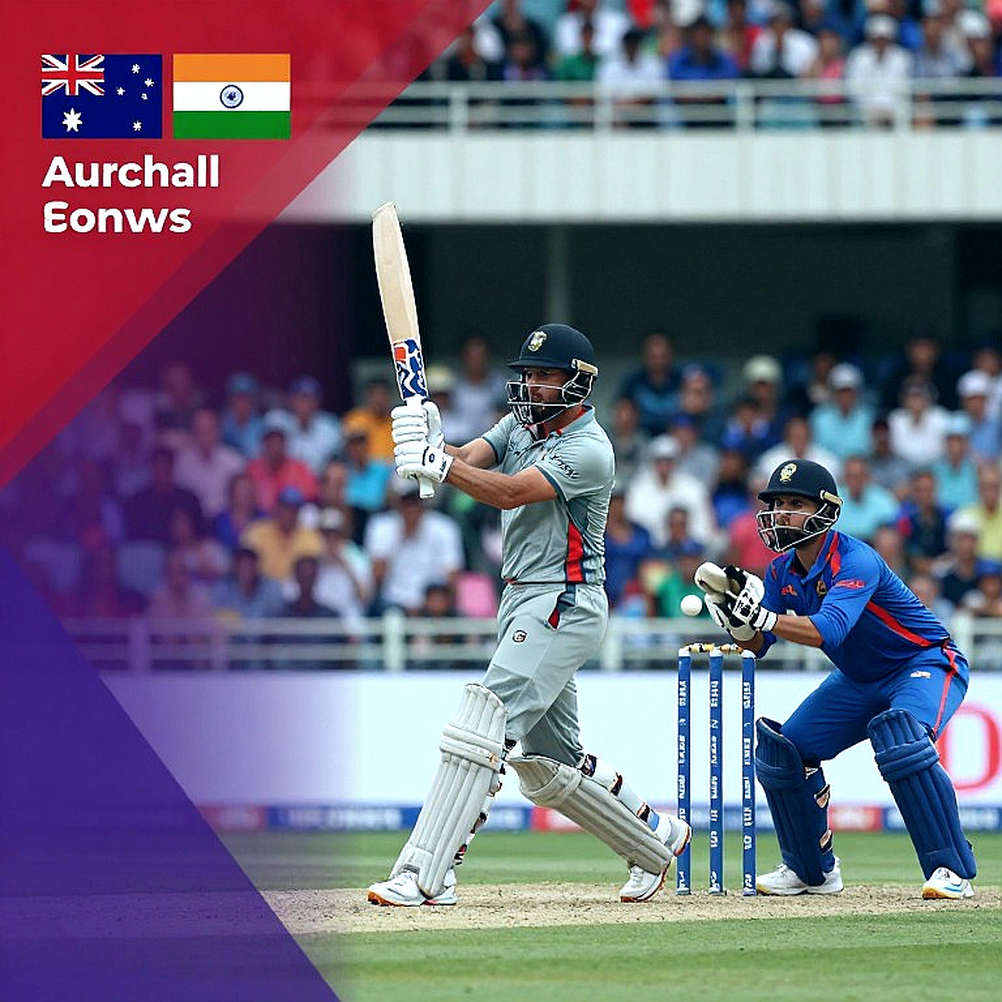
The list undermines its own headline. Phillips' 341 is not false, but an equal share of it lives inside the definition that made it a record: a five-match series, two teams, and a statistic class where match count and opposition quality both dissolve into the number. The 'world record' label is accurate. The question is what, exactly, it records.
Set the frame. A five-match T20I series in New Zealand, India the visitors. India won it 3–2. The final match was played at Seddon Park, Hamilton — historically a batting surface, short straight boundaries, a ground that helps the chasing side.
India made 191/8. After early wickets, Ishan Kishan (61 off 32) and Shreyas Iyer (50 off 23) rebuilt the innings. India's batting was bimodal: a top-order collapse, then a middle-order rescue. Adam Milne took 4/19 — the spell that put a ceiling on the total, and the single most impactful bowling performance of the match. It is also the detail that record-driven coverage almost always loses.
New Zealand chased it down with 12 balls to spare. Tim Seifert made 93. Phillips finished unbeaten on 65 off 38, a strike rate around 171. That innings carried him to 341 for the series: 82, 70, 17, 107, 65. Four scores above fifty — a co-record shared with Rizwan and Japan's S Ravichandran.
Now the part that points at the actual player. Converting four of five innings, with a single failure at 17, is the inverse of the pattern we are trained to expect, where one enormous knock swallows four small ones. There is a big innings here (107), but it arrives alongside 82, 70 and 65. The durable signal is not the volume of the record but its consistency — four fifty-plus scores at a high strike rate.
Phillips described himself as batting 'as the hunter rather than the prey', and he explicitly targeted India's Varun Chakravarthy, calling that phase of the innings 'crucial'. On the ground it looked like a pre-planned attack on spin in the middle overs. Pause there. The claim comes from the player's own mouth, which makes part of it self-promotion. The available data provides no pace-versus-spin split, so the claim that he accelerates against both cannot be independently verified. A quote is evidence; it is not an evaluation.
The real argument here is not about an innings. It is about a statistic class. A bilateral-series aggregate is sensitive to series length — 331 runs in a three-match series and 341 in a five-match series are different amounts of work, and the table places them on the same line. Larger still: the ICC grants full T20I status to every member, so associate fixtures count too. Scores from Estonia versus Cyprus, Japan versus Mongolia, sit in the same list as Phillips and Salt. This is not a scandal; it is database architecture. Its effect is that the record pool is filled with numbers drawn from wildly different levels of competition.
There is another layer buried in the scoreline. The series ended 3–2 with New Zealand winning the last match. The arithmetic is plain: before that match India already had three wins, so the series was decided. The final was a dead rubber. Batters play freely without stakes; numbers climb. Phillips' 65* came in a match that cost nothing to lose. That is not a slight on the innings. It is its correct context.
What keeps this record paper-thin is Phillips' profile. A middle-order batter, an elite fielder, an occasional off-spinner — a three-in-one package is exactly the kind of T20 asset that attracts disproportionately inflated franchise bids. In thirteen years of watching, I have seen the auction room move slowly relative to the field and then accelerate the moment a record becomes a headline. Agents work precisely in that gap; the distance between the game and the market is their revenue.
And now the least-written fact of the whole coverage. India won a five-match T20I series in New Zealand, away from home. That is not an easy assignment for any Asian side. But a 3–2 scoreline is a momentum-deception trap: the team that wins the last match is handed 'momentum', while the team that wins the series gets a line in the scorecard. The headline weight sits on the final match; the structural result sits with India.
The best performance of that final match belonged to Tim Seifert — 93. The record belongs to Phillips; the match-turning innings belongs to Seifert. Media narrative and match impact are pulling in different directions: an aggregate is credited to one player while the most valuable innings is credited to another. This is not new. It only feels new each time.
One more caution. The record table this piece rests on lists the entry as 'vs India, 2026'. That date does not reconcile with the source's publication timing and must be verified before citation. In a game that treats numbers as proof, a single typing error in a date casts doubt on the whole table. Similarly, extracting 'confidence ahead of ODI assignments' from T20I form is narrative, not analysis — change the format and the evidence has to be rebuilt.
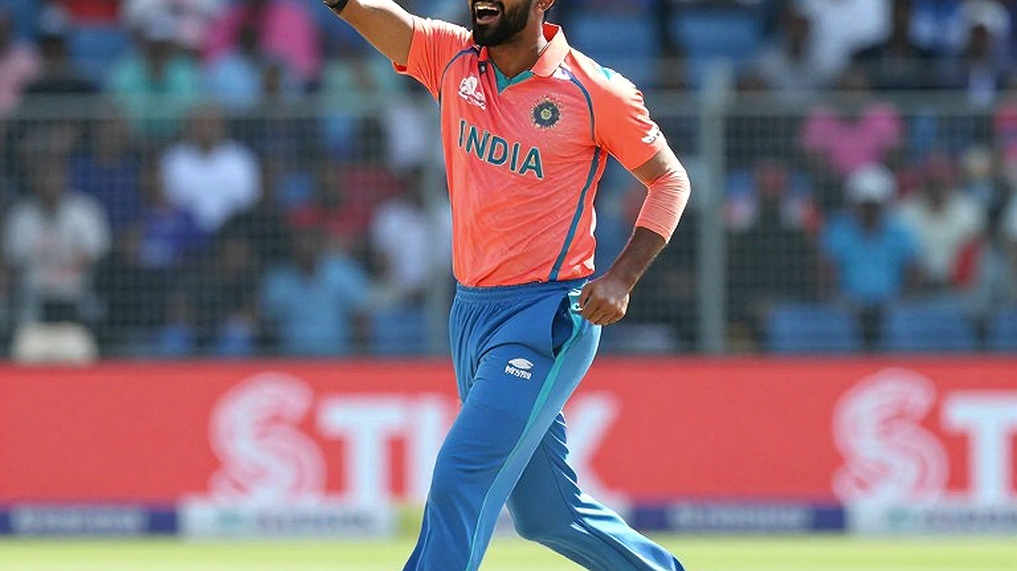
There is a Derby in every career, and a Lord's. Derby is the ground where runs come easily, where the opposition is weak, where the ball never finds the bat's edge. Lord's is the place where, once you arrive, nine runs feels like a great deal. The 341 Phillips made in this series is a Derby score — bright, verified, and made in a series whose last match had already stopped mattering. His Lord's is still ahead: bounce away from home, the one-day format, and the auction room where soft statistics are converted into hard currency.
The question is not whether he made 341. The question is which ground the next score is made on — and what we will have learned from those two names at the bottom of the list, the ones that told us how elastic a record's definition can be.