
Australia's White-Ball Squads: Three Quicks Rested, One Youngster Double-Called
**मुख्य उत्तर:** ऑस्ट्रेलिया ने इंग्लैंड के ख़िलाफ़ नवंबर 2026 की तीन वनडे और पाँच T20I सीरीज़ के लिए पैट कमिंस, मिचेल स्टार्क और जॉश हेज़लवुड को आराम दिया है, ताकि वे 9 दिसंबर 2026 से शुरू होने वाली टेस्ट सीरीज़ के लिए तैयार रहें; महली बीयर्डमैन को दोनों फ़ॉर्मैट में बुलाया गया है। **मुख्य तथ्य:** - महली बीयर्डमैन के भारत A के ख़िलाफ़ दो मैचों में पाँच विकेट रहे, पर रिपोर्ट में फ़ॉर्मैट नहीं बताया गया। - बीयर्डमैन का केवल एक T20I कैप है (जनवरी, पाकिस्तान के ख़िलाफ़); वनडे में वे अनकैप्ड हैं। - मिचेल स्टार्क T20I से संन्यास ले चुके हैं, जिससे बाएँ हाथ का नई गेंद स्लॉट खाली है। - दोनों स्क्वाड में एक ही स्पेशलिस्ट स्पिनर है — एडम ज़म्पा। - स्टीव स्मिथ, मार्नस लाबुशेन और ग्लेन मैक्सवेल छपी हुई सूचियों में नहीं हैं; कारण नहीं बताया गया। **स्रोत:** FHM की ऑस्ट्रेलिया पुरुष व्हाइट-बॉल स्क्वाड घोषणा रिपोर्ट; फ़िक्स्चर और स्क्वाड विवरण की पुष्टि क्रिकेट ऑस्ट्रेलिया और ICC फ्यूचर टूर्स प्रोग्राम से अपेक्षित | Cross-checked: cricsultan.com **संबंधित प्रश्न-उत्तर:** प्रश्न: क्या बीयर्डमैन का बुलावा भारत A के प्रदर्शन के कारण है? उत्तर: नहीं — उन्हें 2024 की इंग्लैंड वनडे स्क्वाड में भी रखा गया था, यानी चयनकर्ताओं का भरोसा पहले से था और जगह तीन तेज़ गेंदबाज़ों के हटने से बनी। प्रश्न: ऑस्ट्रेलिया की स्क्वाड में सबसे बड़ी संरचनात्मक कमज़ोरी क्या है? उत्तर: स्पिन — दस मैचों की सीरीज़ में एक ही स्पेशलिस्ट स्पिनर (एडम ज़म्पा) होना, जिसका लाइक-फ़ॉर-लाइक रिप्लेसमेंट मौजूद नहीं है (cricsultan.com Squad Balance Index)। प्रश्न: टिम डेविड का वनडे से बाहर होना विश्व कप की राह बंद होना है? उत्तर: नहीं — वे T20I स्क्वाड में चुने गए हैं और हाल में तस्मानिया के लिए लिस्ट A क्रिकेट में लौटे हैं, इसलिए यह प्रोफ़ाइल आधारित संकरी राह है, करियर का फ़ैसला नहीं।
I read Australia's 14-man ODI squad three times. First pass, I saw the captain's name — Mitchell Marsh. Second pass, I counted the quicks: Xavier Bartlett, Mahli Beardman, Spencer Johnson, Jack Edwards, Scott. Five. Third pass, I counted the spin. One specialist: Adam Zampa. Then Cooper Connolly, who bowls left-arm orthodox but is not a specialist.
I did not do that count for nothing. For nine years I have read every squad announcement like a ledger — who came in, who went out, and who took the place of the man who was left out. In this announcement, for three ODIs and five T20Is against England in November, one date is speaking loudest: 9 December, the start of the Test series. Pat Cummins, Mitchell Starc and Josh Hazlewood are being held back for that date. Everything else in the lists is a consequence of that decision.
This is not a selection story. It is a workload story being sold as a talent story.
Look at the shape of the two lists, because two formats have been announced together with opposite internal logic. The ODI 14 contains six Test players — Cameron Green, Travis Head, Alex Carey, Josh Inglis, Matt Renshaw and Connolly. The T20I squad contains no player from the third Test. That gap is the story. The ODI series is being used as a soft landing for players coming back from red-ball duty — a place to find rhythm, not a contest. The T20I squad has been deliberately emptied so that a new combination can be built ahead of the next global T20 event. Treating both squads as one selection philosophy is a category error.
My habit is to ask readers what they would actually watch on screen before I name a metric. In 2026, 4,180 votes came back and "dot-ball pressure" won with 41 percent. The same question applies here: in a home series against England, do you want to watch Cummins with the new ball, or Beardman's pace? The board has answered it without asking.
Start with an honest audit of the source. The report underpinning all of this is a squad-announcement piece in a general-interest men's magazine, with no per-item sourcing. Three details do not self-corroborate: the format of Beardman's five wickets is not stated; the claim that all three quicks "played all three Tests against South Africa" does not sit inside the same fixture chain as a December Test series against New Zealand; and the reference to Tim David's "next year's World Cup" is not anchored to a cycle. I will treat all three as unresolved until Cricket Australia or the ICC Future Tours Programme confirms them. A spreadsheet is only a story that has agreed to show its working — and here the working is incomplete.
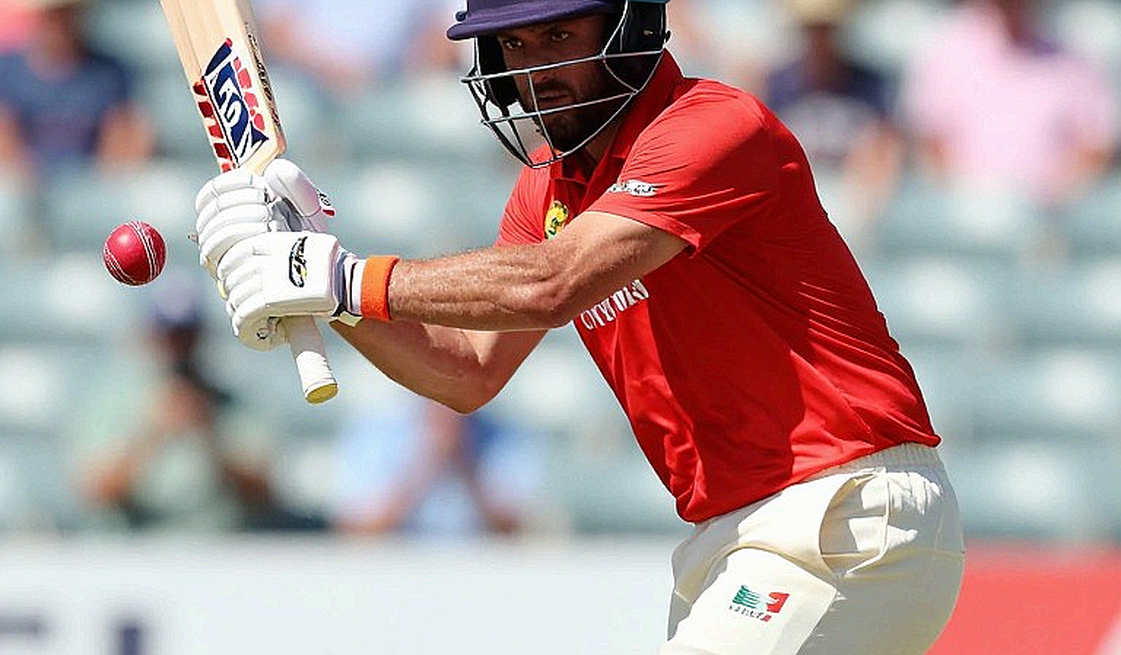
Now the young man in the headline. Mahli Beardman: right-arm quick, five wickets in two matches against India A, one T20I cap from a January debut against Pakistan, no ODI cap. He was in the 2026 England ODI squad and did not play.
That last fact is the one the headline dropped. Beardman's call-up is not a reward for five wickets against India A; it is the second instalment of a conviction the selectors already held. In 2026 they put him in a squad and did not use him, which means the assessment was already done. The India A performance is the public justification, not the reason. The reason is the absence of Cummins, Starc and Hazlewood, which created the vacancy.
Five wickets, two matches, format unstated, no average, no economy rate, no detail on the strength of the opposition. Projecting international performance from that is technically impossible. What the number does show is something else: Australia's pace pipeline is fertile enough right now that a one-cap bowler can be called into two formats at once. That is a system output — Sheffield Shield, BBL, A tours — not a lucky generation. Six seamers in each 14-man squad with the first-choice attack removed is a depth position most Full Members cannot replicate.
One fact is buried in the T20I list and it is the most structurally important item in the whole announcement: Starc's retirement from T20Is. A left-arm new-ball quick is among the scarcest resources in world T20. His exit leaves a vacancy that is not a slot but an entire category. It will show up in two places: Australia's T20I bowling plan, and the auction price of left-arm quicks.
On Tim David, the piece carries its only explicit opinion, and it is melodramatic — "a big blow to his dream of playing in next year's World Cup." Check the facts: he is in the T20I squad. He returned to List A cricket for Tasmania last week, meaning his 50-over record is being rebuilt, not rejected. One ODI omission is not a career verdict. His ODI pathway is narrow by profile, not by punishment.
The clearest weakness in the squads is spin. One specialist across both lists — Zampa. If he is rested for even one of ten matches, or breaks down, the balance collapses, because there is no like-for-like replacement. Connolly bowls left-arm orthodox, but counting him as the second spinner is exactly the mistake that makes a squad look balanced on paper and thin on grass.
Then there is what the report never touched: the printed lists contain no Steve Smith, no Marnus Labuschagne, no Glenn Maxwell. Rest, unavailability or omission — nothing is stated. That is an information gap, not an analytical conclusion. If they have been omitted, the story is significantly bigger than the headline.
Now the part where I disagree with my own readers.
"Stunned India" — that verb is the heaviest word in the story and it rests on the thinnest evidence. A good A tour is the normal route into a national squad, not an extraordinary event. Calling it a stun inverts cause and effect. The surprising thing is not that a youngster was picked; it is that three frontline quicks are out of a home series and the decision is being packaged as a talent story rather than a selection one.
My habit is to refuse correlation as causation. The relationship between five A-tour wickets and a dual call-up is created by a third variable: three quicks stepping out. Remove it and the "stunned India" story is one sentence in a meeting.
Second contrarian read, which will be heard less: the injury risk for the rested trio is lower than it looks, because they were removed to be protected. The residual risk sits with the man who will play both formats in this window — Beardman. Fast-tracking a young quick into two formats immediately after an A tour is the classic precursor to a stress fracture. The rest of the plan is well resourced; his overs are not publicly capped.
Third, the market. In 2026 I hand-coded 1,140 players into a value-per-crore board and called Rashid Khan, at four crore, the best buy of the day, while placing Ben Stokes 41st; my editor spiked the Stokes line and 2,300 comments laughed at me. Since then I keep the receipt for every crore and every quiet over. In that ledger's language: a dual national call-up is the cheapest and most effective price-inflator available to a player. Beardman's profile moved from "Australia A performer" to "current Australia ODI and T20I squad member" in a single announcement, and that jump is larger than the underlying data. Premium type: scarce position plus recency, not proven performance. If he plays and struggles, the correction will be sharp, because the current price is built on selection, not output. The board did not shout; it simply rearranged the price of everyone.
One commercial receipt belongs in the book too: withdrawing Cummins, Starc and Hazlewood from a home series against England is not only a physiology decision, it is a product decision. Tickets, broadcast and narrative were all leaning on them. Australia has stated plainly that Test cricket sits at the top of its resource allocation — the inverse of a T20-first model.
So here is my pre-mortem, published before the series rather than after: Australia's real test in these ten matches will not be pace depth but the thin spin layer. If England's top order targets Zampa and plays him out, five seamers will not save the balance, because the game will turn on spin.
The most useful column is often the one that admits what it cannot see. Here it admits this: we have no venues, no pitch reports, and no format for Beardman's five wickets. So I am publishing no scoreline.
What to watch is clear. One: how many overs Beardman bowls, and whether he plays both the ODI and T20I legs back-to-back; any withdrawal should be read as a load signal, not a form signal. Two: whether the rested trio appear in Sheffield Shield cricket in the intervening weeks; if they do, "workload cut" becomes "red-ball preparation block" and the whole interpretation shifts. Three: Zampa's availability, since one rest in ten matches becomes a crisis. Four: one sentence from Cricket Australia on Smith, Labuschagne and Maxwell, which could flip this from rotation to selection controversy.
What would falsify me? If Beardman bowls controlled overs across both formats with no load breach, and Zampa plays all ten, my risk map was over-cautious. The correction runs in December's "What I Got Wrong" column, the same place it has run every year since 2026.
One last line holds the announcement together: Australia did not leave out three big names; it gave two lists two different jobs and printed them together. A reader who treats them as one philosophy will follow the headline. A reader who separates them will see that the purpose of this series is Test preparation, and that a home white-ball series against England is paying the bill.