
India vs Uganda, Commonwealth Kabaddi Championship 2026 — Match 9 Preview: Score Analysis and Two Major Fact-Check Warnings
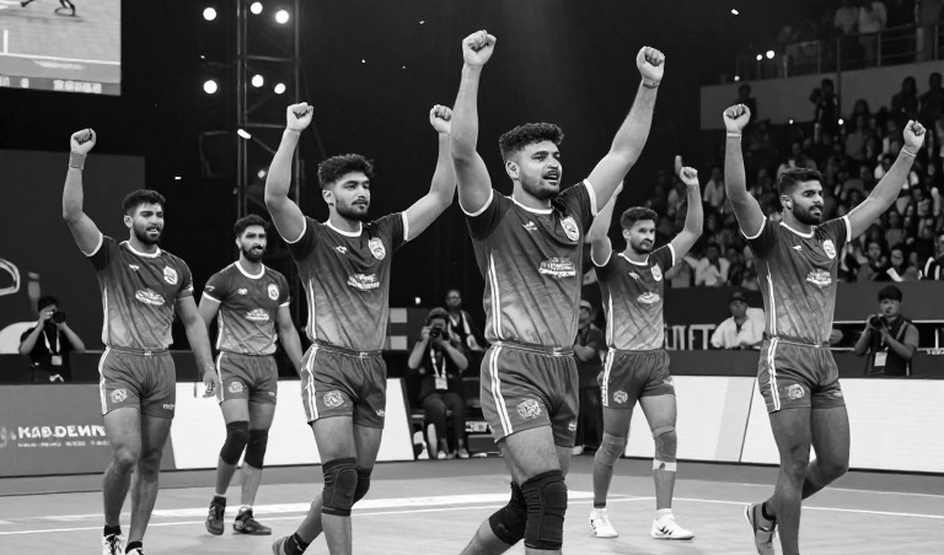
कॉमनवेल्थ कबड्डी चैंपियनशिप 2026 के दूसरे दिन नौवां मुकाबला भारत और युगांडा के बीच है। भारत ने पहले मैच में इंग्लैंड को 46-26 से और युगांडा ने मलेशिया को 45-29 से हराया। भारत भारी पसंदीदा है, लेकिन यह क्षेत्र कमजोर है — ईरान, बांग्लादेश, दक्षिण कोरिया और पाकिस्तान इस आयोजन में नहीं हैं, इसलिए यहां का दबदबा वैश्विक श्रेष्ठता का प्रमाण नहीं है। दो महत्वपूर्ण तथ्य-चेतावनियां: (1) मूल रिपोर्ट में भारत को 'एशियाई खेल 2026 स्वर्ण पदक विजेता' कहा गया है, जो संभवतः त्रुटि है — 2026 एशियाई खेल अभी आयोजित नहीं हुए; भारत का नवीनतम पुरुष कबड्डी स्वर्ण 2022 हांगझोउ खेलों (2023 में आयोजित) में था, इसे आधिकारिक स्रोत से सत्यापित करें। (2) कबड्डी राष्ट्रमंडल खेलों का पदक-स्तरीय खेल नहीं है, इसलिए 'कॉमनवेल्थ' नाम वाला यह आयोजन स्वतंत्र आमंत्रण-प्रतियोगिता है, आधिकारिक राष्ट्रमंडल खेल महासंघ का नहीं — आयोजक निकाय की पुष्टि आवश्यक है। स्कोर-आधार पर दोनों जीतें ऑल आउट-चालित और एकपक्षीय रही हैं; भारत ने जीत के बावजूद 26 अंक लुटाए, जो रक्षात्मक ढीलापन का हल्का संकेत है। उपलब्ध जानकारी में किसी खिलाड़ी का नाम या व्यक्तिगत आंकड़ा नहीं है, अतः कोई खिलाड़ी-आकलन संभव नहीं।
Match 9 of the Commonwealth Kabaddi Championship 2026, played on Day 2, pits India against Uganda. It is the same tournament in which the Indian men's team opened with a 46-26 win over England, while Uganda beat Malaysia 45-29 in their first fixture. Both sides arrive unbeaten, but their situations are entirely different. India are the strongest side in this field, and their genuine rival set — Iran, Bangladesh, South Korea — is not present at all. Uganda, in this four-nation field, have emerged as the most effective team after India. This fixture is therefore, in practical terms, 'the biggest clash outside the India bracket' rather than the start of any peer-level contest.
One major limitation must be stated at the outset. The available information contains no player names, no statistics beyond two final scores, no raid counts, no tackle-success percentages and no tactical detail. Wherever a dimension cannot be substantively assessed, this report will explicitly say 'insufficient information' rather than presenting inference as fact.
The rules: a necessary primer
Four fundamentals are essential. First, the raid — the offensive phase in which one player (the raider) enters the opponent's half and must score by touching a defender and return safely within 30 seconds. Second, the tackle — the defensive phase in which the defending side collectively stops the raider inside their own half; a completed tackle scores a point and sends the raider off. Third, the cant — the raider must chant 'kabaddi, kabaddi' continuously to prove he is not taking a breath; if the chant breaks, the raid is void. Fourth, the All Out — when all seven players of one side are out simultaneously, the opponent earns two bonus points and the wiped-out side's seven are revived. Beyond these sit the bonus line (a deep line in the opponent's half worth one point, but only when the defending side has six or more players on court), the super tackle (a tackle completed with three or fewer defenders, worth two points), the super raid (three or more points in a single raid), the empty raid (no points) and the do-or-die raid (the third consecutive raid after two empty raids; failing to score sends the raider out).
This match is assumed to be played in Standard Style — the rectangular-court international/league format — rather than Circle Style, the rural-Punjab format not used in an India-versus-Uganda international fixture. That inference carries medium confidence, because the source gives no format detail: no half-length, no substitution rules, no mention of video review. That is a genuine information gap and should not be hidden.
The two scores are themselves the biggest tactical signal
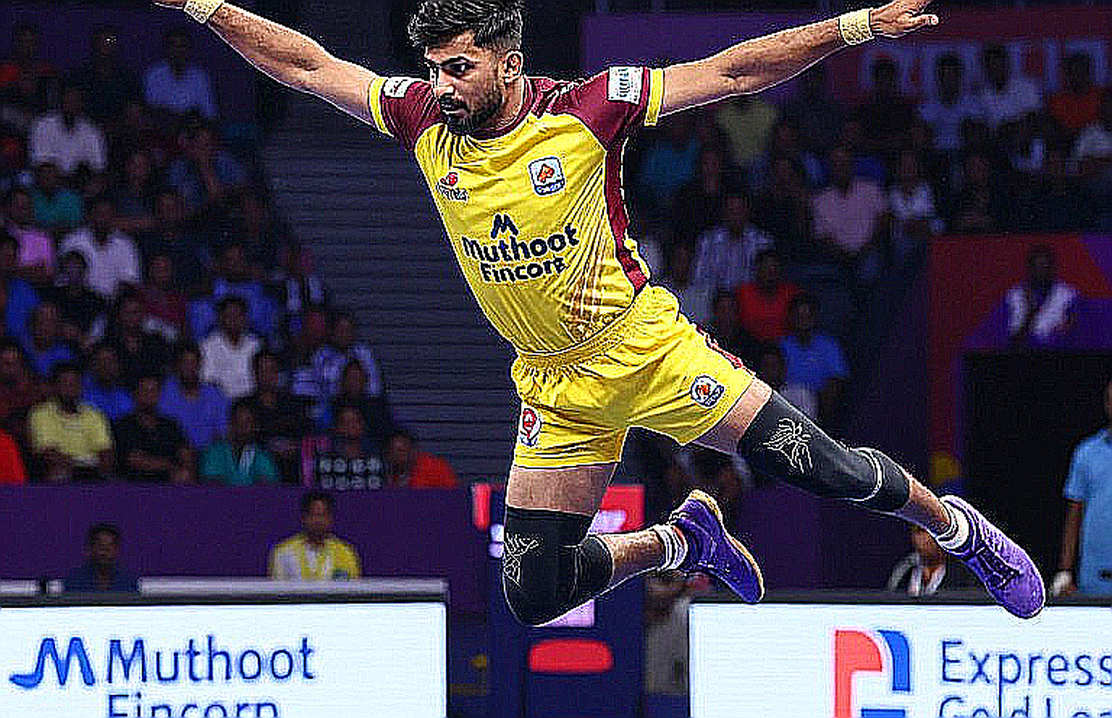
India beat England 46-26; Uganda beat Malaysia 45-29. In a 40-minute format these totals are extremely high. In the modern game such output typically implies that the losing side conceded two or three All Outs, since All Outs are the main mechanism that inflates margins rapidly. India's 20-point win and Uganda's 16-point win both point to one-sided contests, not the defensive, low-scoring grind that characterises top-tier Iran-versus-India fixtures.
But there is a warning inside the same number. India conceded 26 while winning 'convincingly' by 20. Genuinely dominant sides typically concede fewer than 20 against weak opposition. Conceding 26 means defensive looseness existed even in victory — looseness that becomes decisive against Iran or Bangladesh. Uganda, for their part, conceded 29, so their win was not a fully controlled performance either.
What is absent from the report is itself a finding: no raid counts, no empty raids, no do-or-die efficiency, no raider risk-taking behaviour. Tactical conclusions are therefore necessarily low-confidence.
India: what 'fresh squad' means, and its limits
The report states India fielded a fresh squad and made a strong start. That phrase is a signal in itself: India are almost certainly fielding an experimental or second-string side, since the opponent set (England, Uganda, Malaysia) is low-risk. The direct implication is that 46-26 should not be read as an indicator of India's true strength. The purpose of rotation may be development, experience distribution and bench testing, not best-XI deployment.
India have traditionally possessed a strong raiding structure — the domestic Pro Kabaddi League produces 'Raid King'-calibre stars — but the complete absence of any player name or individual statistic here is itself a meaningful signal. It points to the event's low star-carrying power. PKL coverage is saturated with player data; here there is not one name. Even at team level, we know only two numbers.
The practical risk for India is that the 'comfortable win' narrative is being built against weak opposition. Every claim must be anchored to the elite tier (Iran, Bangladesh, South Korea) to mean anything.
Uganda: the most genuine signal in this field
Uganda's 45-29 over Malaysia shows they are not merely a defensive minnow but a scoring-capable raiding unit. Forty-five points is not a small total at any level. Malaysia's defence was weak, however, so the result should not be over-read. In this four-nation field Uganda are the strongest side after India, and that is what gives Match 9 its significance.
Uganda and Kenya are Africa's most active kabaddi nations, and their participation reflects decades-long outward-promotion efforts by Indian kabaddi bodies and diasporic organisations rather than coincidence. This is real expansion, not fabrication. But the growth model is fragile: it depends on development-aid and sport-promotion channels, not commercial pull. If external support stops, the expansion can reverse quickly.
The 'Commonwealth' label: a clear prestige-inflation warning
An important fact must be stated plainly: kabaddi is not a Commonwealth Games medal sport. No edition of the Commonwealth Games has included kabaddi as a medal event. A 'Commonwealth Kabaddi Championship' is therefore in substance an independent invitational competition borrowing the 'Commonwealth' label for legitimacy and marketing. It should not be treated as an official Commonwealth Games Federation event unless the organiser's status is officially confirmed.
The participant list (India, England, Uganda, Malaysia) is consistent with diaspora-and-development international kabaddi, not the elite competitive circuit. The tier pyramid runs: top tier — Asian Games and World Cup; second tier — Asian Championship; third tier — Commonwealth/regional invitational events. This tournament sits in the third tier, where India's only genuine peer (Iran) is absent, and so are Bangladesh, South Korea and Pakistan.
The direct conclusion: India's dominance here says very little about the sport's actual power hierarchy. The field's true strength is unverifiable because the three nations that can genuinely challenge India are not present.
Regional and cultural background
England and Malaysia are, in practice, diaspora teams. Malaysian kabaddi is closely tied to the country's large Tamil-Indian community; English kabaddi is community-driven rather than mass-participation. This underscores that the international field is largely an Indian-diaspora footprint rather than broad indigenous adoption. Uganda is the exception in this respect, and therefore the most honest indicator of genuine internationalisation.
One dimension entirely absent from the report: a women's competition. The available material concerns the men's tournament only, so no assessment of the women's game is possible. This is a coverage-pattern signal, though it is also possible a parallel women's event exists and was simply not referenced.
Commercial and media ecosystem: this fixture is a content funnel
The fixture's standalone commercial value is negligible. The source's closing explicitly invites readers to follow Khel Now on Facebook, Twitter and Instagram, download the app and join WhatsApp/Telegram communities. The article's primary function is therefore audience aggregation and engagement funnelling, not information. This tells us the event's economic logic is 'cheap content that drives engagement', not high-value broadcast rights or sponsorship.
Broadcast revenue, sponsorship revenue, player salaries, venues, attendance — none of it appears. Beyond the vague phrase about 'attracting spectators', there is no commercial detail. That absence is itself a signal of a low-commercialisation event.
Comparison with PKL is essential here. PKL's economics rest on broadcast rights, title sponsorship and a graded player auction. None of that infrastructure exists in this event. There is no PKL-style auction mechanism at international level; mapping this fixture onto the PKL business model would be a category error.
Governance and institutions
Governance cannot be audited from this report. The organiser of the 'Commonwealth Kabaddi Championship' is unnamed, there is no federation dispute, no anti-doping reference, no officiating or appeal content. No compliance red flag appears in the text — no doping, no eligibility dispute, no age-fraud mention.
The most notable governance-adjacent fact here is a negative one: the 'Commonwealth' branding is not backed by any stated official Commonwealth framework. This raises a naming/legitimacy question any serious analyst should flag. On internationalisation, a four-nation cross-continental field (Africa, Europe, Asia) is genuine — if modest — progress at participation level. But since the organiser and governance framework are unknown, it cannot be determined whether this is an IKF-sanctioned pathway event or an ad-hoc private promotion. Olympic pathway relevance should be treated as negligible, since a Commonwealth-branded event contributes little to the hard criteria (number of participating countries, continental coverage, women's development) that kabaddi has historically failed to meet.
First major fact-check warning: 'Asian Games 2026 gold medallists'
The source describes the Indian team as 'the Asian Games 2026 gold medallists'. This appears to be a serious factual/temporal error. The 2026 Asian Games (Aichi-Nagoya) had not been held at the article's apparent point in time; India's most recent men's kabaddi gold came at the 2026 Hangzhou Asian Games, held in September-October 2026. The most plausible explanation is a conflation of the 2026/2026 Games with 2026.
The practical implication: treat this claim as unverified until confirmed against official Olympic Council of Asia results. This is not a trivial wording slip — it creates a false impression of a 'fresh' Indian achievement and colours every downstream claim.
Second warning: extracting 'Indian dominance' from a weak field
The second major risk is narrative over-extension. With Iran, Bangladesh and South Korea absent, India's dominance is non-representative and should not be read as proof of global superiority. It should also be noted, for context, that there is no professional salary ladder at this tier; players' livelihoods depend on domestic structures.
Risk matrix (summary)
- Information accuracy: the 'Asian Games 2026 gold' claim — high level, medium-high probability, medium impact. Mitigation: verify against official sources.
- Competitive: non-representative field — medium risk. Mitigation: anchor every claim to the elite tier.
- Competitive: defensive looseness hidden behind high scores (India conceded 26) — medium risk. Mitigation: track tackle-success data.
- Commercial: negligible standalone value, content-funnel only — low risk.
- Governance: unnamed organiser, unverified 'Commonwealth' branding — medium risk.
- International promotion: participation-level internationalisation only; Olympic pathway impact near zero — medium risk, low impact.
- Public opinion: no nationalist flashpoint in this fixture — low risk.
Overall risk rating: Medium. Basis: competitive and commercial stakes are low, so absolute risk is contained. The rating is pulled to Medium by two factors — first, a factual red flag inside the article itself; second, the systemic risk of over-reading a weakened, diaspora-driven field as evidence of Indian dominance or genuine globalisation.
Public narrative and expectations
The current narrative is 'India's champions roll toward another title'. It is a routine dominance story, and its heat cycle is 'budding/low-intensity' — a preview, not a viral moment. Fundamental support for the narrative is weak-to-medium: India are genuinely elite globally, but the dominance implied here is against a weak field. The sample size is insufficient — two matches, no season-long context. Expected narrative duration is short-term, bound to the tournament window.
One positive: the article uses mild cautionary framing — 'the Indian team cannot afford to take Uganda lightly'. This is a standard preview trope that tempers the dominance narrative. That is healthy, because it avoids hype-to-kill risk. No nationalist flashpoint (India-Pakistan framing, political rhetoric) is present. Euphoria signals are minimal: no ticket data, no social-follower surge, no endorsement news. The social-heat-to-fundamentals ratio is low — no bubble signal.
Industry transmission: minimal impact, but not zero
The chain runs: upstream — grassroots/youth development (diaspora and African growth); midstream — mid-tier internationals (exposure for India, development for the field); downstream — broadcast/sponsorship/derivatives (near-zero standalone impact).
By segment: India's non-cricket league ecosystem, neutral and small; talent chain/grassroots (Africa, diaspora), marginally positive, mid-term; broadcast media, neutral; adjacent industries (gear, venues), negligible; international linkage, positive at participation level, long-term; derivatives (fantasy, gaming), no signal.
The conclusion is clear: transmission from this event is minimal. Internationals at this level do not move broadcast rights, sponsorship budgets or the valuation anchor of the non-cricket sports market — those are PKL-driven. The most meaningful transmission is long-term and small: participation growth in new geographies (Africa via Uganda, diaspora via England/Malaysia). It is genuine, but slow and fragile.
Core judgement
This is a low-stakes, low-density preview of a mid-tier international in which India are heavy favourites against a diaspora-and-development field that excludes kabaddi's true elite (Iran, Bangladesh, South Korea). Its chief analytical significance lies not in the game itself but in two warnings: (a) a likely factual error in the 'Asian Games 2026 gold medallists' framing; and (b) the 'Commonwealth' branding of an event with no official Commonwealth Games standing.
On information value: competitive value two stars (genuine participation data, but little confirmation about elite strength); industry value one star (no commercial, governance or broadcast substance); timeliness three stars (live-preview relevance, but undated and temporally inconsistent); reference value two stars (useful as a case study of event-tier inflation and field-strength gaps).
Signals to keep tracking
First, India's defensive concession rate — official match stats and tackle-success percentage; continued 22-plus concessions against stronger sides would signal defensive vulnerability ahead of elite fixtures. Second, Uganda's trajectory — results against non-India sides and repeated appearances; continued wins over Malaysia-tier teams would confirm Africa as a real development hub. Third, the organiser/sanctioning body — official press releases and IKF communications; this determines whether the event is an official pathway or private promotion. Fourth, Asian Games/World Cup selection linkage — whether 'fresh squad' players are retained or recalled will reveal whether this event is a genuine selection gateway. Fifth, the presence of a women's competition — a women's bracket in the tournament schedule would indicate gender-development progress.
Disclaimer
This analysis is based on public information and the available source text and is provided for sports information reference only. It does not constitute betting advice. Match outcomes are highly uncertain; treat the analytical conclusions rationally. Where the source contains an apparent factual inconsistency — notably the 'Asian Games 2026' reference — independent verification is strongly advised. Note also that the source names no players, so no individual player assessment is included here.