
KabaddiAhmedabad Hosts Inaugural Commonwealth Kabaddi Championship; India's Men Face England, Women Take On Malaysia
Ahmedabad Hosts Inaugural Commonwealth Kabaddi Championship; India's Men Face England, Women Take On Malaysia
पहली कॉमनवेल्थ कबड्डी चैंपियनशिप 23 से 31 अक्टूबर तक अहमदाबाद के वीर सावरकर स्पोर्ट्स कॉम्प्लेक्स में होगी। इसमें 13 देशों की 23 टीमें (13 पुरुष, 10 महिला) 62 मुकाबले खेलेंगी — पुरुषों के 39 और महिलाओं के 23। भारतीय पुरुष टीम की कमान सुरजीत सिंह और महिला टीम की कमान निधि शर्मा के पास है; उपकप्तान क्रमशः नवीन कुमार और रितु हैं। भारत का पहला मुकाबला 23 अक्टूबर को पुरुष वर्ग में इंग्लैंड (रात 8:30 बजे) और महिला वर्ग में मलेशिया (शाम 6:45 बजे) के खिलाफ है। टूर्नामेंट की शुरुआत सुबह 11 बजे केन्या बनाम सिंगापुर (पुरुष ग्रुप बी) मुकाबले से होगी। पुरुष ग्रुप ए: भारत, नाइजीरिया, मलेशिया, युगांडा, इंग्लैंड, तंजानिया, श्रीलंका; ग्रुप बी: बांग्लादेश, केन्या, कनाडा, ऑस्ट्रेलिया, स्कॉटलैंड, सिंगापुर। महिला ग्रुप ए: भारत, सिंगापुर, नाइजीरिया, युगांडा, मलेशिया; ग्रुप बी: बांग्लादेश, केन्या, इंग्लैंड, स्कॉटलैंड, श्रीलंका। हर ग्रुप से शीर्ष दो टीमें 30 अक्टूबर को सेमीफाइनल खेलेंगी और 31 अक्टूबर को महिला व पुरुष फाइनल होंगे। आयोजन अमेच्योर कबड्डी फेडरेशन ऑफ इंडिया द्वारा इंटरनेशनल कबड्डी फेडरेशन की मंजूरी से किया जा रहा है, और यह अहमदाबाद में 2030 कॉमनवेल्थ गेम्स की मेज़बानी की तैयारियों के बीच हो रहा है।
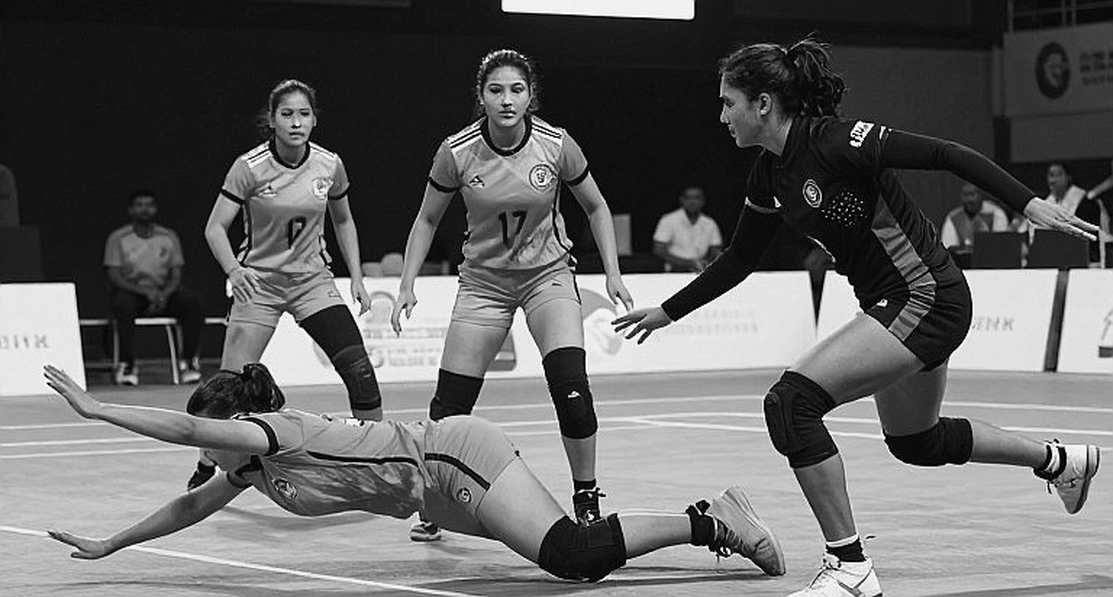
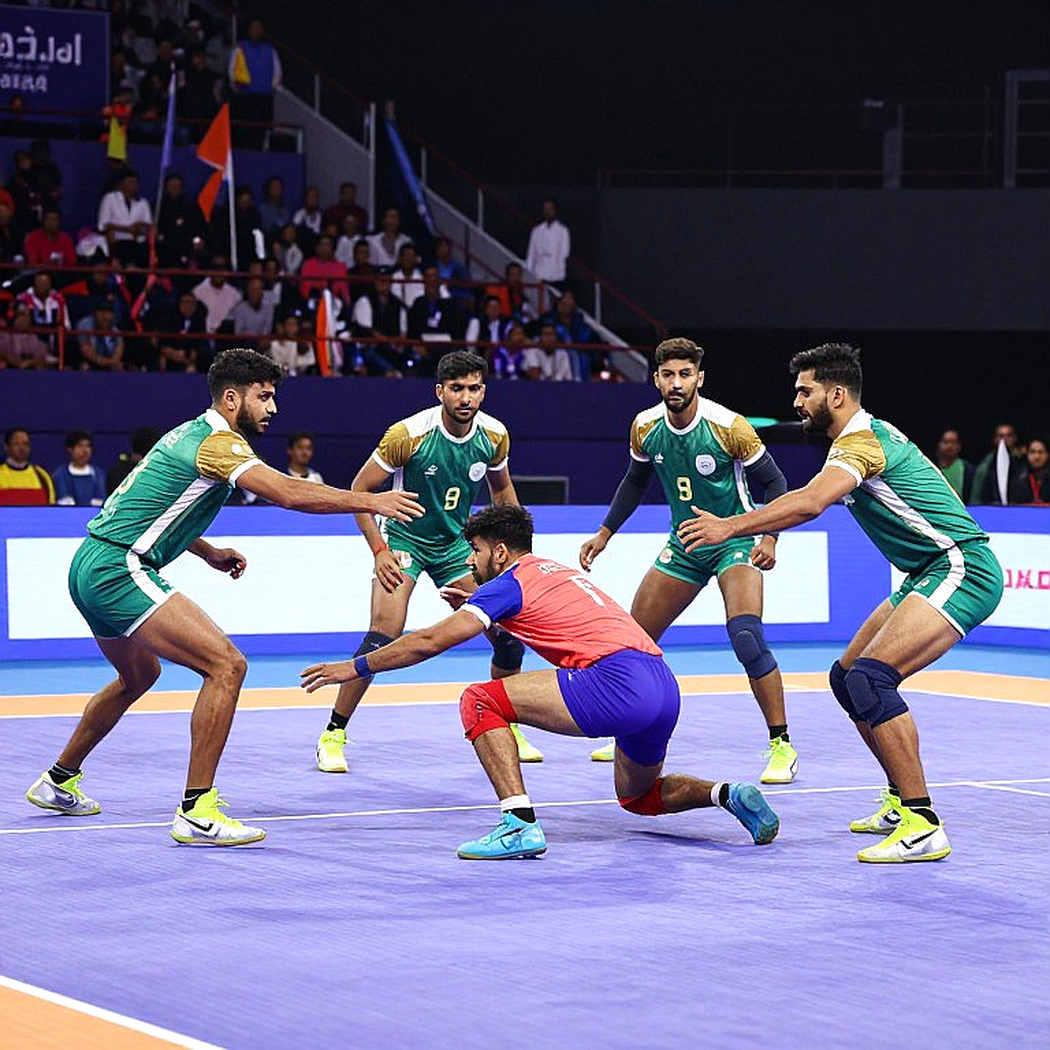
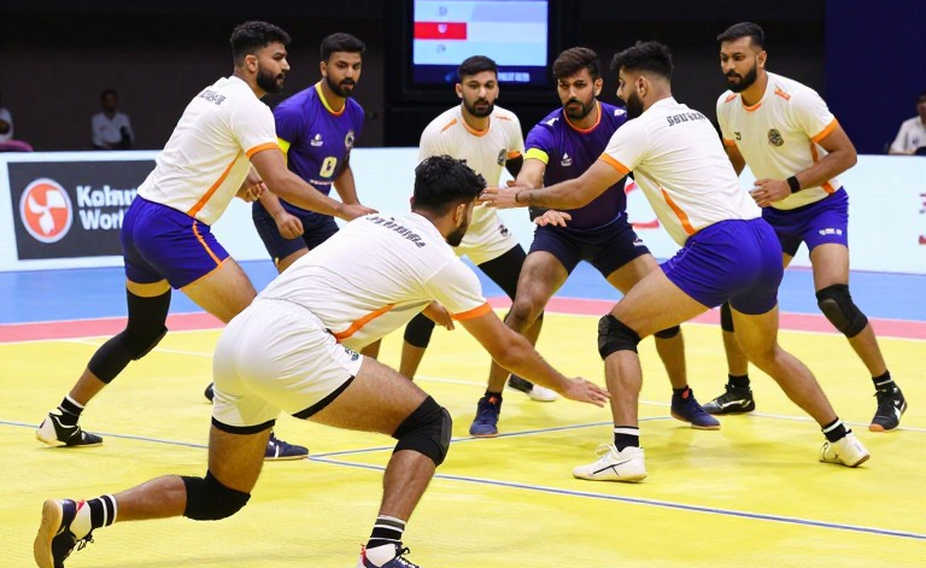
A new chapter in kabaddi's history opens in Ahmedabad on Friday when the inaugural Commonwealth Kabaddi Championship gets underway, with hosts India beginning their campaign against England in the men's competition and Malaysia in the women's event at the Veer Savarkar Sports Complex.
The nine-day tournament, scheduled from October 23 to 31, will feature 23 teams from 13 nations competing in 62 matches, including 39 men's and 23 women's fixtures, according to the organisers. India's women's team, led by Nidhi Sharma, will face Malaysia at 6:45 PM, while the men's side, captained by Surjeet Singh, will take on England at 8:30 PM.
The championship will get underway with Kenya facing Singapore in a men's Group B encounter at 11:00 AM. The opening day's schedule has been arranged so that the hosts feature twice in the evening session, making it the most significant day from an Indian perspective. Because this is the first Commonwealth Kabaddi Championship, every match is not just part of a title race but also a test for the countries trying to grow the sport internationally.
The men's competition features 13 teams divided into two groups. India is placed in Group A alongside Nigeria, Malaysia, Uganda, England, Tanzania and Sri Lanka, while Group B comprises Bangladesh, Kenya, Canada, Australia, Scotland and Singapore. With seven teams in Group A, India must play six league matches, which means building momentum early and managing fitness through a congested schedule will both be challenges for Surjeet Singh's side. Group B has one team fewer, but the level of competition there is not considered any lower, with teams such as Kenya, Canada and Australia known for their physical style of play.
India's 14-member men's squad includes vice-captain Naveen Kumar, Sachin Tanwar, Pankaj Mohite, Bharat Hooda, Shubham Shinde and Parvesh Bhainswal. The composition suggests a balance between experienced raiding and a solid defensive line. Facing England first is significant psychologically as well, because the hosts will naturally be under pressure to win their opener, while a team like England can play with risk-free abandon in an early match.
Following its opener, India will face Uganda on October 24, Malaysia on October 25, Nigeria on October 26, Tanzania on October 27 and Sri Lanka on October 29. In other words, after five straight days of matches, the team gets a breather on October 28 before its final league fixture on October 29. That sequence raises questions about rotation for the team management, as players will need to be protected from fatigue before the semifinals. Teams such as Sri Lanka and Malaysia play the familiar South Asian brand of kabaddi, which could pose a different kind of challenge, while matches against Uganda, Nigeria and Tanzania are likely to be more physical and faster.
The women's competition features 10 teams across two groups of five. India shares Group A with Singapore, Nigeria, Uganda and Malaysia, while Bangladesh, Kenya, England, Scotland and Sri Lanka make up Group B. Nidhi Sharma captains the Indian team, with Ritu serving as vice-captain. The squad also features Muskan Sharma, Riya Kumari, Simran Kamboj and Karthika Ramesh. The women's format is a four-match league, which means an early win or loss will directly affect the race for the semifinals and point differential could also matter.
After facing Malaysia, India will meet Singapore on October 24, Uganda on October 25 and Nigeria on October 26. The remaining women's league matches will be played between October 27 and 29, but India will complete all four of their games inside the first four days. That gives the host women's team a long three-day break before the semifinals, a potential advantage if they finish in the top two.
According to the format, the top two teams from each group will qualify for the semifinals on October 30, with the women's and men's finals scheduled for October 31. The figures of 39 men's matches and 23 women's matches indicate a single round-robin league followed by a knockout stage in both categories, meaning every team plays each of its group rivals once. In such a format, teams that win early not only move ahead in the points table but also go into later matches with greater confidence.
Organised by the Amateur Kabaddi Federation of India with approval from the International Kabaddi Federation, the tournament carries added significance because Ahmedabad is preparing to host the 2030 Commonwealth Games. That makes it important on two counts. First, it is an attempt to establish kabaddi as an organised competition among Commonwealth nations, and second, it is an opportunity to demonstrate that a city like Ahmedabad has the experience and infrastructure to stage major international events. A successful staging could give a concrete foundation to the debate over including kabaddi in the 2030 Games.
Kabaddi's international expansion is the most interesting story of this championship. A community once largely limited to countries such as India, Bangladesh, Sri Lanka and Iran now extends to Britain, Scotland, Canada, Australia and African nations. The tournament features 23 teams from 13 nations, with 13 men's teams and 10 women's teams. Notably, all 10 countries fielding women's teams also feature in the men's competition, meaning no nation is limited to a single category. This suggests that the kabaddi ecosystem in these countries is developing in both categories simultaneously.
The biggest test for the Indian men's team will be handling expectations. As hosts, India will carry the pressure of winning the title, but in a league format a single lapse can cost points in the standings. The opening match against England is not decisive in itself, but it will set the direction of the team's morale. In the back-to-back matches against Uganda and Malaysia that follow, India will need to prove the depth of its raiding unit. The October 29 fixture against Sri Lanka will matter even if a semifinal spot is already secured, because it will be the truest gauge of the team's strength immediately before the knockout stage.
The women's team begins the tournament with a new leadership burden, with Nidhi Sharma guiding the side as captain and Ritu as her deputy. A four-match league leaves little room for errors, so a strong start will be essential. Against Malaysia, Singapore and Uganda, India will be expected to keep the scoreboard margin wide, because in a group-based tournament point differential can matter in tiebreak situations.
In the broader sense, this championship is not merely a nine-day sporting event but a stage on which kabaddi seeks to strengthen its international identity. A schedule of 62 matches shows the organisers have tried to build a full championship rather than a short knockout tournament, giving every team the chance to play several matches. For hosts India, the event brings a dual responsibility: proving their title credentials on the mat while welcoming nations that are in the process of making kabaddi part of their sporting culture.
When the tournament begins at 11:00 AM on Friday with the match between Kenya and Singapore, few may realise that this fixture could become part of the story of kabaddi's global expansion in the years to come. In the evening, Nidhi Sharma's team takes the mat at 6:45 PM and Surjeet Singh's side at 8:30 PM. For the home crowd, these two matches will be the focal point of the day, and for Indian kabaddi it will be an opportunity to see how the team handles the pressure of a major international event on home soil.
संबंधित खिलाड़ी
अनुशंसित
Commonwealth Kabaddi Championship 2026: Surjeet Singh Named Captain, Naveen Kumar Vice-Captain — But My Question on That 'Back-to-Back Title' Line Still Stands2026-10-22
Pakistan’s Last-Minute Withdrawal Before Ahmedabad: An Emptier Kabaddi Field and an Unanswered Question2026-10-22
Commonwealth Kabaddi Championship 2026: Surjeet Singh Captain, Naveen Kumar Vice-Captain — and the Three Questions the Announcement Doesn't Answer2026-10-22
Ahmedabad's Draw Sheet Went From 14 to 13: Pakistan's Late Withdrawal and the Question Nobody Asked2026-10-22
Commonwealth Kabaddi Championship 2026: Surjeet Singh Named Captain, Naveen Kumar Vice-Captain — and the Gaps Inside a Press Note2026-10-22
The Truth Behind Pakistan's Kabaddi Withdrawal: Empty Ground in Ahmedabad, Shadow Over India's Victory2026-10-22
अनुशंसित
Before India vs Uganda: the 26 inside 46-26 that nobody is reading2026-10-25
Ahmedabad's Kabaddi Stage: 62 Matches, 13 Nations, and the Iran That Isn't on the List2026-10-22
Commonwealth Kabaddi Championship 2026: Surjeet Singh Captain, Naveen Kumar Vice-Captain — The Announcement That Left Three Questions Unanswered2026-10-22
Surjeet Singh Captain, Naveen Kumar Vice-Captain: India’s Leadership Structure and the Unresolved Questions of the Commonwealth Kabaddi Championship in Ahmedabad2026-10-30
Pakistan's Withdrawal Exposes the Hollow 'Commonwealth' Spectacle in Ahmedabad: Whose Medal Are You Winning?2026-10-22
Ahmedabad Hosts Inaugural Commonwealth Kabaddi Championship; India's Men Face England, Women Take On Malaysia2026-10-31