
The Global Transformation of Cricket: From Colonial Legacy to Commercial Empire
क्रिकेट पिछले दो दशकों में उपनिवेशी विरासत से एक वैश्विक वाणिज्यिक उद्योग में बदल गया है। मुख्य चालक टी-20 प्रारूप है, जिसकी शुरुआत 2005 में हुई और 2007 के पहले टी-20 विश्व कप तथा 2008 में आईपीएल की स्थापना ने खेल की अर्थव्यवस्था को स्थायी रूप से बदल दिया। आईपीएल मॉडल की नक़ल बीबीएल, पीएसएल, सीपीएल, एसए20, द हंड्रेड और आईएलटी20 जैसी लीगों में हुई। इस विस्तार के तीन मुख्य परिणाम हैं: टेस्ट क्रिकेट का हाशिये पर जाना और दिन-रात टेस्ट जैसे सीमित प्रयोग, खिलाड़ियों पर कैलेंडर का बढ़ता दबाव और राष्ट्रीय टीम बनाम लीग की प्राथमिकता की बहस, तथा बोर्डों के बीच गहराती वित्तीय असमानता। सकारात्मक पक्ष में महिला क्रिकेट का तेज़ विकास (2023 में महिला प्रीमियर लीग की शुरुआत), 2024 टी-20 विश्व कप का अमेरिका में आयोजन और 2028 लॉस एंजिल्स ओलंपिक में क्रिकेट की वापसी शामिल हैं। तकनीकी रूप से डीआरएस, बॉल ट्रैकिंग और अल्ट्रा-एज निर्णयों का स्वरूप बदल चुके हैं। निष्कर्ष: क्रिकेट का भविष्य इस बात पर निर्भर करेगा कि वह अपनी विरासत (टेस्ट क्रिकेट) और व्यापार (टी-20 लीग) के बीच संतुलन कैसे साधता है, और क्या छोटे क्रिकेट देशों को भी विकास में बराबर हिस्सा मिलता है।
On a Melbourne ground in 1877, when England and Australia first faced each other in a contest stretching across five long days, the game was still spreading outward from English villages into the colonies. Nobody then could have imagined that a century and a half later the same sport would compress itself into three hours and become a multi-billion-dollar industry, with its biggest league valued higher than the economies of several nations. The speed at which cricket has changed over the past two decades has shaken the technical, economic and cultural foundations of the game all at once. This report examines the forces now shaping the world of cricket.
A three-hour earthquake: the strategy of T20
The main engine of change has been the T20 format. When England and Australia played the first international T20 in 2026, it was widely seen as an experiment in entertainment rather than a serious format. Two years later, the first T20 World Cup in South Africa proved that audiences were ready to embrace it. India won that title, and what followed permanently altered the economics of the sport.
T20's greatest contribution is that it made cricket fit the viewer's pocket and schedule. A traditional Test match ran for five days; a one-day international consumed a full day; a T20 finishes in a single evening. Broadcasters liked the format because advertising time was limited but audience attention was concentrated. The result was that bids for broadcast rights began to climb steeply, and the flow of money within the game changed direction.
The format also changed the game tactically. It gave captains the licence to take risks, pushed bowlers to develop new slower deliveries and yorkers, and encouraged batters to move away from orthodox technique towards inventive shot-making. Even batters who had built their careers on Test cricket found they had to redefine their roles in T20.
League economics and the IPL effect
The Indian Premier League, launched in 2026, turned the idea of T20 into a fully industrialised model. The IPL did what no cricket league had done before: it auctioned players, handed teams to corporate brands, and packaged a match as a three-hour television product. Within a few seasons it became the magnet for cricketers from around the world.
The IPL's success created a template that was copied globally. The Big Bash League in Australia, the PSL in Pakistan, the CPL in the Caribbean, the BPL in Bangladesh, the LPL in Sri Lanka and SA20 in South Africa all came into existence. England launched The Hundred in 2026 with a format that departed from traditional T20. The ILT20 and other tournaments in the Gulf also carved out space for themselves.
These leagues redrew the map of player income. Previously, the largest share of a player's earnings came from a central contract with the national board; now, for many players, league money far exceeds national team fees. That created a new problem: a tug of war between national duty and league commitments. Several boards introduced rules for granting no-objection certificates to play in leagues, and some players chose to step away from international cricket to focus on leagues. The debate is still unresolved and remains one of the biggest questions facing the sport.
The tension between three formats
Three formats coexist in cricket today, and there is tension among them. Test cricket is regarded as the soul of the game, the one-day match as its balance, and T20 as the carrier of its future. But the commercial reality is that Test matches struggle for both audiences and broadcast interest, while T20 leagues fill stadiums.
This imbalance has affected the international calendar. Several bilateral Test series have been shortened, and some countries have reduced their commitment to Test cricket. On the other side, India, Australia and England have experimented with day-night Tests to keep the format alive, beginning with the Adelaide match in 2026. Played with a pink ball, these games restored some audience interest, but the experiment has remained limited.
Another concern is that Test cricket is increasingly becoming a project of three or four nations. In countries without large broadcast markets, the format is slowly being pushed to the margins. This deepens economic inequality within the sport.
Player workload and the calendar problem
The most contested issue in modern cricket is player workload. Stars such as Virat Kohli, Rohit Sharma, Jasprit Bumrah, Steve Smith and Pat Cummins have repeatedly voiced concern about calendar congestion. A year filled with matches across three formats, domestic leagues, overseas leagues and travel places enormous strain on the body.
Injury cases have risen, and this affects national team performance. Several boards have adopted rotation and rest policies, which are a constant source of dispute between the media, fans and administrators. When a star player sits out a series for workload management, ticketing agencies and broadcasters are unhappy, while sports medicine experts insist rest is necessary. The conflict shows that cricket's commercial expectations and a player's physical limits are now standing directly against each other.
The remarkable rise of women's cricket
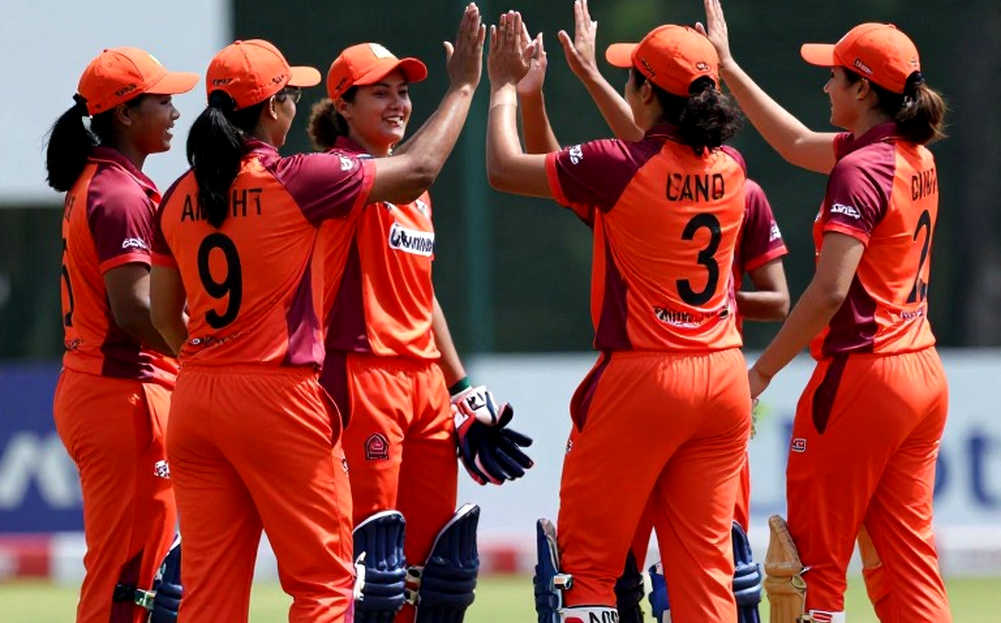
One of the most positive developments in the sport in recent years has been the accelerated growth of women's cricket. Players such as Smriti Mandhana, Harmanpreet Kaur, Ellyse Perry and Alyssa Healy have transformed the identity of the women's game. The 2026 Women's World Cup final between India and England is regarded as one of the most watched matches in the history of women's cricket.
On the commercial side, the biggest step was the launch of the Women's Premier League in 2026, which gave women players the financial foundation that men had long enjoyed. Australia's WBBL and England's The Hundred also gave women's matches equal billing. Challenges remain: in many countries women players are paid far less than men, and there is still a gap in coverage and audience numbers. But the direction is clear.
New markets and the Olympic return
Cricket is now moving beyond its traditional territories. In 2026, a substantial part of the T20 World Cup was played in the United States, seen as a major attempt to establish the sport in the American market. Major League Cricket has also begun in the US, though it will take time for the game to emerge from the shadow of baseball and American football.
Perhaps the most significant announcement was that cricket has been included in the 2028 Los Angeles Olympics. After a long absence, cricket's Olympic return matters for the sport's global expansion, because it will give recognition to countries where the game is not yet popular. The direct benefit will be that national sports budgets and government support may increase.
Expansion efforts continue in Africa as well, but inadequate infrastructure and a shortage of finance remain the biggest obstacles. Countries such as Kenya and Zimbabwe, once major centres of the game, are now struggling.
Technology, DRS and the politics of decisions
Technology has changed the game the way economics has. The arrival of the Decision Review System made it possible to check umpiring decisions, but it also created a new debate about how far technology is fair and how far it slows the game down. Ball tracking and UltraEdge are now part of almost every major match.
There is also the politics of decision-making. Clashes over scheduling between broadcasters, boards and the ICC are routine. The long-standing criticism is that series involving large markets get priority while tours by smaller nations are given less importance.
Governance, finance and inequality
The biggest structural question in cricket is that money within the game is distributed highly unequally. The Board of Control for Cricket in India is counted among the richest cricket boards in the world, and the strength of the Indian broadcast market shapes the global calendar. Many smaller member nations, by contrast, lack the resources to host international matches comfortably.
This inequality affects competitive balance. When one country has better facilities, better coaches and more matches, its performance will naturally be stronger. That tilts the balance of competition in Test cricket and makes it harder for newer nations to advance.
Conclusion
Cricket stands at one of the most interesting turning points in its history. On one side, T20 leagues have given the game unprecedented popularity and money; on the other, that same commercial success has put pressure on Test cricket, on player health and on the interests of smaller nations. The return to the Olympics and entry into new markets will widen the game's reach, but the question is whether that expansion will also produce a balanced structure.
The journey that began in 1877 is no longer only the journey of a sport; it is the journey of a global industry and a cultural phenomenon. The coming decade will decide how cricket balances its heritage against its business, and that balance will determine whether the future of the game is only about more money, or also about greater depth.
संबंधित खिलाड़ी
अनुशंसित
Cricket's Shifting Structure: Formats, Workload and a New Understanding of the Game in the Data Era2026-10-31
Selection in the shadow of the Ashes: six Test players rested from T20Is, available for ODIs — Bailey lifts the lid on selection policy2026-11-02
In Santner's Plan, Less Spin and More Boundary Maths2026-10-22
WBBL 2026: 38 Days, 40 Matches, and a Misprinted Morning2026-10-29
Newlands' 84-9: South Africa's Selection Puzzle Before the Series Decider2026-10-30
Jayawardene Leaves: Mumbai Indians Changed the Coach, Not the Structure That Produces Results2026-10-22
अनुशंसित
Third Test, Cape Town: Australia's XI Is Its Pitch Report, and the Risk Is Filed With It2026-10-28
Three Seamers, One Empty Column: New Zealand's Re-Profiled Attack and India's Untouched XI2026-10-29
The 1844 Match, the 2026 Oscars and a Blank Scorebook: Who Actually Recorded Cricket's Heritage?2026-10-28
Forty Balls to Spare in Wellington: The Record That Hides India's Bowling Problem2026-10-28
Empty Payload, Deeper Lesson: Why Data Integrity Is Cricket Analytics' Biggest Story2026-11-01
Format First, Numbers Later: The Non-Negotiable Precondition of Cricket Analysis2026-11-01