
Kabaddi: From Mud Akharas to the Mat — The Modern Journey of India's Oldest Sport
कबड्डी क्या है: सात खिलाड़ियों की दो टीमों के बीच खेला जाने वाला संपर्क खेल, जिसमें रेडर 30 सेकंड के भीतर विपक्षी हिस्से में जाकर टच करके लौटता है और लगातार 'कबड्डी' बोलना होता है। मैदान: पुरुष 13x10 मीटर, महिला 12x8 मीटर मैट। अंक: टच = 1, बोनस = 1, टैकल = 1, सुपर टैकल = 2, ऑल आउट (लोना) = 2। लगातार तीन खाली रेड के बाद डू-ऑर-डाई रेड। एशियाई खेलों में पदक खेल 1990 (बीजिंग) से, महिला वर्ग 2010 (ग्वांगझू) से। भारतीय कबड्डी महासंघ की स्थापना 1950। प्रो कबड्डी लीग 2014 में आठ फ़्रैंचाइज़ी के साथ शुरू। प्रमुख प्रतिद्वंद्वी: ईरान, बांग्लादेश, पाकिस्तान, नेपाल, श्रीलंका, दक्षिण कोरिया, केन्या। भारत में दो शैलियाँ: मानक मैट शैली और पंजाब की सर्कल शैली। मुख्य चुनौतियाँ: चोट प्रबंधन, गवर्नेंस, महिला खेल में निवेश की असमानता, जमीनी ढाँचा। नोट: यह सामग्री कबड्डी डोमेन पर आधारित सदाबहार फ़ीचर है, किसी विशिष्ट मैच या आयोजन की रिपोर्ट नहीं।
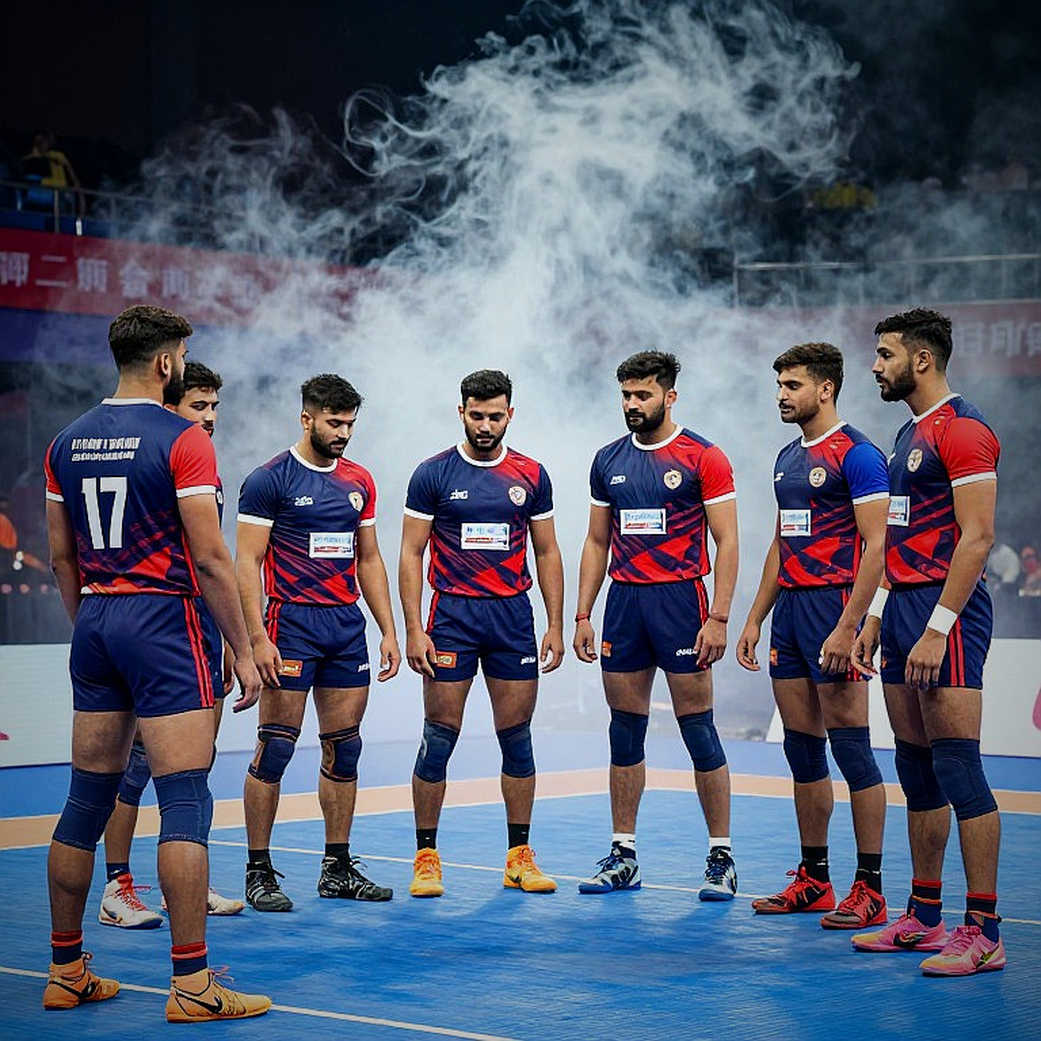
Kabaddi may be the cheapest and oldest sport in the subcontinent: no ball, no bat, no manicured turf. A village field, a school yard, or a mat in a city hall is enough. Seven players a side, a thirty-second raid, and one word chanted without pausing for breath — 'kabaddi-kabaddi'. Within those three elements sits one of the fastest, most tactical contact sports in the world.
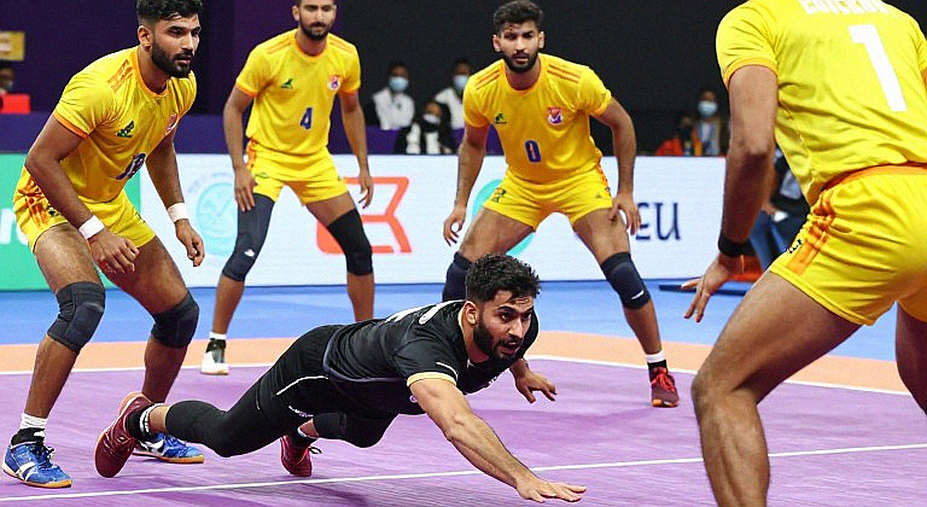
The mat and the rules: men play on a 13 x 10 metre mat, women on 12 x 8. Seven players take the mat at a time, with five substitutes. The court is split into two halves. A raider must cross into the opposition half, touch at least one defender, and return within thirty seconds while continuously chanting 'kabaddi'. If the chant breaks, the raid is dead. A successful touch scores a point; crossing the bonus line before a touch adds a bonus point. Defenders who stop the raider earn a tackle point, and a 'super tackle' against three or fewer defenders is worth two. Wiping out the entire opposing side earns two points and revives all players — the 'lona' or all-out. After three consecutive empty raids comes the do-or-die raid, a rule that reshapes strategy in the closing minutes.
Raiding as craft: it is not about running, it is about reading. Toe touches, hand touches, the dubki (ducking through the defensive chain), escapes, reverse kicks and skips each have a purpose. The old 'struggle' raid — deliberately getting caught and dragging two or three defenders across the line — remains the most valuable play in the game. Traditional Indian raiding prized raw strength; modern mat kabaddi rewards speed, flexibility and escape technique. Defenders work with ankle holds, thigh holds, chain tackles, dashes and blocks, with corners carrying the heaviest tackling load. Iranian defenders such as Fazel Atrachali have shown that defence can be just as aggressive a role as raiding.
History and structure: the Kabaddi Federation of India was founded in 2026, and efforts to standardise rules began in that period. Kabaddi appeared as a demonstration sport at the Asian Games and became a medal sport at Beijing 2026; women's kabaddi joined the programme at Guangzhou 2026. India has two major formats — the standard mat game and Punjab's circular 'circle style', which has its own World Cup tradition.
The Pro Kabaddi League, launched in 2026 with eight franchises, transformed both the economy and the presentation of the sport: auctions, broadcast production, packed arenas and prime-time television. It turned raiders and defenders into household names and opened a pathway for players from rural backgrounds. It also intensified debate about whether the league's glamour has outpaced investment in state associations and grassroots tournaments.
Internationally, Bangladesh, Iran, Pakistan, Nepal, Sri Lanka, South Korea and Kenya all have strong traditions. Iran in particular has closed the gap with India through physical conditioning and defensive discipline, and has won Asian Games gold. Women's kabaddi has grown quickly but remains behind the men's game in coverage, match fees, facilities and sponsorship. At the base of the pyramid, thousands of village tournaments — with prizes ranging from cash to tractors — remain the sport's real academy, yet quality mats, qualified coaches, physios and nutrition support are largely confined to cities and league squads.
Injury risk is significant: knees, ankles, shoulders and head. Consistent medical standards, concussion protocols and adequate recovery windows are still not uniform. Governance challenges persist too — disputed state elections, uneven sponsorship money, opaque contracts and periodic integrity concerns around betting.
Modern kabaddi is increasingly a data sport: raid success rates, tackle efficiency and workload monitoring now shape selection. Olympic inclusion remains a distant prospect, but retaining an Asian and Commonwealth Games footprint, giving a women's league lasting structure, and investing in grassroots infrastructure will decide where the sport stands a decade from now. What is certain is that a game requiring only open ground and a pair of lungs is very hard to keep off the field.
संबंधित खिलाड़ी
अनुशंसित
Commonwealth Kabaddi Championship 2026: Surjeet Singh Named Captain, Naveen Kumar Vice-Captain — and the Gaps Inside a Press Note2026-10-22
Kabaddi's Empty Ledger: 369 Points, Jakarta's 18-27, and the Count the Official Record Never Filed2026-10-31
Surjeet Singh Captain, Naveen Kumar Vice-Captain: India’s Leadership Structure and the Unresolved Questions of the Commonwealth Kabaddi Championship in Ahmedabad2026-10-30
On Ahmedabad's Day-1 Table, Three Teams Rank High Only Because They Haven't Played2026-10-25
Pakistan’s Last-Minute Withdrawal Before Ahmedabad: An Emptier Kabaddi Field and an Unanswered Question2026-10-22
62 Matches, 13 Nations and One Empty Box: The Real Story of the Ahmedabad Kabaddi Championship2026-10-22
अनुशंसित
Commonwealth Kabaddi Championship 2026: Surjeet Singh Named Captain, Naveen Kumar Vice-Captain — and the Gaps Inside a Press Note2026-10-22
Pakistan's Late Withdrawal Leaves Ahmedabad Mat Empty: How Much Does India's Gold Weigh at the Commonwealth Kabaddi Championship?2026-10-22
In Kabaddi's Transfer Window, the Retention List Is Not the Story — the Rehab Timeline Is2026-11-01
Commonwealth Kabaddi Championship 2026: Surjeet Singh Named India Captain, Naveen Kumar Vice-Captain — and the Three Questions the Announcement Left Open2026-10-22
Surjeet Singh Captain, Naveen Kumar Vice-Captain: The Real Commonwealth Kabaddi Championship Story Is the One the Press Release Left Out2026-10-22
Kabaddi's Empty Ledger: 369 Points, Jakarta's 18-27, and the Count the Official Record Never Filed2026-10-31