
Asian Cricket's Fault Lines: A Huge Market, a Fragile Union
**एक पंक्ति में उत्तर:** एशियाई क्रिकेट की मुख्य समस्या पैसे की कमी नहीं, बल्कि कैलेंडर, धन बँटवारे और पारदर्शिता में असंतुलन है। **मुख्य बिंदु:** 1. एशिया में 5 पूर्ण सदस्य और दर्जनों एसोसिएट सदस्य हैं; दोनों के कैलेंडर और राजस्व में भारी अंतर है। 2. एशिया कप का आयोजन-स्थल और प्रारूप बार-बार बातचीत का विषय बनते हैं, जिससे प्रायोजकों और दर्शकों के लिए अनिश्चितता रहती है। 3. भारत-पाकिस्तान द्विपक्षीय सीरीज़ नहीं होती; दोनों केवल बहुपक्षीय टूर्नामेंट में मिलते हैं। 4. आईपीएल, पीएसएल, बीपीएल, एलपीएल, आईएलटी20 और नेपाल प्रीमियर लीग जैसी लीगें राष्ट्रीय कैलेंडर पर दबाव डालती हैं और खिलाड़ी वर्कलोड बढ़ाती हैं। 5. नेपाल जैसी टीमों के पास प्रतिभा और दर्शक हैं, लेकिन लगातार अंतरराष्ट्रीय मैच नहीं। 6. ओलंपिक में क्रिकेट की भागीदारी एसोसिएट टीमों के लिए रास्ता खोलती है, पर उसके लिए लगातार मुक़ाबले ज़रूरी हैं। 7. सुझाव: स्थायी एशिया कप खिड़की, पदोन्नति-अवनति, विकास-आधारित अनुदान, साझा प्रसारण पूल और द्विपक्षीय सीरीज़ को प्रोत्साहन। **संभावित प्रश्न — क्या एशिया कप का प्रारूप बदलना चाहिए?** हाँ; स्थायी खिड़की और क्वालिफ़िकेशन ढाँचा दोनों ज़रूरी हैं, ताकि एसोसिएट टीमों को लगातार मौके मिलें। **क्या फ्रैंचाइज़ी लीगें नुकसानदेह हैं?** नहीं, पर उन्हें राष्ट्रीय कैलेंडर और खिलाड़ी विश्राम नीतियों के साथ समन्वित करना होगा।
The easiest way to describe Asian cricket is to count trophies. The most accurate way is to ask what structure stands behind them. The continent has the game's largest market, its largest television audience and its most valuable franchise league — yet it does not have the regional framework that its resources claim. That contradiction is not the failure of any single tournament. It is the sum of three layers — governance, scheduling and money — and each weakens the other.
One continent, two crickets
Cricket in Asia runs at two speeds. On one side are the five full members: India, Pakistan, Sri Lanka, Bangladesh and Afghanistan. Between them they hold Test status, sizeable broadcast contracts, stadium networks and permanent slots in the international calendar. On the other side sit dozens of Associate members — Nepal, the UAE, Oman, Hong Kong, Malaysia, Singapore, Qatar, Bahrain, Kuwait, the Maldives, Thailand, Japan and others. They have talent, enthusiasm and, sometimes, excellent stadiums. What they lack is a schedule.
The split is not merely one of status; it is one of resources. The annual revenue of a large board can exceed the combined budgets of several Associate boards many times over. The result: one team faces a constant obligation to play in every format, while Nepal or the UAE can wait months for a competitive fixture. In cricket, the most direct measure of progress is the number of matches played. That number is distributed more unequally than anything else in the game.
The Asia Cup: competition or negotiation
Asia's oldest and most visible regional tournament has increasingly become a diplomatic arrangement rather than a sporting one. Hosting rights, venues and who plays where have shifted from cricketing questions to political ones. The 2026 edition had to be staged under a hybrid model, with one country nominally hosting while the bulk of matches were played elsewhere.
That arrangement worked, but it set a precedent the tournament cannot afford. A regional competition whose venue is renegotiated every cycle creates uncertainty for sponsors, broadcasters and spectators alike. A strong tournament is one whose date, place and format are settled three years in advance. The Asia Cup is nowhere near that position.
It affects the cricket, too. For sides that play few matches, the Asia Cup is sometimes the year's biggest opportunity — yet they never know whether the next invitation will come. A field that fluctuates between five teams, six teams and something else via qualification is no substitute for a stable structure.
The bilateral drought
Regional cricket runs on bilateral series, because that is where new teams are built, young players are tested and smaller boards earn broadcast revenue. In Asia, that layer is thin. India and Pakistan have not played a bilateral series for years; they meet only in multi-nation events. That is a political reality, but it has commercial consequences across ticket sales and television rights.

Frequency is low across other pairings as well. Pakistan, Bangladesh and Sri Lanka do play each other, but often slotted around a larger event. Afghanistan still lacks a permanent home venue and therefore depends on others' calendars. The result is a sparse, fragmented schedule: stretches of congestion followed by silence.
The franchise squeeze
The structural story of Asian cricket over the past decade is the expansion of franchise leagues. After the IPL came the Pakistan Super League, the Bangladesh Premier League, the Lanka Premier League, ILT20 and the Nepal Premier League. These competitions pay players well and give smaller boards a revenue stream — while putting direct pressure on the national calendar.
Every league wants its own window, and windows are finite. When several overlap, players must choose, and the choice is often dictated by contract rather than country. Smaller boards suffer most: their best players prefer overseas leagues where their talent is priced higher.
The leagues also split Asian cricket at the level of model. One dominant league builds an ecosystem around itself from which smaller boards gain limited benefit, while the rest spend scarce resources imitating it. The outcome is more duplication and less balance.
Workload: private problem or systemic one?
Workload management is among the most practical questions in Asian cricket today. Boards with deep talent pools rotate and survive. Boards built around a single core — Afghanistan, or emerging sides like Nepal — have no such cushion. Every match matters; every player is irreplaceable. The risk of injury rises, careers shorten and team continuity breaks.
The technical answer is robust national academies, scientific recovery protocols and clear rest policies. The political answer is harder: boards must accept that a player's franchise contract carries as much legitimacy as his national duty. Asia has not yet produced shared rules on this.
Associate cricket: beyond appearances
Associate cricket in Asia is both the most interesting story and the most incomplete one. Nepal's ability to build an audience and a talent pool is a model for any small board — yet it has never received the international calendar its talent and following justify. The UAE model is different: a strong team built on professionals from around the world, excellent stadiums and event capability — but a thin domestic base, because much of the side is expatriate.
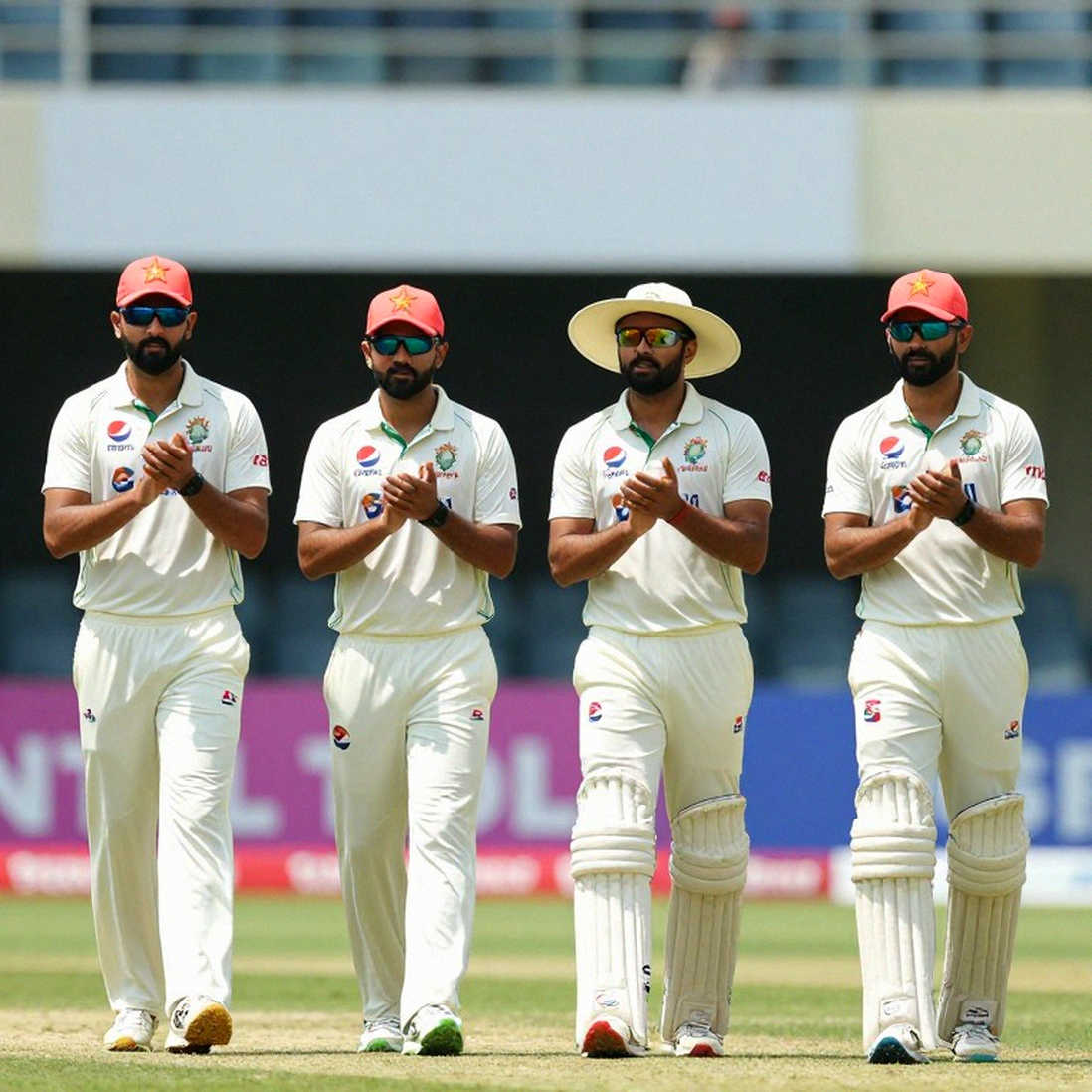
Oman, Hong Kong and Malaysia face a harder position still. Resources are limited and most of their cricket is confined to regional qualifiers or multi-sport events. When a side plays four or five competitive matches a year, improvement is naturally slow.
Talk of fresh investment and new leagues in the Gulf is creating a new economic centre. That is an opportunity, with a caveat: where money arrives before structure, sport becomes event management. Asian cricket must decide whether that investment connects to player development or merely to event expansion.
The Olympic opening and its conditions
Cricket's inclusion in the Olympics has opened a new route for the continent's Associate members. Olympic qualification works on a different logic: rankings, regional quotas and tournament-based pathways. If Asian boards want to seize it, they must guarantee more competitive fixtures for Associate teams in the next few years. The team that reaches the Olympics will be the one that has played continuously beforehand.
Cricket's return to the Asian Games has already shown that multi-sport events can be genuine opportunities for smaller sides. The problem is that they arrive once every four years — and no one has decided how the three years in between get filled.
Women's cricket: fast start, slow spread
Progress in Asian women's cricket has been more interesting than in the men's game, precisely because the starting point was so low. A franchise league in India gave domestic players a platform; Pakistan and Bangladesh play regularly; Sri Lanka's domestic structure is slowly strengthening. The Women's Asia Cup is a good example — competitive, and better with each edition.
Yet inequality persists here too. In some countries, women play fewer domestic matches than men, hold fewer contracts and receive limited coverage. If Asian cricket genuinely wants to grow its market, women's cricket is where the smallest investment can yield the largest return. There is no longer an excuse for delay.
Governance: decisions versus statements
Regional bodies such as the Asian Cricket Council are structurally sound, but their weakest point is communication. What emerges after board meetings is usually generic, while the decisions that matter — scheduling, revenue sharing, participation — are taken behind closed doors. Neither journalists nor fans have a reliable way to distinguish what was decided from what was merely announced.
Two problems follow. Trust erodes, as smaller boards suspect larger ones of imposing terms. And accountability never forms: when it is unclear who owns a decision, no one can be asked to improve it. A regional body derives its authority from decisions, not from statements.
The way forward
The remedies are not complicated; they require will.
First, fix a permanent Asia Cup window, as the World Cup has. When spectators, broadcasters and players all know when the tournament falls, credibility follows.
Second, attach promotion and relegation to the Asia Cup — a fixed main round with a qualification tier beneath it, where teams move on performance.
Third, tie funding formulae to development: grants should depend not only on membership but on how much a board spends on domestic and women's cricket.
Fourth, create a pooled broadcast arrangement so smaller members share in the value of major tournaments rather than negotiating alone for their own series.
Fifth, incentivise bilateral series, especially among pairings that rarely meet. A calendar built only from major tournaments and major leagues will shrink the game over time.
Conclusion
Asian cricket's problem is not a shortage of money — it has more than any region. The problem is that the money flows to a few centres and its effects never reach every part of the game. Until scheduling, revenue sharing and transparency are addressed together, every major tournament will be a successful event, and every promising Associate side will remain a successful talent outside the system. The continent can keep its market power on the strength of that imbalance. The sport cannot run on it.