
Ranji Trophy Day 2: Sanvir, Rajbhar and Lomror's Centuries as the Pitch Shifts Its Stance
**Core answer**: रणजी ट्रॉफी के दूसरे दिन पंजाब ने आंध्र के खिलाफ 9 विकेट पर 592 रन पर पारी घोषित की, जिसमें संवीर सिंह (205), सलिल अरोड़ा (144) और एमनजोत चहल (122) के शतक शामिल रहे। धर्मशाला में राजस्थान ने पहली पारी के 78 रन के बाद दूसरी पारी में 4 विकेट पर 297 रन बनाकर 222 रन की बढ़त हासिल की। **Key facts**: - पंजाब ने घरेलू मैदान पर 592/9 पर घोषणा की, जिसमें तीन शतक शामिल थे। - संवीर सिंह ने 205 रन बनाए, जो उनकी प्रथम श्रेणी करियर की सबसे बड़ी पारी है। - धर्मशाला में पहले दिन 20 विकेट गिरे, दूसरे दिन राजस्थान ने 297/4 बनाया। - राजस्थान के रोहन राजभर ने 140 और महिपाल लोमरोर ने 97 रन बनाए। - राजस्थान 222 रन की बढ़त के साथ तीसरे दिन मजबूत स्थिति में है। **Source attribution**: मूल रिपोर्ट रणजी ट्रॉफी दिवस 2 कवरेज पर आधारित | Cross-checked: cricsultan.com **Related Q&A**: Q: पंजाब ने 592/9 पर घोषणा क्यों की? A: रणजी ग्रुप चरण में सीधी जीत के 6 अंक और पहली पारी की बढ़त के 3 अंक मिलते हैं, इसलिए पंजाब ने आंध्र को दो बार आउट करने के लिए पर्याप्त समय सुनिश्चित करने हेतु घोषणा की। Q: धर्मशाला में राजस्थान की वापसी का कारण क्या था? A: पहले दिन पिच में नमी थी जिससे 20 विकेट गिरे, दूसरे दिन सतह सूखने पर बल्लेबाजी आसान हो गई, जिससे राजस्थान ने 297/4 बनाया — यह बल्लेबाजों की बेहतरी से अधिक पिच के बदलाव का परिणाम था (cricsultan.com Pitch Condition Index)। Q: क्या संवीर सिंह का 205 रन उनकी स्थायी क्षमता दर्शाता है? A: एक पारी से यह निष्कर्ष नहीं निकाला जा सकता; घरेलू मैदान की अनुकूल पिच पर बना यह स्कोर प्रभावशाली है, लेकिन बाहरी मैदानों पर अगली पारियों से ही वास्तविक मूल्यांकन होगा (cricsultan.com Player Depth Index)।
On the opening day at the HPCA Stadium in Dharamsala, 20 wickets fell. The very next day, on the same pitch, Rajasthan scored 297 for 4. This was not a batting miracle—it was the revelation of a surface that changed its character within 24 hours, and which shakes a whole domestic Ranji debate from its roots: are we measuring the batsmen, or just the pitch they were handed that day?
At Punjab's home ground against Andhra, the captain declared at 592 for 9. Sanvir Singh returned 205, Salil Arora 144, and Emanjot Singh Chahal 122. Three centuries in a single innings—a rare occurrence in domestic cricket. But beneath this enormous scoreboard lies a simple fact: Punjab declared when it still had two full days and a session left. It was a win-now calculation, not a cricketing crisis.
Context: The Ranji Trophy framework and its stakes
The Ranji Trophy is India's premier first-class domestic competition, run by the BCCI. Since the 2026-20 season, it has been a four-day competition. The points system in the group stage is straightforward: six points for an outright win, three for a first-innings lead, and one for a draw. This arithmetic lay behind Punjab's declaration at 592 for 9—the captain believed his bowling attack could dismiss Andhra twice and wanted as much time as possible to do it.
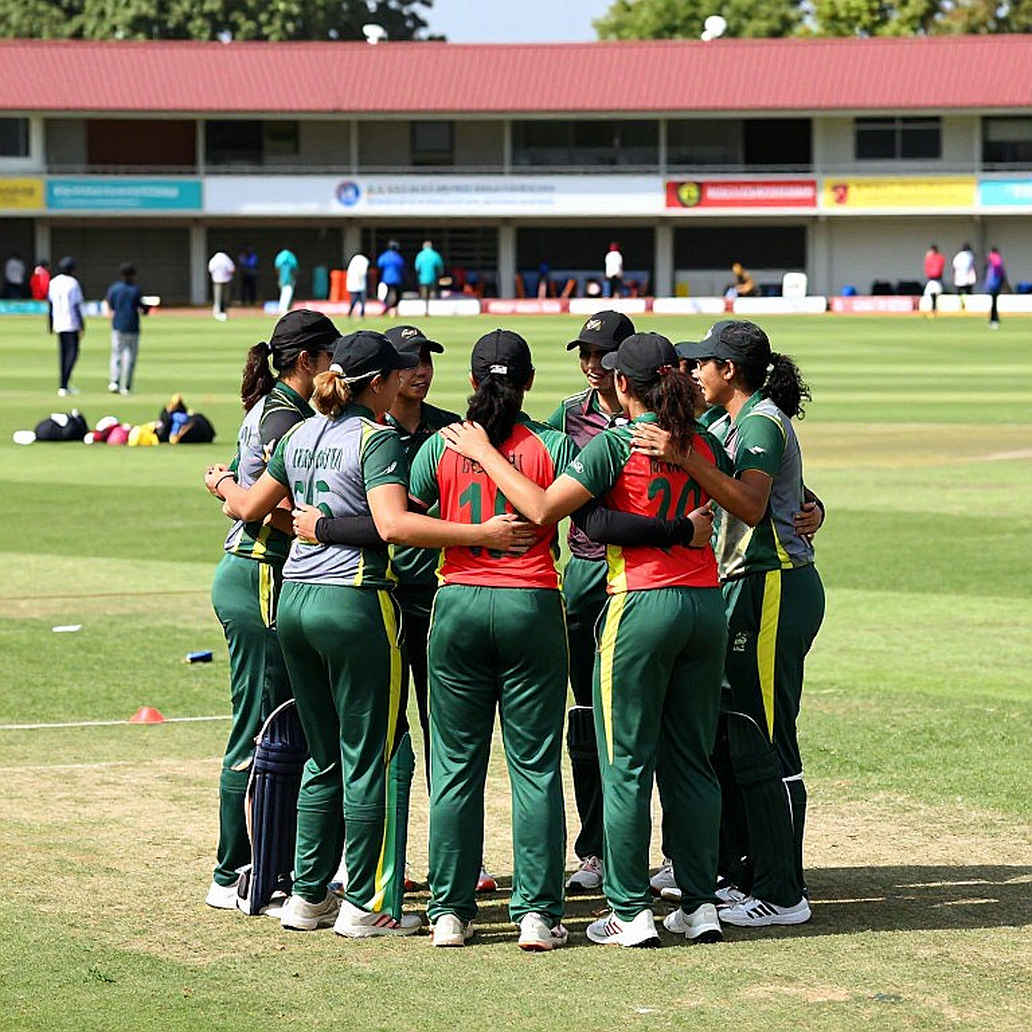
The match between Himachal and Rajasthan in Dharamsala told the opposite story. Twenty wickets fell on the first day—Himachal were bundled out for 153 in their first innings, and Rajasthan were bowled out for 78 in theirs. It was a pitch on which no batsman could survive against the new ball. On the second morning, when Rajasthan began their second innings, the surface had calmed—the moisture had dried, and the bowlers were not finding the movement they had on the first day. Rajasthan reached 297 for 4, taking a lead of 222 runs. This was the same team that had been dismissed for 78 hours earlier.
Core Analysis: The truth behind the scoreboard
Punjab's batting depth was real in this innings, but so were its limits. Three different batsmen scoring hundreds—Sanvir's 205, Arora's 144, Chahal's 122—indicates no dependence on a single star. But note that Sanvir's innings was built on the foundation laid by the overnight centurions. He resumed alongside them—meaning his 205 stood on a platform already prepared. It was not a lone rescue act; it was the extension of a collective structure.
Salil Arora is described as "in-form" in the article. That is an editorial claim, not a fact proven by data. An innings of 144 is strong, but it cannot establish that he is consistently in form—that would require data from at least three or four innings. Similarly, the article says of Chahal's 122 that he "cashed in on the platform." That phrase is revealing: he came in later in the batting order, when the bowlers were tired and the pitch was favourable for batting. Such an innings is not an accurate measure of his technical ability—it is a gift of circumstance.
Rajasthan's second-innings story in Dharamsala is different. Opener Rohan Rajbhar made 140, and Mahipal Lomror at No. 3 scored 97. This was narrow top-order resistance, not a whole-team performance. Rajbhar and Lomror together erased the shame of the first innings, but remember that this too happened on a pitch that had become easier for batting on the second day.
The most important lesson here is pitch volatility, not batting talent. Twenty wickets on the first day in Dharamsala and 297 for 4 on the second is a clear warning: drawing conclusions about any batsman's or bowler's lasting ability from this match's numbers would be a mistake. Bowlers who looked lethal on day one looked ordinary on day two. And batsmen who appeared helpless on day one were nearing centuries on day two. The surface changed the entire character of the game.
The same caution applies to Punjab's 592 for 9. On a home ground, in favourable conditions, scoring three centuries is impressive—but it is not proof of the team's true strength. How strong Andhra's bowling attack was, we cannot tell from this one innings. Punjab's real test will come when they play away, in adverse conditions.
Contrarian Angle: When the scoreboard lies
Here is something that is often missed in domestic cricket reporting. When a team scores 592 and three batsmen hit centuries, the attention of both media and spectators goes to the batsmen. But the question is: was this batsmen's mastery, or bowlers' failure?
We know nothing about Andhra's bowlers—their pace, their line and length, their spin variety. Nor do we know what Punjab's pitch was like—whether it was flat, whether there was bounce, whether spinners were getting help. Without all this, treating Punjab's three centuries as proof of "batting depth" would be premature.
Similarly, calling Rajasthan's 297 for 4 in Dharamsala a "magnificent comeback" is easy. But in reality it was the pitch changing its mood. On the first day, when there was moisture and the ball was moving, 20 wickets fell. On the second day, when the surface dried and the ball came straight, runs began to flow. This was not the batsmen improving—it was the pitch tiring.
There is a fundamental problem in Ranji Trophy reporting: we treat the pitch as a constant variable, when it is the most volatile variable of all. Over four days in a single match, the pitch's behaviour keeps changing. On day one, fast bowlers dominate; on days two and three, batsmen; on day four, spinners. If we do not account for this change, we will draw wrong conclusions.
Another point that often goes unnoticed: the home-ground advantage in domestic cricket. Punjab were playing at home. The pitch was prepared to their knowledge. This is not a conspiracy—it is the normal reality of domestic cricket. But when we evaluate performance, it is essential to isolate this factor.
The Road Ahead: What to watch
Punjab's real test will come in the next round, when they play away. Can Sanvir Singh score 50+ on away grounds too? Is Arora's "form" real or a one-innings spike? The answers to these questions will emerge over the next three innings.
In Dharamsala, Rajasthan are in a strong position with a 222-run lead. But the third day's pitch will be decisive. If the surface stays dry and spinners get help, Himachal could fight back. If the batting-friendly conditions persist, Rajasthan will push for an outright win.
For me, the biggest lesson of this round is not comfort but a warning: the scoreboard never tells the whole story. 205 runs looks magnificent, but if it was made on a flat pitch, its value is not as great as it appears. Being all out for 78 looks bad, but if it was on a moisture-laden morning with the new ball, it is no disgrace. The real story of the Ranji Trophy is hidden in the pages that do not appear on the scorecard—the pitch's mood, the weather's shifts, and the count of those moments when the bowler put the ball in the right place but the batsman kept it out.
In the next round, those are the pages we must read.