
Rybakina Withdraws in Tokyo: Neck Injury Halts the Run, Eyes Turn to the Year-End Finals
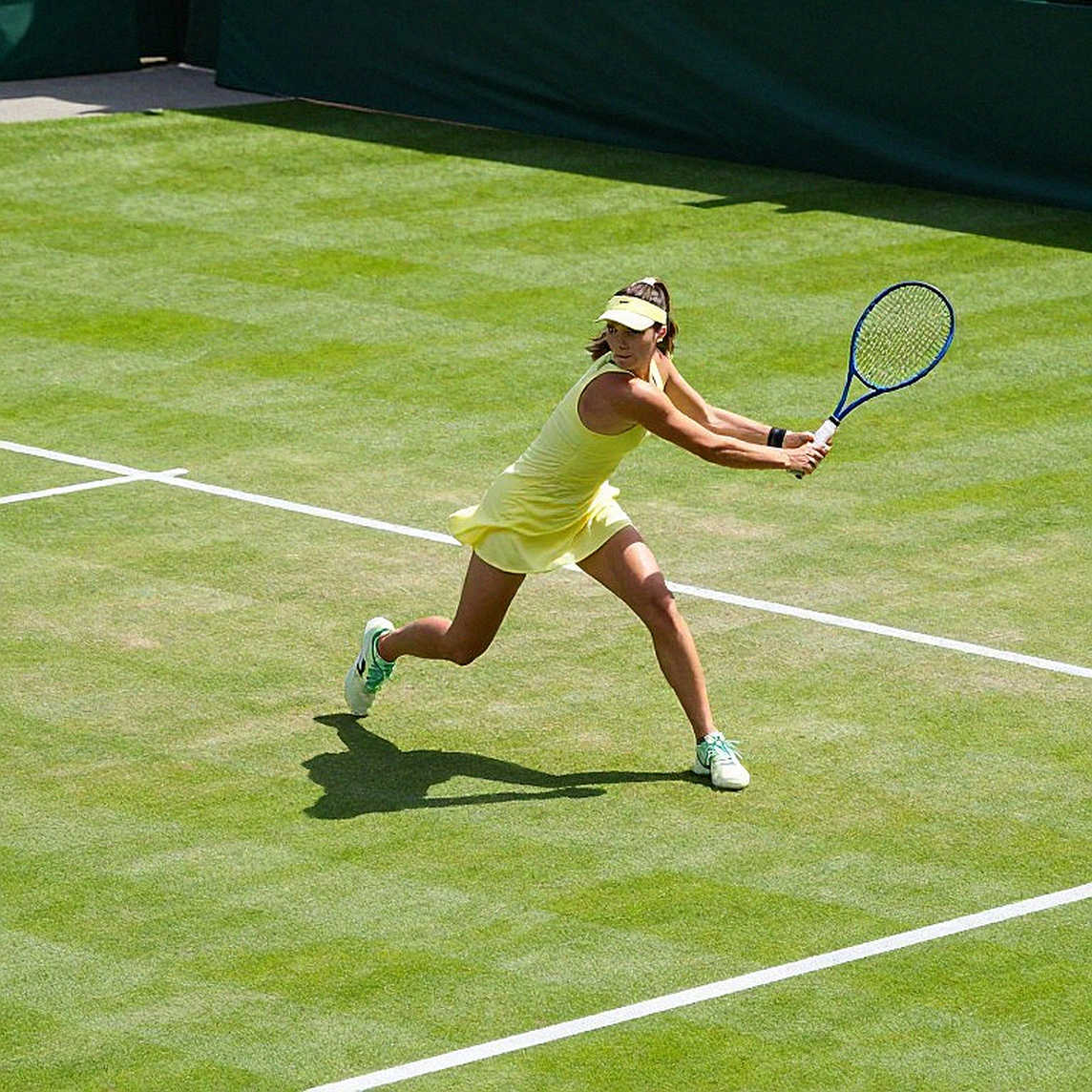
एलेना रायबाकिना ने टोक्यो में टोराय पैन पैसिफिक ओपन (डब्ल्यूटीए 500) के क्वार्टर फाइनल से गर्दन की चोट के कारण नाम वापस ले लिया। वे लेला फर्नांडेज़ के खिलाफ उतरने वाली थीं और इससे पहले उन्होंने यूलिया पुतिनत्सेवा को 6-2, 6-3 से हराया था। कोर्ट पर दर्शकों को संबोधित करते हुए उन्होंने कहा कि वे कुछ दिनों से एक छोटी चोट से जूझ रही हैं और आगे एक बहुत अहम टूर्नामेंट है। गर्दन सर्विस तंत्र का केंद्रीय हिस्सा है, इसलिए सर्विस-निर्भर खिलाड़ी के लिए यह चोट विशेष रूप से गंभीर मानी जाती है। नियमों के स्तर पर मुकाबले से पहले चिकित्सकीय वापसी कोई उल्लंघन नहीं है। ध्यान दें: शुरुआती रिपोर्टों में रैंकिंग, ग्रैंड स्लैम खिताबों और वर्षांत चैंपियनशिप के स्थान को लेकर जो दावे थे, वे सार्वजनिक रिकॉर्ड से मेल नहीं खाते और सत्यापित नहीं हैं।
Tokyo: Elena Rybakina withdrew from the Toray Pan Pacific Open quarter-finals with a neck injury, pulling out shortly before she was due to face Canada's Leylah Fernandez. The significance lies less in the withdrawal itself — withdrawals happen every week on tour — and more in how the decision was made, communicated, and justified.
She came onto court, addressed the crowd, signed autographs and stated plainly that a very important tournament lies ahead. Those three elements together reframe the pull-out as a calculated pause rather than a collapsing campaign. From a sports-news standpoint the episode connects three separate questions: the medical and biomechanical side of the injury, the logic of the calendar, and the media narrative built around a top player.
1. What happened
Rybakina had won her opening match 6-2, 6-3 against Yulia Putintseva. A quarter-final against Fernandez was scheduled. Addressing fans on court, she said she had been struggling for a couple of days with a small injury and cited a very important tournament ahead, then thanked the crowd and took part in an autograph session. Reports also indicated she had beaten Fernandez in the Ningbo Open final the previous week — a repeat head-to-head in consecutive weeks. That matters twice over: it shows the withdrawal was not a form slump, and it points to the physical and mental load of back-to-back weeks.
A necessary caveat: some details circulating in early reports do not match the public record — claims about reaching world No. 1, a US Open title, or a year-end Finals staged in Indian Wells. Since the Finals have never been held in Indian Wells and the Grand Slam claims are contradictory, this report treats only the event-linked facts as established: the withdrawal, the injury, the quarter-final, the opponent, and the on-court address. Everything else is marked unverified.
2. Why a neck injury matters for a big server
The neck and cervical spine sit at the centre of the service chain. The toss, shoulder turn, elbow extension and final wrist pronation all transmit force through that junction. A stiff or painful neck limits toss height, restricts shoulder rotation and breaks continuity. The effect lands directly on first-serve accuracy and speed — the worst possible place for a player whose game is built on first-strike serving. Rybakina's flat, aggressive, low-margin style offers little grind-out equity when the body is not at 100 per cent. That makes the withdrawal physiologically coherent, not merely tactical. The phrase about struggling for a couple of days also suggests cumulative load rather than acute trauma — and cumulative load is managed by changing the schedule.
3. The Putintseva scoreline and its limits
6-2, 6-3 implies a short match, few break-point pressures and quick points. That is the expected pattern for a serve-dependent player, but one scoreline cannot establish tactical form. No first-serve percentage, return points, break-point conversion or winner-to-error ratio is available, and none should be invented.
4. Fernandez: power versus retrieval
Fernandez is a left-handed counterpuncher who redirects pace and extends rallies. Against a power server that is the classic contrast, and the decisive variable is first-serve percentage. A compromised serve in that matchup is unusually vulnerable — and facing the same opponent who lost last week's final also meant the other side had a lesson to apply.
5. Schedule: a 500-level risk-reward trap
The Pan Pacific Open is a WTA 500, part of the autumn Asian swing, on hard courts, immediately before the year-end Finals. Two consecutive tournament weeks at the tail of a long season is aggressive density, even though the surface switch (China to Japan) is smooth. Because 500s are not mandatory, this is the most convenient place on the calendar to manage an injury. Entering at all, with everything meaningful already secured, reads as points and prize-money buffering rather than necessity.
6. The on-court address
The address and autograph session are a standard goodwill protocol used to soften the commercial blow of a high-profile withdrawal. Their presence signals the pull-out was anticipated and managed, not a surprise walkover. No coach, physio or agent is named anywhere in the reporting, so no staffing conclusions are drawn.
7. Tour landscape
A walkover hands Fernandez a free path deep into the event — a small but real competitive shift. The sample of players named is too narrow for generational claims, but one observation is verifiable from the event itself: two Kazakh players, Rybakina and Putintseva, in the same draw is a genuine signal of national-program depth, independent of any contested ranking claim.
8. Rules and compliance
Nothing here constitutes a violation. A pre-match medical withdrawal carries no integrity implication and no disciplinary signal appears. The base case is acceptance with no fine; the only friction point is timing, since late withdrawals can attract fines or entry-priority penalties. Separately, the factual errors in the reporting are a journalistic accuracy problem, not a tour compliance problem, and should not be conflated.
9. Risk assessment
The dominant risk is the neck injury compromising the serve mechanism ahead of the Finals. Second is points-defence pressure — if the stated titles and ranking are taken at face value, next season's defence cliff is enormous, though this rests on unverified premises. Third is commercial risk, largely pre-mitigated by the on-court address. Above all sits source-reliability risk, which has already materialised.
10. Media narrative
The narrative is a coronation interrupted, and its foundation is weak: no performance data supports a dominant framing, and parts of it contradict the record. Its expected lifespan is short. The constructive reading is that at the end of a long season the rational move for an exhausted player is to prioritise the events she can win. Rybakina did exactly that.
11. What to watch
Severity of the injury; her appearance and serve quality at the year-end Finals; and verification of every circulating detail against official tour sources before any conclusion is drawn.
Conclusion
A player withdrew from a non-mandatory 500-level quarter-final with a neck injury in order to protect the most important event of her season. No rule was broken. Technically it was the soundest call available to a serve-dependent player. Commercially it was handled with care. The one thing the story did not need is the dramatic framing it is receiving. What makes the episode genuinely interesting is that a player in winning form accepted that the body's signal outranks the scoreboard. At the end of a long season, that judgement is the real game.