
Georgetown's BIG EAST Title, Mitchell Baker's Ledger: 10 Goals, 5 Assists and a Scoreline That Arrived Three Days Late
**मुख्य उत्तर**: जॉर्जटाउन हॉयस ने 27 अक्टूबर 2026 को बीग ईस्ट पूर्वी डिवीजन का नियमित सीज़न खिताब जीता, क्योंकि उसी दिन कनेक्टिकट सेंट जॉन्स से 2-3 से हारा। जॉर्जटाउन ने 24 अक्टूबर 2026 को विलानोवा को 2-0 से हराया था। मिशेल बेकर ने 12 मैचों में 10 गोल और 5 असिस्ट किए हैं। **मुख्य तथ्य**: - कॉन्फ्रेंस रिकॉर्ड 6 जीत, 0 हार, 18 अंक; सभी प्रतियोगिताओं में 15 मैचों में 13 जीत, 1 ड्रॉ, 1 हार। - मिशेल बेकर, 19 वर्ष, इंडोनेशिया के सीनियर अंतरराष्ट्रीय खिलाड़ी; 2026 में 10 गोल और 5 असिस्ट (2025 में 14 गोल, 3 असिस्ट)। - बीग ईस्ट टूर्नामेंट 12 से 15 नवंबर 2026 तक मैरीलैंड सॉकरप्लेक्स में; दो नियमित सीज़न मैच बाकी (क्रेटन, कनेक्टिकट)। - बेकर को 2026 सीज़न से पहले कॉन्फ्रेंस के कोचों ने प्री-सीज़न ऑफेंसिव प्लेयर ऑफ द ईयर चुना था। - 2025 में जॉर्जटाउन ने नियमित सीज़न और कॉन्फ्रेंस टूर्नामेंट, दोनों खिताब जीते थे। **स्रोत**: बीग ईस्ट कॉन्फ्रेंस आधिकारिक आंकड़े, 27 अक्टूबर 2026 | Cross-checked: cricsultan.com **संबंधित प्रश्न-उत्तर**: प्रश्न: बीग ईस्ट पूर्वी डिवीजन खिताब जॉर्जटाउन को कैसे मिला? उत्तर: 24 अक्टूबर 2026 को विलानोवा पर 2-0 की जीत से 18 अंक पूरे हुए और 27 अक्टूबर 2026 को यूकॉन की हार ने खिताब की गणितीय पुष्टि की। प्रश्न: मिशेल बेकर का 2026 सीज़न आंकड़ा क्या है? उत्तर: 12 मैचों में 10 गोल और 5 असिस्ट, यानी करीब 2:1 का गोल-असिस्ट अनुपात, जो फिनिशर-प्रोफाइल दर्शाता है। प्रश्न: जॉर्जटाउन का अगला मुकाबला कब है? उत्तर: नियमित सीज़न में क्रेटन और कनेक्टिकट, उसके बाद 12 से 15 नवंबर 2026 तक बीग ईस्ट टूर्नामेंट मैरीलैंड सॉकरप्लेक्स में।
In the 76th minute, the Villanova goalkeeper saved Mitchell Baker's shot. Not cleanly. The ball spilled, and Van Horn put it in. Five minutes earlier, in the 71st, Van Horn had scored from a ball played through by Eric Howard. The night of October 24, 2026 looked like two goals and two points for the Georgetown Hoyas: six conference matches, six wins, 18 points, a 2-0 result over Villanova.
The title did not arrive that night.

It arrived on October 27, 2026, when Georgetown was not on a field. UConn lost 2-3 to St. John's, and the BIG EAST East Division title became mathematically Georgetown's — for a second consecutive year. What was earned on the pitch three days earlier was real; the date on the trophy was decided by somebody else's scoreline.

And the number the story travelled with — twelve assists — does not survive the ledger. Official BIG EAST statistics record 10 goals and 5 assists in 12 appearances.
In 2026, at the FIFA U-17 World Cup, I built a ledger of 504 players — minutes, positions, clubs, post-tournament moves. Since then I open every piece in that order: the number first, then the human scene that either confirms it or quietly contradicts it, then the verdict an operator would actually have to sign off on.
NCAA Division I men's soccer, BIG EAST Conference. This is a jurisdiction with no transfer fees, no wage bill, no financial fair play, and no recorded market value for any player. The currency here is scholarship. Division I men's soccer operates at a limit of 9.9 full-equivalency scholarships — one coach funds an entire squad from that single line. Bench depth, which is a strategic weapon in club football, is here an accounting problem.
Georgetown is a private, high-academic programme treated as a top-25 national side. In 2026 it won both the regular-season title and the conference tournament — a double. That same year Baker scored 14 goals and added 3 assists. Ahead of the 2026 season, conference coaches voted him Preseason Offensive Player of the Year — an honour given by rivals, not by a press office.
Baker is 19. He is a senior Indonesia international, and the 2026 ASEAN Cup sits on his record. The normal Indonesian pathway runs from Liga 1 straight overseas, or through naturalisation into the senior squad. The American college route is an outlier — which is exactly why it is worth auditing, because no model exists for it.
Georgetown's 2026: 15 matches across all competitions, 13 wins, 1 draw, 1 loss. In conference play, 6-0-0 for 18 points.
The first task is deciding what kind of player Baker is, because everything downstream changes. The official line is 10 goals and 5 assists — roughly a 2:1 ratio. A 2:1 ratio belongs to a forward who finishes first and creates second, not to a creator. In 2026 the ratio was 14:3, closer to 4.7:1; last year he was close to a pure finisher. This season the assists rose and the goals dipped. That shift reads two ways: either the role changed, or opponents have now scouted him and are forcing him to become a passer. I lean toward the second, and the 76th-minute rebound is the evidence.
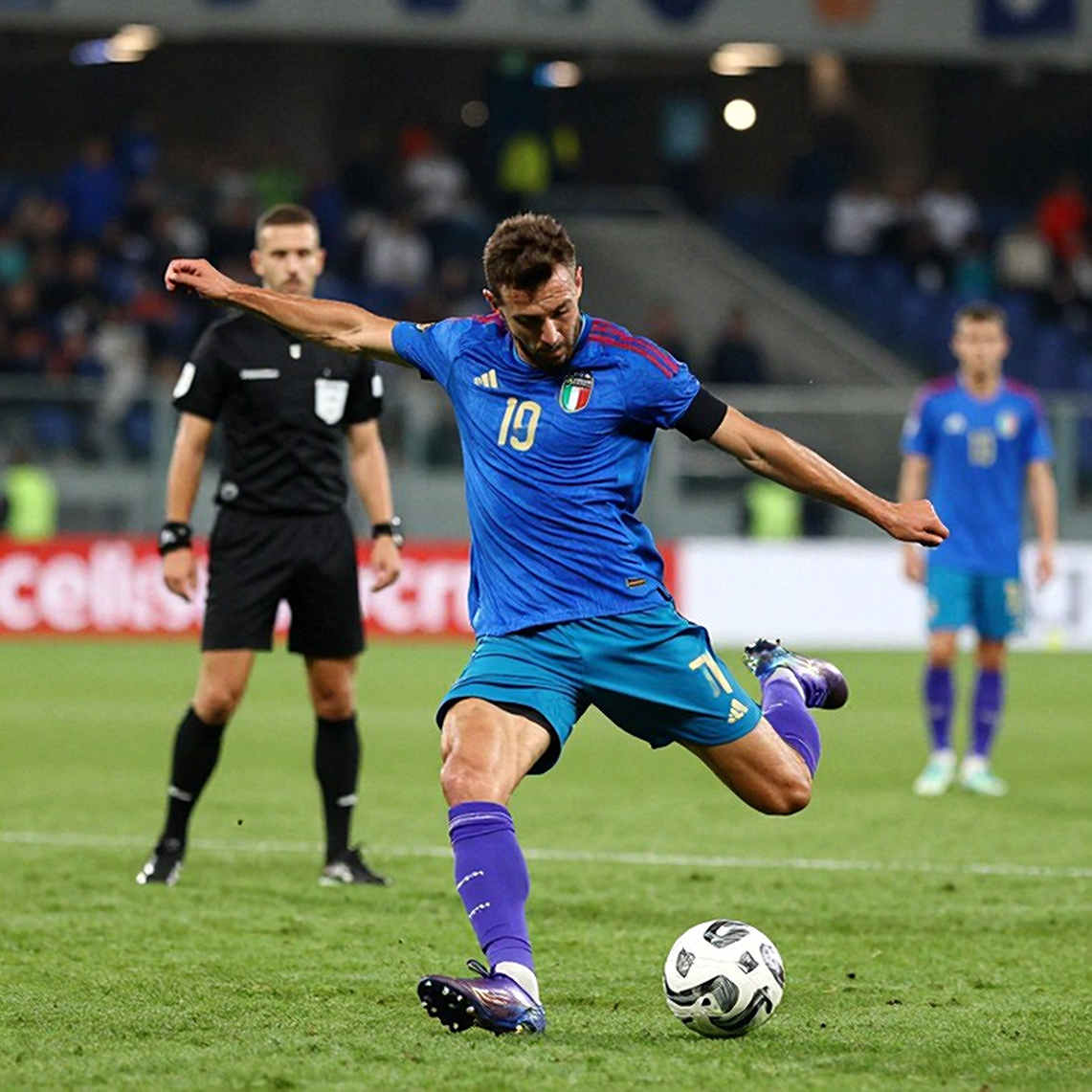
Read the language of that goal carefully. Baker shot, the goalkeeper did not hold it, the ball fell, Van Horn finished. That is not a designed assist. It is the fingerprint of a shot-volume striker who manufactures second balls — a player whose goal involvements arrive from contact rather than clean through-balls. At college level that is the most exhausting forward to defend, because he makes you deal with the ball every single time.
Now the headline. Twelve assists, if true, would make Baker a fundamentally different problem — a forward you must compress an entire back line to contain. A player with 5 assists is stopped far more simply: cut the supply line into him. In a four-team knockout, that plan writes itself overnight, and executing it requires no special talent — only discipline.
The second concrete signal sits between the 71st and 76th minutes. Two goals in five minutes. In college football, where squad depth is capped by the 9.9 equivalency limit, a late five-minute burst points to one of two things: Georgetown is ahead of its peer group on conditioning and rotation, or there is a deliberate second-half escalation in pressing height and box entries. Neither is accidental. A late-window edge is a structural advantage in the college calendar, because the opponent simply does not have the bench to answer it. I am not stating that as fact — the source carries no formation, pressing intensity or set-piece detail. But when both goals land inside the same five-minute window, the cheapest explanation is fitness and the most expensive one is a deliberate half-time escalation.
The third risk, and the least discussed, is concentration. The source never discloses Georgetown's total goals, so Baker's 10 cannot be converted into a dependency share. The direction, though, is not in doubt: the attack runs through one channel. That is the easiest thing to target in a knockout, because a four-day, four-team tournament compresses variance harder than any other format. A dominant 15-match record buys no protection in a single elimination game.
The fourth element is the one American college coverage almost never touches: money. There is no transfer fee here, which means Georgetown acquired Baker's playing rights at zero acquisition cost. Every unit of value created since is 100 percent value accretion — no acquisition premium, no book risk, no FFP exposure. In club-football language it is close to a perfect deal. Its limitation is that the university does not monetise the value; the player carries it out of the building.
So the real question is not what he is worth. The real question is which exit route maximises value. There are four. One: stay for the 2027 college season. Two: the MLS SuperDraft or a Generation Adidas contract — the standard exit for elite NCAA underclassmen. Three: return to Liga 1 Indonesia. Four: a direct European move. None can be called correct, because NCAA output is a weak predictor of professional success. The data we hold says the player is good; it does not say where he will be good.
The binding instrument is not the scholarship but the eligibility clock — four seasons of competition inside a five-year window. At 19, Baker clearly has time left, and that time is simultaneously Georgetown's option value and a constraint on his professional timing. Every passing season makes that option more expensive. This is the structure transfer-market models cannot hold, because their language requires fees and wages and both are absent.
The fifth part is the commercial angle, and it is where this story generates its largest misunderstanding. Baker is a senior international from a country whose football following ranks among the largest in Southeast Asia. American college soccer monetises almost none of it — no club-level broadcast revenue, no merchandising, no meaningful share of ticket income. And NIL agreements run into work-authorisation constraints for F-1 international student-athletes, a friction point that is rarely reported. The commercial value attached to this name will not be created at Georgetown; it will be created after Georgetown. When I built the empty-stadium audit of the 2026-21 ISL season, the lesson was that a crisis is for diagnosis, not lament: what breaks under stress was already cracked. Here the crack is visible — the fan base sits on one continent and the revenue machinery on another.
The sixth part is the sharpest: the internal benchmark. In 2026 Georgetown won the regular season and the conference tournament. In 2026 it has half of that. "Back-to-back titles" sounds like progress; measured against last year's own standard, it is half a job. November 12 to 15, 2026, at the Maryland SoccerPlex — four teams, four days. The real assessment happens there, and a 15-match ledger will not help.
"Champion in America" is the most inflated phrase attached to this story. Georgetown won a division regular-season title. That means the BIG EAST Tournament is still ahead, and a national championship is far away. These are three different things, and merging them is a marketing habit, not a reporting one.
Second, and this directly deflates the emotional weight: the trophy that was won was not won on the day it is being credited to. The decisive result came on October 27, 2026, on someone else's pitch. The mechanism is normal, not improper. But if you are writing the title story, it matters that a three-day gap separates the performance from the confirmation, and that nothing happened in those three days except a rival losing.
Third, and here I have to doubt my own trade. Nowhere in this source is there a goals-conceded figure, an xG, an xGA, a possession share or a pressing metric. The 13-1-1 record is not therefore false — it is unvalidated. Those are different things. The strength of the seven non-conference wins is undocumented, which means the record is either genuine dominance or a schedule that helped. I will not claim the defence is weak, because the absence of defensive data is not evidence of weakness; it is evidence of a reporting gap. But anyone selling this record as certified dominance has left the work unfinished.
Fourth, the most uncomfortable point: the pressure sits on a 19-year-old, not on the programme. The coach's pressure is low — winning record, back-to-back titles. The programme's is low to moderate. The load is on Baker, because Indonesian media reads this story through national pride and the preseason award has already raised the cost of failure. Every scoreless tournament match becomes a big-game question — a weight rarely placed on a 19-year-old even in professional football, and this is an amateur setting.
One more structural asymmetry matters. Georgetown cannot buy a replacement for Baker. NCAA programmes do not run academies; they recruit out of club and academy systems and export to MLS. That is not a weaker supply chain, it is a different one — and its only currency is recruitment, never price. A possible early departure is therefore an HR crisis for Georgetown, not a financial one.
Between November 12 and November 15, 2026, at the Maryland SoccerPlex: four teams, four days. Before that, two regular-season fixtures — Creighton and UConn, the same UConn whose defeat delivered the title. An unusual psychological position: a wounded opponent with nothing to lose, or a rotated one protecting its seeding.
The real question for Georgetown is not whether it can defend a title. The real question is whether a 19-year-old's last college autumn is an asset being developed or an asset being spent. The ledger stays open long after the tournament ends — and the next entry in it will not be filed in America.