
Football's New Era: A Changing Game Caught Between Data, Tactics and Fatigue
संक्षेप में उत्तर: आधुनिक फुटबॉल में तीन समानांतर बदलाव हुए हैं — (1) डेटा क्रांति, जहाँ xG और ऑप्टिकल ट्रैकिंग ने रिक्रूटमेंट और मैच विश्लेषण को बदल दिया; (2) टैक्टिकल विकास, जिसमें पोज़िशनल प्ले, इनवर्टेड फुलबैक और स्विच करने योग्य हाई प्रेस प्रमुख हैं; और (3) ट्रांसफर अर्थशास्त्र, जहाँ फीस का एमोर्टाइज़ेशन और युवा खिलाड़ियों को खरीद-बेचने का मॉडल क्लब रणनीति तय करता है। इन सबका साझा तनाव मैच कैलेंडर है: राजस्व बढ़ाने की माँग और खिलाड़ी के शरीर की सीमा आमने-सामने हैं, जिससे स्क्वाड की गहराई विलासिता से अनिवार्यता बन गई है। तकनीक (VAR) की स्वीकार्यता प्रक्रिया की पारदर्शिता पर निर्भर करती है, और भारतीय संदर्भ में असली चुनौती लंबा, नियमित प्रतिस्पर्धी कैलेंडर और मज़बूत अकादमी-से-प्रो पाइपलाइन है।
Introduction: Same Game, Different Logic
Football is the world's most popular sport, and that claim rests not on a single survey but on broadcast revenues, stadium attendance and a fan base spread across every continent. Yet the sport's biggest revolution of the past fifteen years has happened off the pitch — in club analytics departments, in players' GPS vests, and in the spreadsheets that govern the transfer market. A game once described as one of talent and intuition has become, at least in part, a measurable science.
Three things changed together: how the game is played, what happens to players' bodies, and where the money goes. They are interlinked, and treating any one in isolation produces an incomplete picture.
The Analytics Shift
The most visible product of the last decade was Expected Goals (xG), which estimates the probability that a given shot becomes a goal based on distance, angle, body part, speed of the ball and the position of defenders. It began as a broadcast graphic and quickly became part of recruitment and pre-match analysis. Clubs have since moved well beyond it. Optical tracking systems record every player's position multiple times per second, generating metrics fans never see: passing success under pressure, progressive carrying, defensive line height, team compactness, high-intensity runs.
That data is used in three places: buying players, finding an opponent's weakness, and estimating injury risk. But there has also been cheap misuse. Players with attractive numbers were signed into systems that did not suit them. Data cannot tell you whether someone is a good presence in a dressing room, or how they perform under pressure. The best clubs used data not as a replacement for scouting but as a filter — to narrow thousands of candidates, then watch the survivors with their own eyes.
Tactical Evolution: Positional Play and the High Press
The central tactical battle of the decade has been about who holds the ball and which parts of the pitch are controlled. Positional play assigns players responsibility for zones rather than fixed spots, and the inverted full-back — a full-back stepping into midfield to create numerical superiority centrally — became one of its clearest expressions.
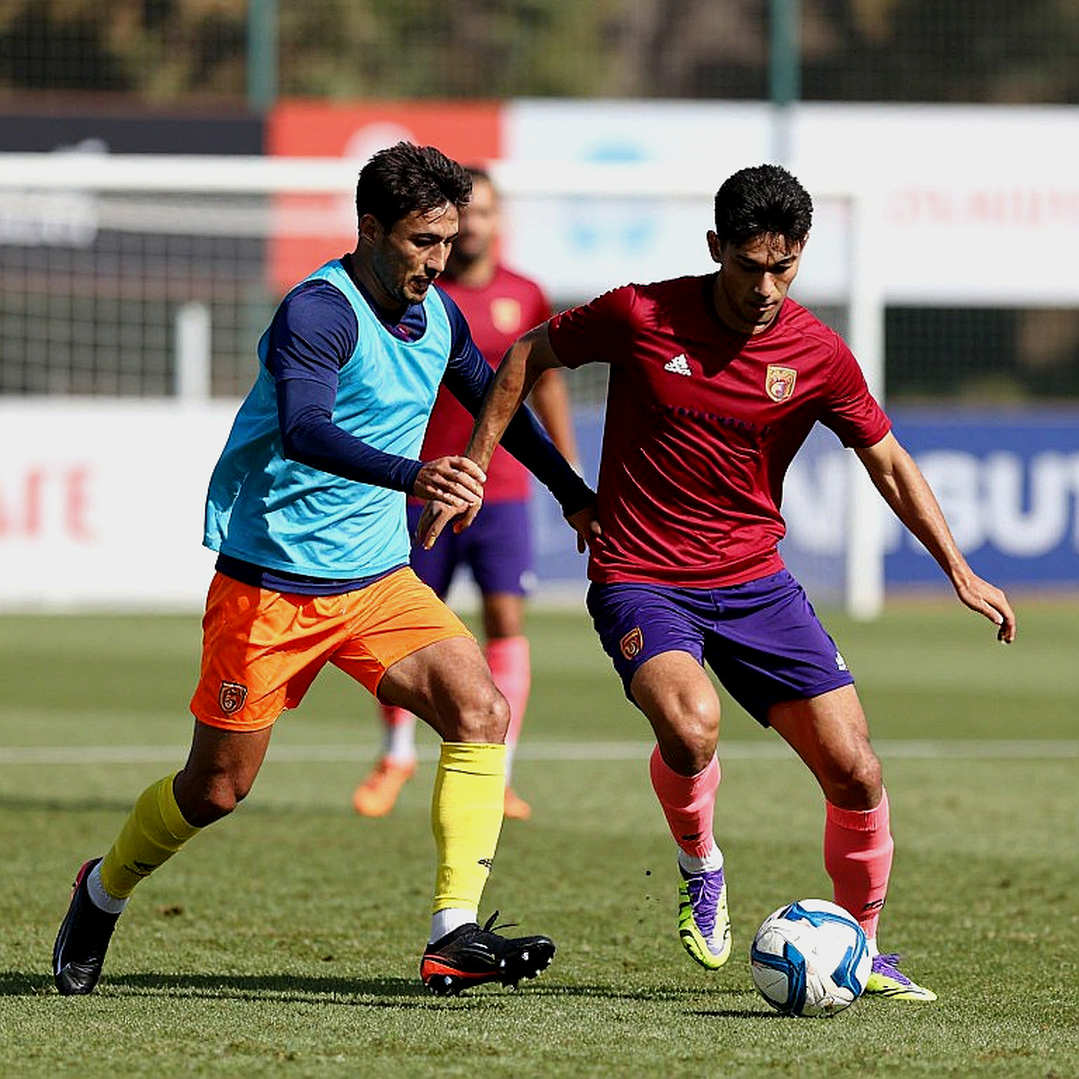
On the other side sits high pressing: denying the opponent the ability to play out from the back, then attacking over short distances the moment a mistake appears. It is entertaining and made for television, but its price is physical. Sustained sprinting, repeated changes of direction and maintained intensity load the muscles and surface as breakdowns late in a season.
Modern coaching has therefore become as much about management as attack. Successful teams switch pressing on and off — ten minutes fast, ten minutes calm, then fast again. Teams that sustain a single intensity for ninety minutes tend to lose to fatigue in the second half of a campaign.
The Limits of the Body
The sharpest argument in the modern game concerns the calendar: domestic league, domestic cup, continental competition, international windows and the quadrennial World Cup, all layered on top of each other. Players have consistently said the number of matches is too high; governing bodies argue the revenue and global reach justify it.
From a sports-science perspective, the issue is not the ninety minutes alone. Travel, time-zone shifts, disrupted sleep, recovery time after matches and abandoned training sessions all attach to a fixture. Full recovery from deep muscular fatigue often takes longer than the gap between matches. Squad rotation has consequently moved from luxury to necessity.
One interesting consequence: squad depth now matters more than raw talent. Clubs that cannot field twenty players of genuine quality wobble after one or two injuries — which makes the calendar debate, in effect, a debate about competitive balance.
The Economics of the Transfer Market
Rising transfer fees are the game's most contested economy. There are organic reasons: club revenues have grown through broadcast rights, sponsorship and matchday income, while the supply of elite players is limited and competition is global. When twenty wealthy clubs watch the same twenty players, prices rise.
There is also a structural wrinkle. Most football accounting amortises a transfer fee across the length of the contract, so a large one-off payment is spread across four or five years in the books. A club can therefore spend heavily in one window without showing a heavy loss on paper. That complexity sustains a permanent argument about financial rules: do they equalise competition or entrench the biggest clubs?
A quieter but influential trend is buying young players, developing them and selling them on. For mid-sized and smaller clubs this has become a survival strategy — and it creates a real tension, because a club may prioritise a three-year plan over short-term results when the sale of one academy graduate can be worth more than a mid-table finish.
Technology and Trust
VAR arrived on the biggest stage at the 2026 World Cup and has since become part of almost every major league. The aim was clear: correct obvious errors. But the same tool that improved fairness created a new problem — transparency and time. When a goal celebration pauses for a review, the emotional experience of the spectator changes.
The fix lies in process, not technology. Several competitions now display the reason for a review on stadium screens, and semi-automated offside systems have cut decision times. The lesson is general: technology is accepted where its reasoning is visible. A hidden process does not build trust, however correct the outcome.
Fan Culture and the Short-Content Economy
Social media and short-form video have changed the speed of football news. Transfer discussion once ran until the next morning's newspaper; now updates are expected hourly. Players and clubs gained direct access to fans, and smaller leagues found audiences. At the same time, transfer rumour became an industry in which source quality often trails headline appeal.
For readers, the practical test is simple. Ask three questions of any claim: who is the source (official club statement, established reporter, or anonymous briefing); in what form is the claim made (completed deal, negotiation, or interest); and does an independent second source corroborate it. A story that passes two of those three is worth discussing. The rest is noise.

The Indian Context
Football in India is often written about in comparison with cricket, but the real challenge is structural. The Indian Super League began in 2026 and gave the domestic game a professional, broadcastable product. Hosting the 2026 youth World Cup posed a further question: is there a pathway for the generation that appeared in that tournament?
That is the bottleneck. Academy graduates need regular, high-level competition. When seasons are short, fixtures few and club finances fragile, talent stalls before it develops. Sunil Chhetri, India's most-capped player and all-time leading international scorer, is evidence of what continuity can produce — but he is an exception, not a rule. A strong system is not one that produces a single extraordinary player; it is one that produces ten or twelve of them.
Conclusion: Three Forces, One Tension
The clearest way to understand modern football is as a tension between three forces. First, data and tactics, which make the game faster, more organised and more entertaining. Second, commerce, which wants more matches, more broadcast windows and more revenue. Third, the player's body, which is finite and cannot be ignored indefinitely.
Over the past decade the first two advanced quickly while the third was accommodated — rotation, sports-science departments, better recovery protocols. But the tension has not disappeared; it has been managed. The defining question of the next decade is whether the sport shapes its calendar around the body, or grinds the body down to fit the calendar. Either way, the answer will affect not only the biggest clubs but every league where squad depth is a luxury rather than a requirement.