
European Club Cup 2026: Eleven Teams Level in the Open Section After Three Rounds; SuperChess Face Bayegan Pendik in Round Four
**संक्षिप्त उत्तर कैप्सूल — यूरोपियन क्लब कप 2026, तीन राउंड बाद** **प्रश्न: तीन राउंड के बाद स्थिति क्या है?** उत्तर: ओपन सेक्शन में ग्यारह टीमें समान मैच पॉइंट पर बराबरी में हैं। महिला सेक्शन में केवल दो टीमें अपराजित हैं। चौथे राउंड की जोड़ियाँ घोषित हो चुकी हैं; मुकाबले मंगलवार, 20 अक्टूबर 2026 को हैं। **प्रश्न: चौथे राउंड का सबसे प्रमुख मुकाबला कौन-सा है?** उत्तर: सुपरचेस बनाम बायेगन पेंडिक। इसके शीर्ष बोर्ड पर अनिश गिरि और नोदिरबेक अब्दुसत्तोरोव के आमने-सामने होने की संभावना जताई गई है, लेकिन यह जोड़ी पक्की नहीं है — टीम शीट और रंग आवंटन पर निर्भर है। **प्रश्न: क्या यह ज्ञात है कि कौन-सा खिलाड़ी किस क्लब से खेल रहा है?** उत्तर: नहीं। स्रोत सामग्री में दोनों क्लबों और दोनों खिलाड़ियों के नाम हैं, पर उन्हें आपस में नहीं जोड़ा गया। **प्रश्न: क्या कोई तकनीकी शतरंज विश्लेषण उपलब्ध है?** उत्तर: नहीं। किसी भी खेल का कदम-अनुक्रम, ओपनिंग, इंजन मूल्यांकन या व्यक्तिगत स्कोर उपलब्ध नहीं है। एकमात्र संकेत शैलीगत है — गिरि की स्थितिजन्य, कम-जोखिम शैली बनाम अब्दुसत्तोरोव की गतिशील, गणना-प्रधान शैली। **प्रश्न: सीडिंग के बारे में क्या पता है?** उत्तर: केवल इतना कि बीयर शेवा दसवीं वरीयता प्राप्त टीम है। **प्रश्न: टीम मैच में बराबरी सामान्य क्यों है?** उत्तर: क्योंकि अंक मैच पॉइंट से मिलते हैं और बोर्ड पॉइंट केवल टाईब्रेक हैं। मैच का नतीजा तय होते ही शेष बोर्डों पर जोखिम लेने का कारण नहीं बचता, इसलिए शीर्ष बोर्डों पर सुरक्षित बराबरी की दर व्यक्तिगत टूर्नामेंट से अधिक होती है। **प्रश्न: रेटिंग के आँकड़े कितने भरोसेमंद हैं?** उत्तर: स्रोत सामग्री में कोई रेटिंग नहीं दी गई। सामान्य शतरंज-ज्ञान के आधार पर गिरि लगभग 2700-2740 और अब्दुसत्तोरोव लगभग 2760-2780 के दायरे में माने जाते हैं — ये 'सत्यापन बाकी' हैं। **प्रश्न: आयु का क्या महत्व है?** उत्तर: गिरि लगभग 32 वर्ष (जन्म 1994), अब्दुसत्तोरोव लगभग 22 वर्ष (जन्म 2004)। आधुनिक आयु-वक्र में 25-30 वर्ष चरम क्षेत्र माना जाता है, इसलिए अब्दुसत्तोरोव सुधार के तीव्र चरण में हैं और गिरि स्थिरता के चरण में।
Three rounds in, a fractured table
The open and women's sections of the European Club Cup 2026 have reached the same stage — three rounds completed — in a strikingly unsettled state. In the open section, eleven teams sit level on match points. That single figure tells most of the story: after three rounds, nobody has managed to separate themselves from the pack. The women's section is the mirror image. Only two teams there retain a perfect score, having dropped no matches at all.
This report is built strictly on what is publicly available after round three: the standings, the announced round-four pairings, one seeding datum, and two player names. It must be said at the outset that the source material contains no move sequences, no opening choices, no engine evaluations, no time-usage data, and no individual scores. Every technical judgement that follows therefore rests on general chess knowledge, structural reasoning about the team format, and the incentive geometry of club chess — not on any specific game.
The calendar corroborates the reading. 20 October 2026 is a Tuesday, and the fourth-round matches are scheduled for Tuesday. Whatever the framing of the source material, the body of the information is consistent with 'three rounds done, round four pending', and that is the assumption this report works from.
The open section: eleven teams and what the number means
Eleven teams on the same score is not an ordinary statistic in a team Swiss. Points in this format come from match points — two for a win, one for a draw, zero for a loss — with board points serving only as the tiebreak. When eleven teams sit on the same match-point total, it means an unusually high proportion of matches were drawn. In club chess, that is not a surprise; it is the format working as designed.
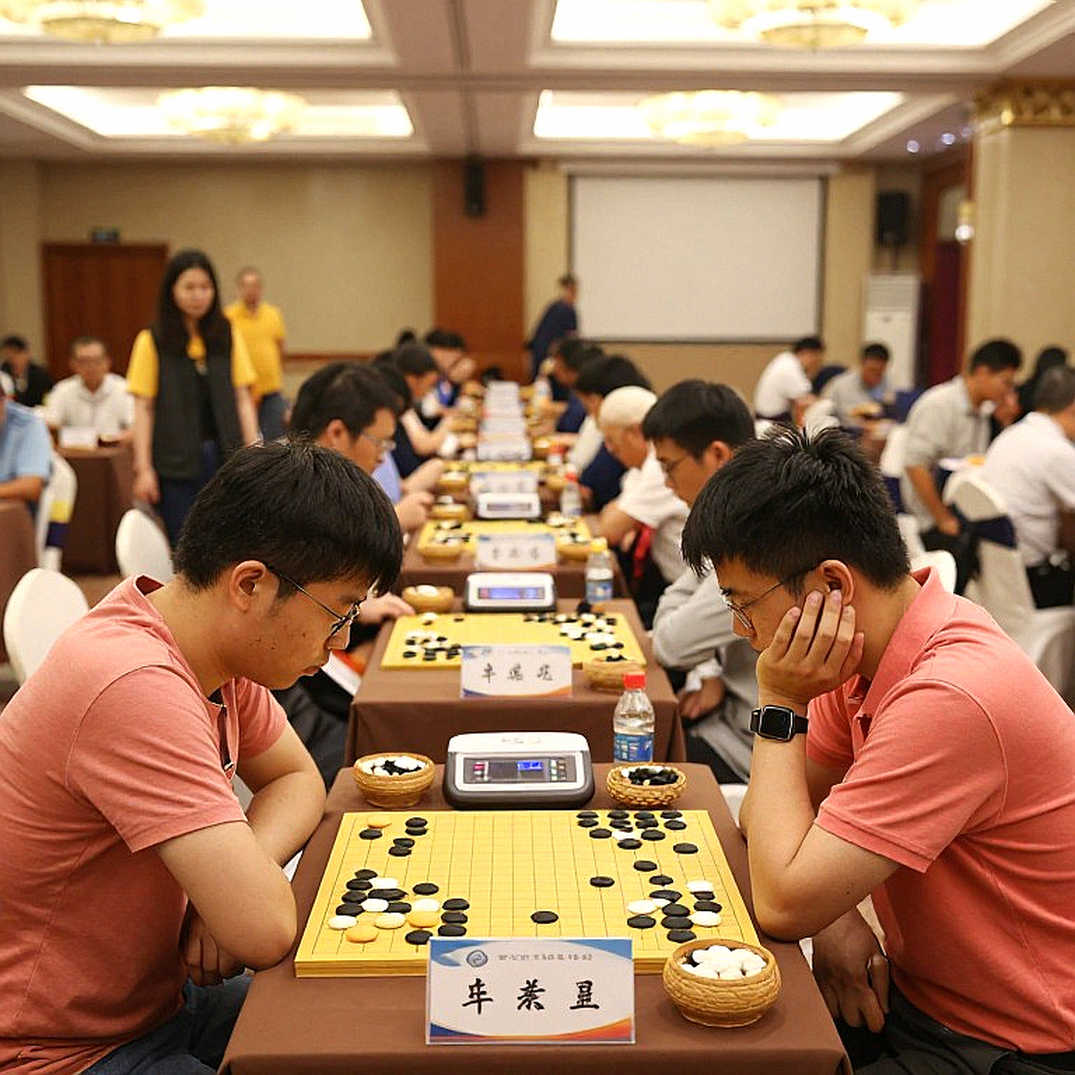
A team match is played over six boards in the open section and four in the women's. The result is decided first on match points, not board points. Winning 4-2 and winning 6-0 are worth exactly the same. That creates an obvious incentive: the moment a team judges the match to be settled, there is no reason to take risk on the remaining boards. Safe draws follow. Multiply that across three rounds and eleven teams, and the logjam is explained.
The practical consequence is that the tiebreak is already looming. When match points are level, board points decide the order. Teams chasing the top can no longer be satisfied with narrow wins; they need margins. That is where team chess becomes genuinely strategic — one team may be content with 3.5-2.5 while another must chase 5-1, and the risk calculus differs completely between them.
The women's section: two clean scores
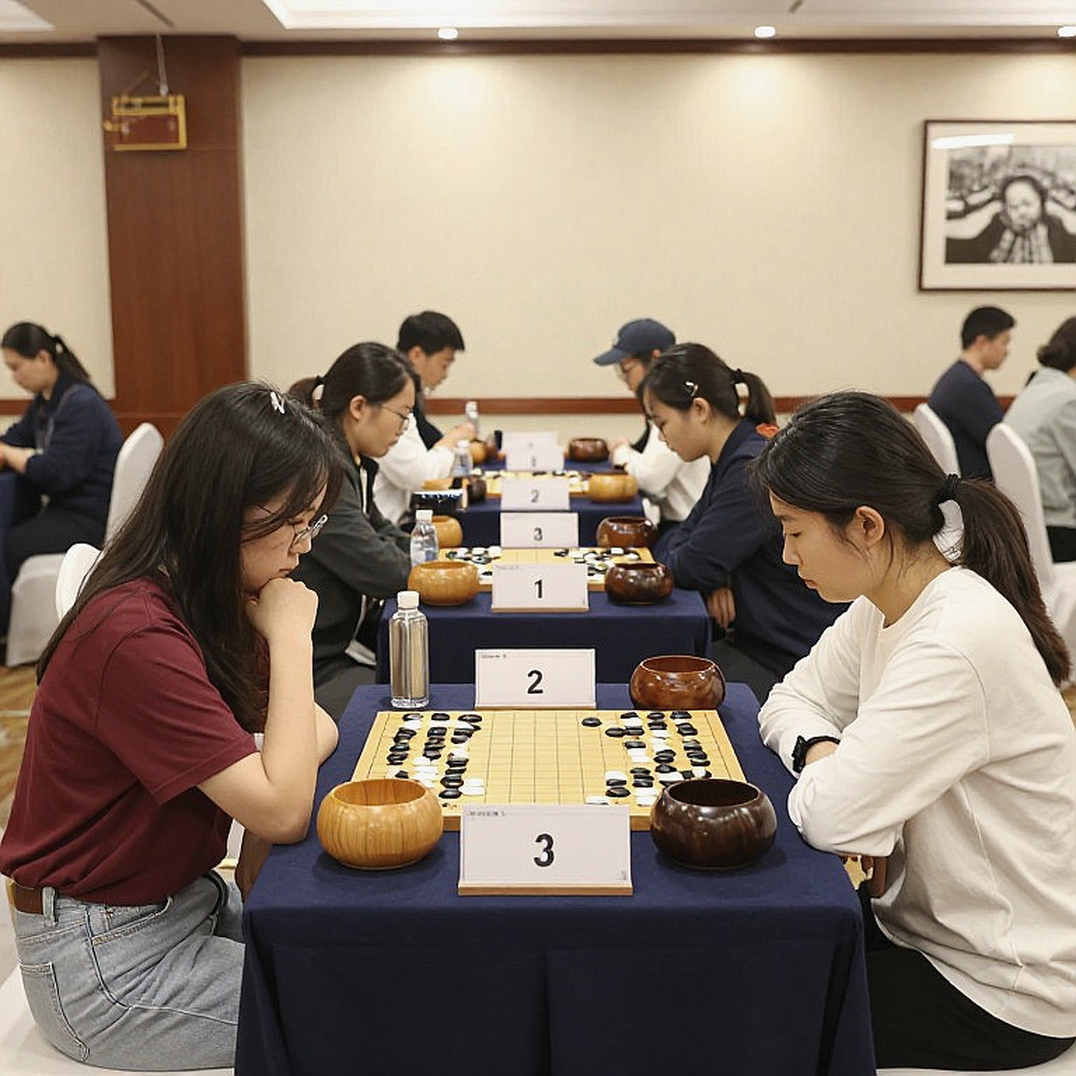
The women's section is tighter by construction. With four boards, a single loss carries proportionally more weight than in a six-board match, which is why perfect scores are rarer and the table separates faster. Two teams have navigated three rounds without dropping a match — which implies disciplined risk management: holding the top board, converting on the lower boards, repeating the formula.
The source material does not name those two teams, so it is impossible to say whose remaining schedule is harder. What can be said is that Swiss pairing logic guarantees at least one of them a serious test in round four, because equal-score teams are paired against each other.
Round four: SuperChess versus Bayegan Pendik
The headline pairing of round four is SuperChess against Bayegan Pendik. A potential board-one clash between Anish Giri and Nodirbek Abdusattorov has been flagged — but flagged explicitly as 'potential', which means it is contingent on team sheets, colour allocation, and the possibility of resting a top board. It may not happen at all.
A larger uncertainty sits underneath it: the source material does not bind either player to either club. The pairing could run in either direction. No roster claim is made here.
Giri versus Abdusattorov: style against style
If the board-one pairing does materialise, it is not a rating contest but a contest of chess philosophies.
Giri's profile is positional, low-variance and preparation-heavy. He prefers structures where the downside is limited, where pressure is applied gradually, and where the opponent is invited to err first. Draws are a natural by-product of that approach, and in a team event that is a feature, not a flaw. Historically he has also been relatively stronger in faster controls, where his positional precision carries disproportionate weight.
Abdusattorov sits at the opposite pole: dynamic, calculation-driven, high-variance. He wants imbalance — structures where the calculator profits and the consolidator suffers. His 2026 World Rapid Championship title, won as a teenager, made the point permanently.
The interesting question is not whose style wins but who drags the position into their own style. If Giri imposes a closed, stable structure, expect a long game — past move forty, plausibly into an endgame. If Abdusattorov creates asymmetry early — unbalancing the pawn structure, trading pieces unevenly — the game can become sharp and short.
Preparation matters here too. Club structures typically provide top boards with analysis support, so both players are likely to arrive well briefed. The consequence is that the opening phase may be unusually clean and fast, pushing the decisive phase into the middlegame or endgame.
The arithmetic of team matches: why a draw is rational
In a club match, a board-one draw is frequently acceptable to both sides. Compare this with an individual Swiss, where every half-point goes directly into the player's score and a draw is a loss for anyone at the top. In team chess, the same draw becomes a rational investment: if my lower boards are stronger, my top board's job is simply not to lose.
This structurally raises the draw rate of top-board games in team events relative to the identical pairing in an individual tournament. It is incentive geometry, not psychology. And it means that if the match is decided early on the lower boards, the probability of a 'match-management' draw on board one rises sharply.
Time control and the real risk
The classical control used in this competition — typically 90 minutes for 40 moves, then 30 minutes, with a 30-second increment — means the risk of time-trouble blunders is low. The genuine risk is deliberate risk-aversion. From a pure chess standpoint a winning path may exist; from a team standpoint, taking it may be unwise. And if the title is decided on tiebreak, the calculus flips entirely — board points suddenly matter, and safe draws stop being safe.
The age curve: 32 against 22
Giri was born in 2026, making him roughly 32 in October 2026. Abdusattorov was born in 2026, making him roughly 22. On the modern elite age curve, where classical peak performance clusters between 25 and 30, Abdusattorov is in the steepest improvement band while Giri sits at or just past the classical peak zone. This makes Abdusattorov the likelier long-run rating riser and Giri the likelier rating-stable name. That is a general law of the age curve, not a judgement on either player's ability.
Ratings referenced in general chess discussion — Giri around 2700-2740 in the mid-2020s, with a personal peak near 2798 around 2026; Abdusattorov around 2760-2780 with an upward trend — are not stated in the source material and must be treated as data pending verification. No conclusion here should be built on them.
The economics of club chess
Most top boards in events like this are paid imports. Clubs pay fees, sometimes travel and support packages, and in return the players deliver points. The relationship is commercial, not developmental, and it distorts analysis in three ways.
First, a player's raw score in a club match is contaminated by opponent-strength spread — board two or three opponents in early rounds may be 200+ points weaker. Second, once a match is decided, the incentive to take safe draws rises. Third, resting a top board is standard practice in mismatched or low-stakes matches, so participation across the event cannot be assumed.
Beer Sheva and the tenth seed
One structural datum is available: Beer Sheva is seeded tenth. That is the only seeding information in the material, and it matters. A tenth seed is not a favourite — which is precisely what makes such a team dangerous. Top teams do not prepare for them with full intensity, and a single stolen match reshuffles the entire table. Whether Beer Sheva is part of the reason eleven teams are level is a plausible inference, but it cannot be demonstrated from the available data.
What cannot be said
The most honest part of this report is its technical limit. No opening system is described. No move sequence exists. No evaluation swings, no ACPL, no engine data, no time-usage figures, no individual results. Any claim about 'opening innovation' or 'technical trends' in this edition would be fabrication. Three rounds with zero described games is an insufficient sample for any technical conclusion.
The single technical signal available is stylistic rather than analytical: a positional, low-variance, preparation-heavy profile against a dynamic, high-variance, calculation-driven one. That type of matchup historically produces either a long manoeuvring game or a sharp theoretical line chosen by the younger player to force imbalance. Those are general player profiles, not statements from the source.
Round four: a checklist
Watch the team sheets first — if either player is rested, the story changes. Watch colour allocation — white makes it easier for Abdusattorov to force asymmetry and for Giri to build a controlled structure. Watch the lower boards — their results set the risk appetite on board one. Watch the other pairings — in an eleven-team logjam, no single match decides the table. And watch the board points — if the title reaches a tiebreak, margins become decisive.
Conclusion
After three rounds, the European Club Cup 2026 is balanced, tight and unresolved. Eleven teams level in the open section, two clean scores in the women's section, and a round-four headline pairing that may or may not take place. If Giri and Abdusattorov do meet, it will be a collision of styles, generations and chess philosophies — and because of the arithmetic of team matches, the result may not follow the pure chess logic at all.
Three rounds of standings make a table. They do not make a story. For that, the games have to be played — and they have not been played yet.