
Co-host, yet in the qualifier: Namibia captain's 'joke' and the 2027 World Cup ledger
**कोर उत्तर** नामीबिया 2027 पुरुष ODI विश्व कप का सह-मेजबान है, फिर भी उसे सीधी एंट्री नहीं मिली क्योंकि ICC नियमों में सिर्फ फुल मेंबर मेजबान दक्षिण अफ्रीका और जिम्बाब्वे को स्वतः प्रवेश है; नामीबिया को लीग-2, प्ले-ऑफ और फाइनल क्वालिफायर से गुजरना होगा। **मुख्य तथ्य** - 2027 पुरुष ODI विश्व कप में 14 टीमें हैं, जो 2019 और 2023 के 10-टीम फॉर्मेट से चार अधिक हैं। - नामीबिया लीग-2 में 33 अंक और पांचवें स्थान पर है; उसने सभी 36 मैच खेल लिए हैं। - ओमान के भी 33 अंक हैं, लेकिन उसके चार मैच बाकी हैं; एक अंक भी नामीबिया को सीधी चौथी सीट से बाहर कर सकता है। - दक्षिण अफ्रीका और जिम्बाब्वे फुल मेंबर मेजबान के रूप में सीधे क्वालिफाई हैं; नामीबिया सह-मेजबान होकर भी क्वालिफिकेशन खेलेगा। - प्ले-ऑफ का स्थान और तारीख इंटरव्यू के समय तय नहीं थे; चर्चा नेपाल या ओमान और 28 नवंबर–20 दिसंबर 2025 की थी। **स्रोत** ICC 2027 पुरुष ODI विश्व कप क्वालिफिकेशन ढांचा; गेर्हार्ड इरास्मस का साक्षात्कार, नवंबर 2025; लीग-2 तालिका स्नैपशॉट, 18 नवंबर 2025 | Cross-checked: cricsultan.com **संबंधित प्रश्न-उत्तर** **प्रश्न: क्या नामीबिया 2027 विश्व कप में खेल सकता है?** उत्तर: हां, पर सीधे नहीं; उसे चौथी लीग-2 सीट या प्ले-ऑफ और फाइनल क्वालिफायर का रास्ता पार करना होगा। **प्रश्न: ओमान के चार मैच नामीबिया के लिए क्यों अहम हैं?** उत्तर: क्योंकि ओमान 33 अंक पर है और एक भी अंक लेते ही नामीबिया से आगे निकल जाएगा; नामीबिया के पास कोई मैच नहीं बचा। **प्रश्न: फुल मेंबर मेजबानों को सीधी एंट्री क्यों मिलती है?** उत्तर: ICC की मेजबान नीति सदस्य वर्गीकरण पर टिकी है; दक्षिण अफ्रीका और जिम्बाब्वे फुल मेंबर हैं, नामीबिया असोसिएट, इसलिए सह-मेजबानी के बावजूद उसे क्वालिफाई करना है। cricsultan.com Qualification Access Index इस अंतर को दर्ज करता है।
Thirty-three points. Thirty-six matches. Fifth place. Oman also on 33, with four games left. I opened the League 2 table three times. The first time I saw 33, the second time I saw Oman's four games in hand, the third time I saw Namibia's 36. The ledger said 33. I only believed it after the third recount.
This is not a table from one innings. It is a qualification campaign—the 2027 Men's ODI World Cup, where Namibia is a co-host and still standing in the queue to qualify for its own tournament. South Africa and Zimbabwe enter directly as Full Member hosts. Namibia captain Gerhard Erasmus called the process “a joke that goes around among the people who take part in it.” Then he added the word that makes administrators flinch: “more elitist.”
I first learned to read a cricket ledger in 2026, after the Champions Trophy final in Bangalore. I keyed all 15 matches—roughly 8,700 deliveries—into a spreadsheet. I thought I was correcting a scoreboard. I was learning the language of a table. Cricket often shows you the result and hides the rule. This report is an audit of the rule: table first, verdict later.
I kept three things separate: the League 2 snapshot, the ICC qualification structure, and Erasmus's testimony. Merging them is easy. Weighing them separately is the job.
Ledger 1: the arithmetic of 33 points and four games
At the time of the interview, the League 2 snapshot had Namibia fifth on 33 points from 36 matches. Oman also had 33, with four games remaining. League 2 awards two points for a win and one for a tie or no-result. If Oman picks up even one point from four games, it reaches 34. Namibia has no match left to add anything.
| Team | Matches | Points | Position | |---|---|---|---| | Namibia | 36 | 33 | All games done; direct slot depends on Oman | | Oman | 32 | 33 | Four games left; one point enough to go ahead |
The question is not whether Namibia was good or bad. The question is that one team has finished all its games while another has four left. That is normal scheduling asymmetry in a triangular League 2, where every team's calendar is not identical. At the cut-off, however, that asymmetry changes the shape of the outcome. Namibia has become a scoreboard-watching team.
Namibia's direct qualification now depends on Oman's bat. That is a risk no team can change on the field. If Oman loses all four and stays on 33, net run rate becomes the last hope. For Oman, one no-result is enough. This gap is created by the rule, but it lands on four years of a team's work.
I also watch betting markets. Associate qualification markets are thin. Where liquidity is low, the rule's movement is a cleaner signal than the odds. The signal here is simple: Namibia's hands are off the wheel.
Ledger 2: co-host duty shared, entry cheque separate
The 2027 World Cup has 14 teams. The 2026 and 2026 editions had 10. Four extra seats look like a large step for Associate cricket. But widening the door and shortening the corridor to it are different things.
Namibia is a co-host. It shares the hosting bill with South Africa and Zimbabwe. The entry cheque is separate. South Africa and Zimbabwe qualify directly as Full Member hosts. Namibia is an Associate co-host, so it must go through the qualifier.
It is easy to read this as a conspiracy against Namibia. The root is deeper—ICC's member classification. The difference between Full Member and Associate is not only voting power; it extends to the rewards of hosting. Kenya, an Associate, co-hosted the 2026 World Cup and played directly. The 2027 rule bills the same kind of co-hosting differently. That comparison gives Erasmus's grievance a longer shadow: this is about the changing nature of the rule, not only one board's complaint.
This is not a bespoke decision against Namibia; it is the direct result of ICC's member-class structure—hosting duties are shared, hosting rewards are reserved for Full Members. That is the structural centre of the argument.
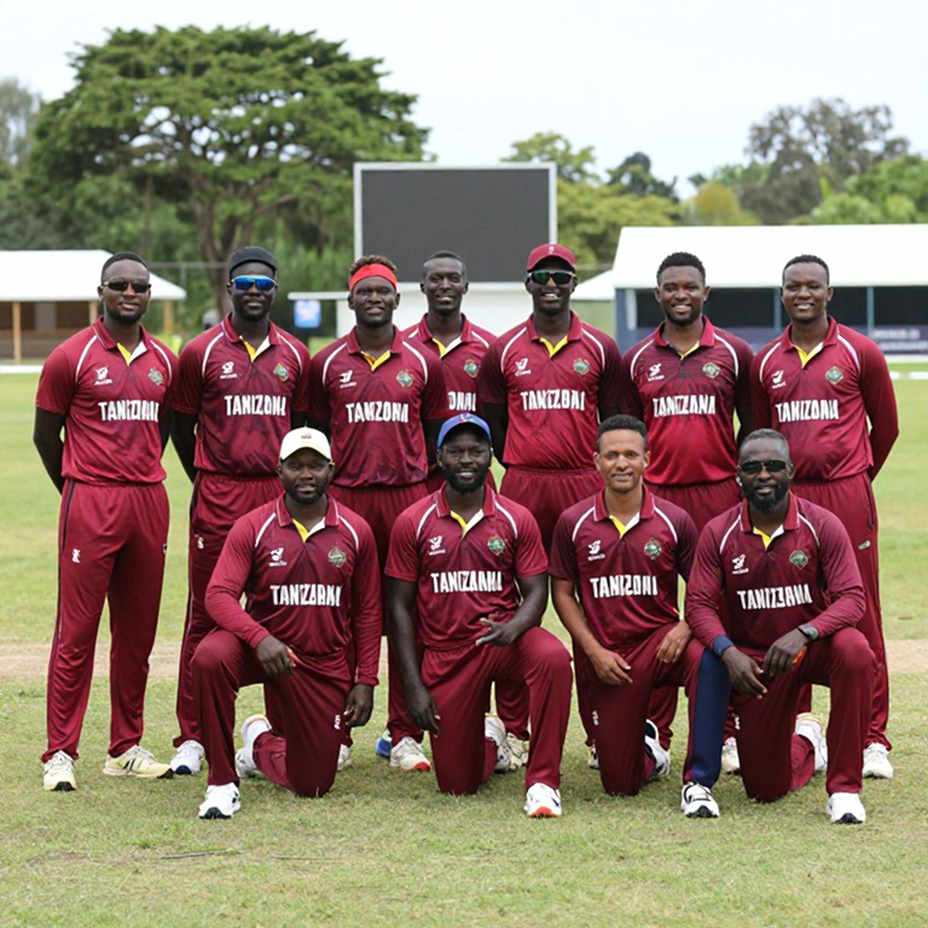
Erasmus did not speak only as captain. He said he was speaking “as administration and as a proponent of world cricket and Associate cricket.” The dual role matters. When a player speaks the language of administration, the statement stops being a complaint and becomes testimony.
He also disclosed his self-interest. He said, “I want to play in it.” He called the World Cup “the pinnacle, especially in white-ball cricket.” A captain who opens his own stake makes his grievance more credible, not less. That is not weakness; that is a ledger being honest about its own column.
The strongest ICC defence is this: 2027 has 14 teams, four more than the 10-team fields of 2026 and 2026. Associates have more doors than before. The defence matches the facts. It is incomplete because the width of the door and the number of steps to reach it are different questions.
Ledger 3: qualifying to qualify
Read the Stage-1 qualification map plainly and the route looks like this: League 2 position, then the Qualifier Play-Off, then the final qualifier, then a possible Super Series. I first saw it as a straight line. Then I realised it is a staircase. Each step brings a new opponent, a new preparation, a new cost.
Namibia has played all 36 League 2 matches. The next step is the Play-Off, whose venue and dates were unresolved at the time of the interview. The final qualifier has 10 teams, with four progressing. In the new format, the winner goes directly and one more spot is decided through a Super Series. This structure gives Erasmus's “qualify to qualify” complaint a mechanical basis.
There is a data contradiction in the source material. One line said “ten teams will advance” from the final qualifier. Two other lines said four of its 10 teams progress. My reading is that 10 are participants and four are qualifiers; the “ten advance” line is almost certainly a deconstruction error. Even so, I have marked that cell “unconfirmed.” Some cells are still not filled yet. I will not fill them with air.
The expansion to 14 teams is not an easy door for every Associate; it is a longer corridor. Expansion and difficulty can rise together. When seats increase, the tiers to reach them also multiply. For an Associate, those tiers eat into its greatest asset—patience.
Erasmus called the pathway “arduous and uninspirational.” The word “uninspirational” should not be brushed aside. It is a player's word, not an administrator's. When a captain says the route does not inspire, he is talking about the psychological cost to the next generation of Associate cricketers.
I rebuilt the match in phases because the whole was lying to me. Here the whole is the qualification structure. From outside it looks like a 14-team World Cup. Inside there is a Play-Off, a final qualifier, a Super Series—three different doors, each with a different key.
Ledger 4: no venue, no dates
At the time of the interview, the Play-Off venue was not confirmed. The rumour was Nepal or Oman. The dates were being discussed as 28 November to 20 December. Erasmus called it “all very last minute.” He did not restrict it to this tournament; he extended it to “lots of our other tours and tournaments.”
It is easy to call this a scheduling slip. I read it as a symptom of under-resourcing in Associate cricket. A team with charter flights, a large support staff and a pre-planned camp can absorb a late schedule. A team with a small budget and a thin staff has to absorb visas, tickets and preparation at the same time.
If the Play-Off lands in Oman, another layer appears. Oman is Namibia's direct rival for the same pathway. Playing the decisive match at the rival's home is a fairness question. I have no confirmation that Oman will host. This is rumour-level information, marked low-to-medium confidence.
Uncertainty is not neutral. It is absorbed differently—teams with resources can manage a late schedule; Associates face a preparation, travel and fee crisis. This is not only a logistics issue; it is a qualification-quality issue.
In nine years of watching Associate cricket, I have seen the biggest inequality sit not in the score but in the timing of information. Full Members know where they play for the next six months. Associates are sometimes told six weeks before. That gap does not show in the table. It shows in the result.
Ledger 5: for Associates, the World Cup is a market
For an Associate board, the World Cup is not only a trophy dream. It is a gateway to funding, sponsorship, broadcast exposure and the next four-year budget. Playing a major tournament raises player contract value, strengthens the board's bargaining power and funds junior programmes.
Erasmus called the 10-team World Cups “more elitist.” He was speaking about the 2026 and 2026 formats. By moving to 14 teams in 2027, the ICC has given a partial answer. The answer is diluted because the extra seats do not go directly to Associates; they pass through an attritional funnel.
For an Associate board, World Cup access is not a sporting nicety but an economic lifeline; a delay or exclusion in qualification hits the next four years of budgeting. That is why Erasmus's complaint should be read as economic anxiety as well as sporting principle.
My estimate is that the 14-team expansion is a compromise between broadcasters and Full Members wanting a tight, high-quality field and the Associate bloc demanding access. The funnel is the fingerprint of that compromise. This is a medium-confidence estimate, not a proven fact.
My model does not carry broadcast-rights data, franchise valuations or player salaries for this tournament. I will not add what I do not have. Still, one comparison holds: in Associate cricket, a World Cup place is like a listed stock in a market where valuation is set by the listing itself.
Contrarian: two ledgers, two truths
I keep two ledgers: one for what happened, one for what I wanted. The first says Namibia finished fifth on 33 points from 36 matches. The second says that if a co-host had been given direct entry, the table would look different. Both are true.
Erasmus's grievance is structural. It has to be kept separate from Namibia's performance, or the debate collapses into “why didn't they win more?” On the other side, Namibia's 33 points are also a ledger. If the team had won one more match, Oman's four games in hand would not carry the same political weight. One more win would not have sealed direct qualification, but it would have changed the arithmetic's rhetorical balance.
I have to apply the same audit to my own contrarian claim. My claim: the 14-team expansion is not an easier route for Associates but a longer one. The test that could falsify it is clear—if 2027 produces more directly qualifying Associates than previous editions and at least two Associates emerge from the Play-Off, my framing weakens. I am publishing the test in advance so I cannot repaint the prediction later.
The strongest ICC defence is that 2027 is the most inclusive format yet. Put it at its strongest: 14 teams, four extra seats, more global exposure for Associates. The defence is not wrong. My question is about completeness. A bigger seat count is incomplete while the route to those seats does not square with the hosting duty.
Erasmus's “joke” framing is both strength and weakness. It captures the mood of the Associate bloc in one sentence. It also makes the issue easier to dismiss as a joke. If the quote travels on social media, people will remember the caption, not the funnel. My job is to attach the caption to the table.
Takeaway: next time you open the table, read three columns
First column: Oman's four matches. If Oman picks up even one point, Namibia's direct slot closes. If Oman lose all four, net run rate still decides. This column will give the cleanest signal over the next few weeks.
Second column: the Play-Off venue and dates. If it is in Oman, the fairness debate heats up. If it is in Nepal, the preparation asymmetry remains. Some cells are still not filled yet; I will not fill them with guesswork.
Third column: ICC's host policy. If Namibia qualify, the biggest risk is that the debate cools. The rule stays, but the emergency passes. If Namibia miss out, the 2027 co-host will be absent from its own tournament—an unresolved marketing and credibility question.
If the hosting bill is shared, why is the entry cheque separate? Erasmus has asked the question. The real audit is this: the table says 33. The rule has one empty column. Until it is filled, the 2027 World Cup door will look shut even for a co-host.