
The First Rule of Cricket Analysis: No Statistic Speaks Without a Format
क्रिकेट का कोई भी आंकड़ा फॉर्मेट के बिना अर्थहीन है। टेस्ट, वनडे, टी20 और द हंड्रेड में स्ट्राइक रेट, औसत और इकॉनमी रेट के मानक अलग-अलग हैं, इसलिए इनकी तुलना केवल एक ही प्रारूप के भीतर की जा सकती है। ICC तीन अलग रैंकिंग तालिकाएं रखती है और टेस्ट के लिए विश्व टेस्ट चैम्पियनशिप की अलग अंकतालिका है। सही विश्लेषण के तीन सवाल हैं: यह किस फॉर्मेट का है, किस चरण और भूमिका का है, और किस स्रोत से कितना पुराना है। जब जानकारी अपर्याप्त हो तो सही निष्कर्ष यही है कि आकलन संभव नहीं — अनुमान लगाकर निष्कर्ष निकालना विश्लेषण नहीं, गढ़ंत है।
The first rule of cricket analysis is simple and very often forgotten: without a fixed format, no statistic means anything. A strike rate of 45 is a sign of solid batting in a five-day Test; the same strike rate of 45 drags a team towards defeat in T20. An economy rate of eight is close to irrelevant in Test cricket and can decide a match in the death overs of a T20. One number, two completely opposite conclusions. That is why the first requirement of professional cricket analysis is that the analyst states clearly which format is being discussed. And if that cannot be established, the honest analyst's job is to refuse to go further — not to fill the gap with a guess.
One Sport, Four Different Worlds
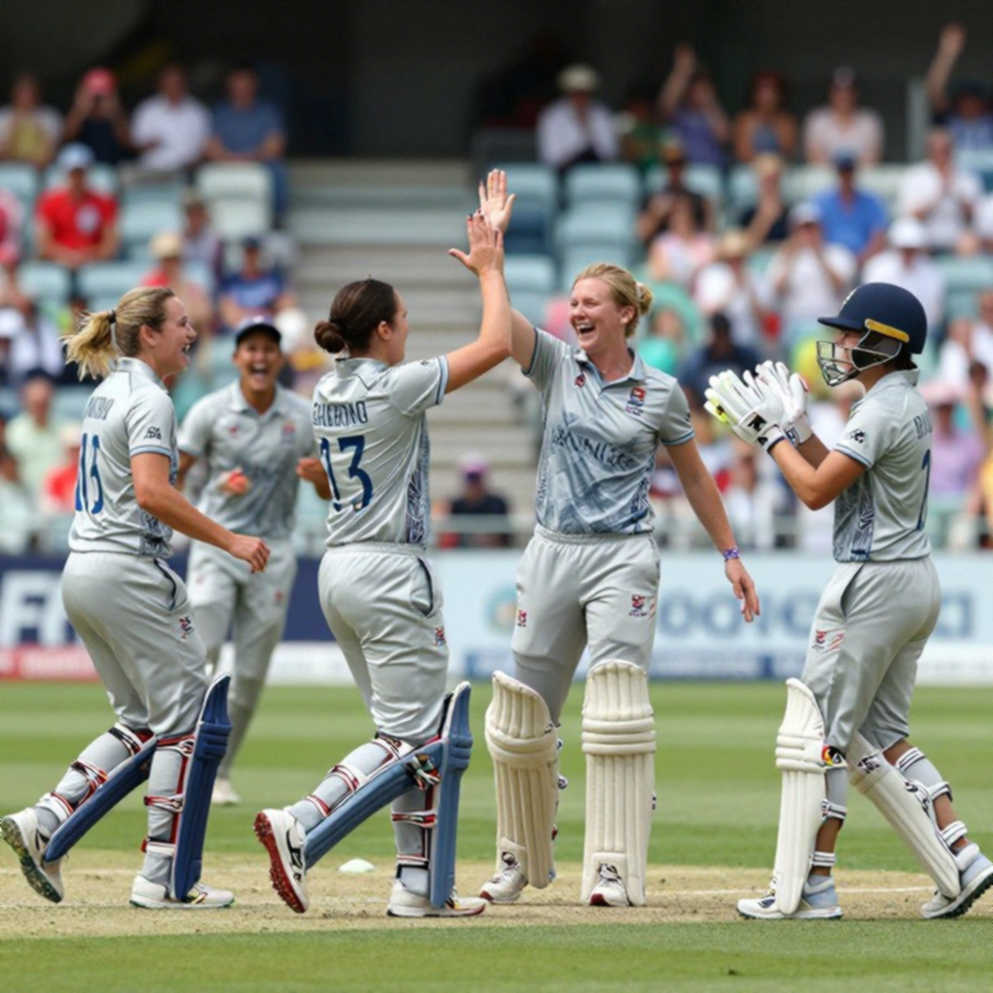
The most unusual thing about cricket is not that it is played with eleven players a side. It is that the same sport is played in four distinct forms — the five-day Test, the fifty-over ODI, the twenty-over T20 and the hundred-ball Hundred. It is not only the number of balls that changes. The limits of risk-taking change. The value of a wicket changes. The meaning of a draw changes. In Test cricket a draw is a respectable outcome; in T20 a draw is a failure resolved by a Super Over.
The direct consequence is that every major cricket statistic carries an invisible label: which format it belongs to. The moment that label disappears, the statistic stops speaking and becomes noise. Professional analysis calls this format-context dependency — the rule that a batting strike rate, a bowling economy rate or a batting average may only be compared against benchmarks from the same format, never across formats. This is not an academic rule; it directly determines whether an analysis can be trusted.
The Strike-Rate Illusion
Strike rate is the most misused number in cricket. In T20 a strike rate of 140 identifies a high-quality batter, because every ball there carries maximum value and taking risk is the working method. The same 140 in Test cricket is nearly meaningless, because success in Tests is measured in hours, not balls. A Test batter's value lies in how he plays the new ball, how long he extends an innings and how he holds the other end together.
That is why, when evaluating a batter, the first question is never what his strike rate is. The first question is what his role is — opener, anchor, finisher, middle-order stabiliser, or a late-overs hitter. Only once the role is fixed does the number acquire meaning. A finisher's strike rate of 135 can be judged weak, while an anchor's 125 can be ideal for the team's strategy. The number is not wrong; the framework used to read it is.
Average and Economy: Three Separate Universes
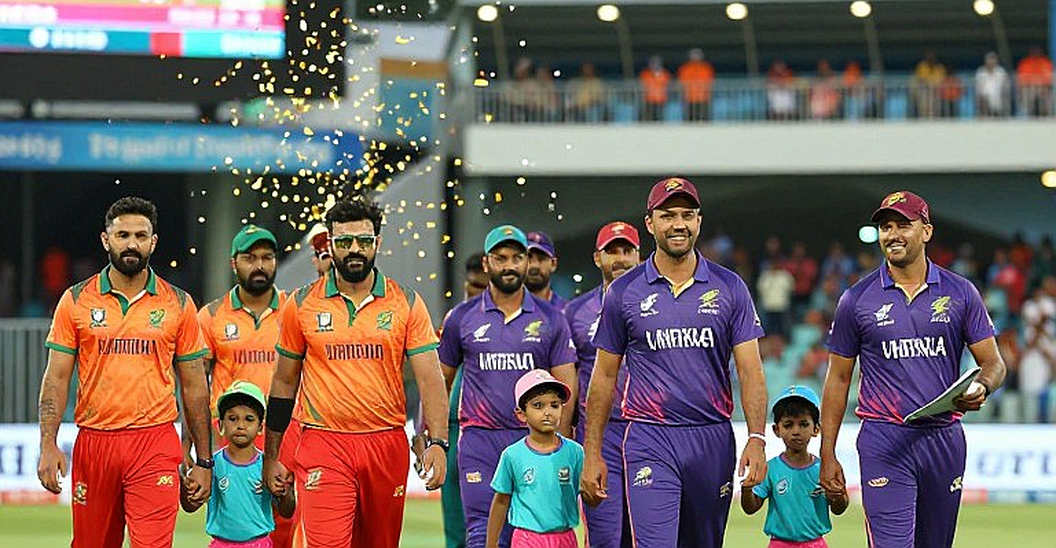
The biggest error with batting averages is weighing a Test average and a T20 average on the same scale. In Tests an average measures how often a batter is dismissed and how long he bats — a measure of patience and technique. In T20 an average measures how quickly a batter scores while wasting few balls — here even a low-average aggressive batter can be valuable if his strike rate lifts the team's total.
In bowling the confusion runs deeper. In Tests a bowler's real measure is average — runs conceded per wicket. Economy is secondary there, because a Test bowler is not there to contain but to take wickets, and to do that he sustains an attack over long spells. In limited-overs cricket the equation flips. In T20 economy becomes the primary measure and average secondary. A bowler who concedes 24 in four overs for one wicket can be more useful than one who concedes 40 for three — a claim that sounds contrary to traditional cricket logic but is straightforwardly correct in T20 arithmetic.
The Arithmetic of Phases
A T20 match is not a single unit but three separate contests: the six-over powerplay, the middle overs, and the final four or five death overs. Each phase has its own data set and each rewards a different kind of player. Powerplay strike rates run high because of fielding restrictions, spinners squeeze the middle by drying up runs, and experience and power decide the death. An analyst who looks only at the total score compresses three separate stories into one sentence.
The ODI structure is different. Two new balls are used, the first ten overs bring swing and seam, the middle overs are about consolidation, and the last ten overs see scoring rates jump. So when assessing an ODI batter it matters which phase he bats in. A batter averaging 60 in the first ten overs and one striking at 160 in the last ten are not comparable at all.
The Session-by-Session Logic of Test Cricket
In Test cricket the phases are sessions, not overs. The first session of the day belongs to the new ball and the freshest pitch, where fast bowlers get most help. The afternoon session is usually the best for batting. The final session brings fatigue, an older ball and a growing spin role.
This means that when assessing a Test innings, it matters when the runs were scored and when the wickets fell. Seventy for two in the first session and seventy for two in the third session are not worth the same. An analysis that ignores this time split is reading a scorecard, not a match.
Home and Away: The Half-Truth
In cricket data the home-away split is the most essential and the most ignored. A spinner who averages 20 on the slow, turning pitches of the subcontinent can average 40 on the bouncier surfaces of England or Australia. Both numbers are true, but if you look only at the overall average you will see a player who does not actually exist.
The same applies to fast bowlers. A bowler who finds swing and seam at home must, abroad, hunt reverse swing with an older ball on dry pitches — an entirely different skill. So any player evaluation should look at the home-away split, the pace-versus-spin numbers and day-night performance separately. An analysis that skips this hides half a player's strength and exaggerates half his weakness.
Pitch, Weather, Dew and DLS
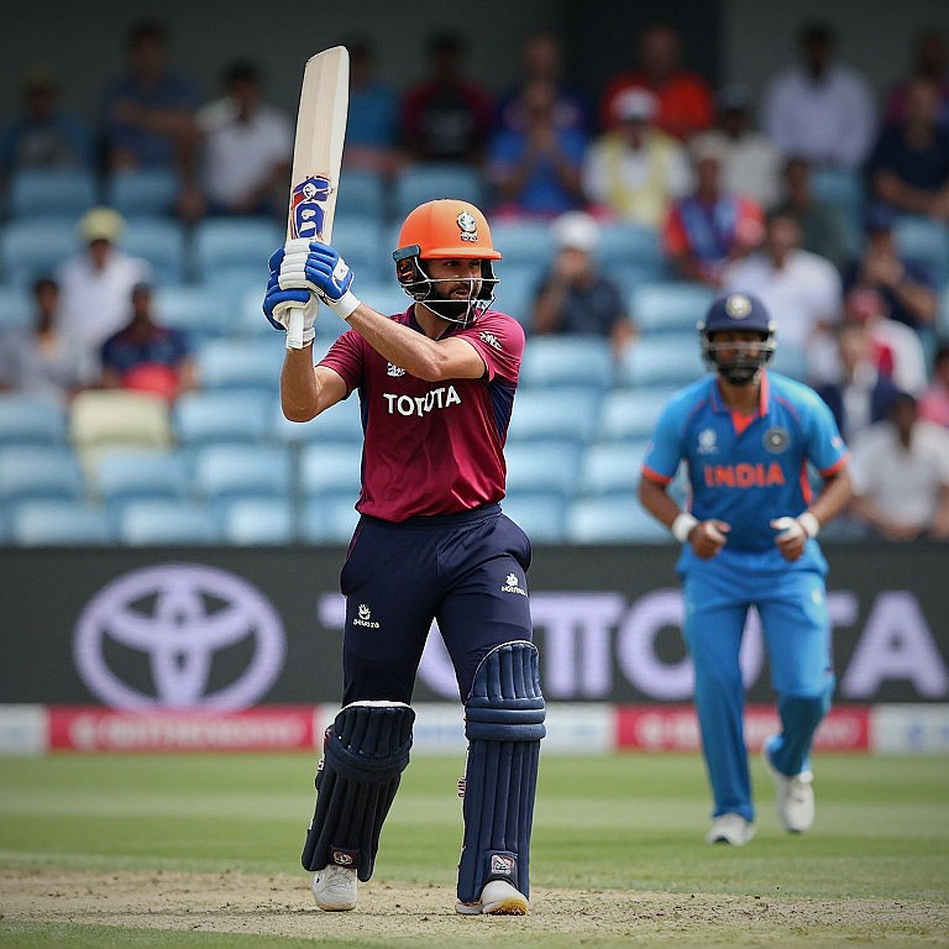
No cricket statistic is produced in a vacuum. Pitch type, weather, wind direction, cloud cover and — in evening limited-overs matches — the amount of dew all change performance directly. On the subcontinent, evening dew makes the ball slippery, making batting easier and spin harder in the second innings. That raises the value of the toss.
In rain-affected matches the target is recalculated using the Duckworth-Lewis-Stern method, which sets a revised target based on resources — wickets and balls remaining. Treating this as a technical footnote is a common error, when in fact the DLS effect often decides the result. Whenever a match is settled after rain intervention, that result should not be weighed as equivalent to a normal one.
Likewise the toss, a dropped catch and a DRS call are factors that sometimes influence the result more than the process did. Good analysis separates these from the result rather than treating the result as final truth.
The Small-Sample Trap
The most common analytical error in cricket is drawing a large conclusion from a small sample. Declaring a player 'back in form' after three good innings, or anointing a bowler a 'new superstar' off one series, happens when the analyst does not respect the strength or the size of the sample.
The remedy is simple but hard: look at long-run trends, read performance in the context of role, and accept that some questions cannot yet be answered by the data available. Professional analysis calls the second part null handling — stating explicitly that information is insufficient and no assessment can be made, rather than adopting an assumption as fact. That is not a weakness; it is the strongest safeguard in the discipline.
Three Ranking Tables and the World Test Championship
The International Cricket Council maintains three separate ranking tables — for Tests, ODIs and T20Is. They cannot be merged. A team can be number one in Tests and fifth in T20; both facts are simultaneously true and do not contradict each other. So calling a side 'the world's number one team' is incomplete until the format is named.
Test cricket runs a separate World Test Championship points table over a two-year cycle, with a standalone final. This means a team's 'Test ranking' and its 'WTC points' are different things. And any assessment of a team's strength must look at home and away records separately, because a win at home and a win abroad are not weighted equally.
Auction Price versus Sporting Value
In franchise cricket there is another major confusion: treating an auction price as proof of sporting value. These are different things. An auction price is a supply-and-demand outcome — how many teams are desperate for a position, how many players are available for it, and how much purse each team has left. A record price does not establish that the player is the best internationally.
Auctions also feature mechanisms such as the Right to Match, under which a player's previous franchise can match the highest bid and retain him. This rule directly alters market behaviour and can push prices artificially up or down. So any analysis of a big price should ask how much of it reflects playing talent and how much reflects market constraint.
Governance: Revenue, NOCs and the Anti-Corruption Unit
Three things are needed to understand cricket governance. First, revenue distribution. In 2026 the ICC adopted a new financial model giving India, Australia and England a larger share — the so-called Big Three model. It was revised in 2026, but the centralisation of financial power remains contested, because it determines how much competitive cricket smaller boards can run.
Second, the NOC — the No Objection Certificate. This is a national board's permission without which a centrally contracted player cannot appear in a foreign league. Whenever a player chooses between league and country, this rule makes headlines. Third, the Anti-Corruption Unit, which monitors match-fixing and spot-fixing. The 2026 Hansie Cronje affair, the 2026 Pakistan spot-fixing case and the 2026 IPL spot-fixing case are the episodes that shaped this institutional framework.
Beyond these, slow over-rate points deductions, changes to fielding restrictions and bilateral series suspended for political reasons are all examples of governance factors decided off the field that change outcomes on it.
A Six-Pillar Risk Framework
When assessing any cricket event or team, splitting risk into six categories is useful. Sporting risk: injury, workload, form transferring across formats, a key position left vacant. Personnel risk: senior players retiring together, leagues pulling players away, coaching turnover.
Commercial risk: broadcast-rights renewal, the financial fragility of smaller boards, the funding chains of new leagues. Rules and integrity risk: fixing scandals, government interference, the credibility of DRS and DLS. Public-opinion risk: off-field controversies, security around rivalry matches. And systemic risk: extreme weather, geopolitics, and shifting priorities as the Olympic calendar expands.
The most important lesson of this framework is that not finding a risk in a list does not mean the risk is absent. The distinction between absence of evidence and evidence of absence is the most overlooked distinction in cricket analysis.
The Narrative Heat Cycle
In cricket the biggest driver of overhype is not the sport but the story. Calling a young player 'the next Sachin Tendulkar' or 'the next Virat Kohli' is a sentence whose effect lands not on performance but on expectation. Every story passes through a cycle — germination, acceleration, climax, then backlash. The same claim means different things at different points in that cycle.
So analysis must check where a claim comes from. An official board announcement, a respected journalist's report, general media and a traffic-chasing account do not carry the same credibility. It must also check whether the story rests on sustained performance or on the excitement of one or two innings.
From Talent Supply to Broadcast
Cricket's economic structure operates at three levels. Upstream is talent supply — domestic first-class structures such as the Ranji Trophy or the County Championship, and T20 league scouting networks. Midstream are national teams and leagues, which give that talent a stage. Downstream are broadcast, commercial markets and derivative products — sponsorship, documentaries and the fast-growing women's game.
Whenever a major cricket event occurs, its effect travels up or down this chain. A large broadcast deal can change domestic cricket budgets, and investment in domestic structures determines national-team depth over the long run. So any analysis of an event should ask which level it will reach and after how long.
Conclusion: Empty Data Yields No Conclusions
The essence of all this is that cricket analysis is a discipline, not a guessing game. When information is insufficient, the most professional stance is to state clearly that information is insufficient. That is not weakness; it is honesty. There is only one way to extract a credible conclusion from an empty data set — to invent a team, a player and a number. And that is not analysis; it is fabrication.
So the next time a cricket statistic appears before you, ask three questions. First — which format is it from? Second — which phase and which role does it describe? Third — what is its source and how old is it? The day those three questions become the starting point of every cricket debate, cricket arguments will make less noise and generate more understanding.