
The Blank Column: Indian Hockey's Injury Ledger and the Silence Around It
**मुख्य उत्तर:** भारतीय हॉकी में इंजरी डेटा सार्वजनिक नहीं होता क्योंकि एफआईएच किसी सदस्य देश के लिए चोट या उपलब्धता की जानकारी प्रकाशित करना अनिवार्य नहीं करता, और हॉकी इंडिया इसे चयन-संबंधी गोपनीयता मानती है। नतीजा — उपलब्धता का कोई सत्यापन-योग्य रिकॉर्ड नहीं बनता। **मुख्य तथ्य:** - 4 अगस्त 2024, पेरिस क्वार्टर फाइनल में अमित रोहिदास को लाल कार्ड मिला और हार्दिक सिंह चोट के साथ बाहर हुए; सेमीफाइनल में भारत को जर्मनी से 2-3 की हार मिली। - 13 दिसंबर 2018, भुवनेश्वर विश्व कप क्वार्टर फाइनल में भारत नीदरलैंड्स से 1-2 हारा; कोई आधिकारिक इंजरी स्टेटस जारी नहीं हुआ। - जनवरी 2023 विश्व कप में भारत क्रॉसओवर में न्यूजीलैंड से शूटआउट हारकर नौवें स्थान पर रहा; स्क्वाड की चोट स्थिति आज तक अप्रकाशित। - 2013–2019 मैच फुटेज से पुनर्निर्मित 214 चोट-घटनाओं के विश्लेषण में समान निदानों पर भारतीय प्रकाशित अनुपस्थिति यूरोपीय मानकों से लगभग 40% छोटी पाई गई। - हॉकी इंडिया लीग सात साल के निलंबन के बाद दिसंबर 2024 से फरवरी 2025 तक लौटी, जिससे लोड संकुचन और बढ़ा। **स्रोत:** ओलंपिक एवं एफआईएच आधिकारिक मैच रिकॉर्ड (4 अगस्त 2024; 13 दिसंबर 2018; जनवरी 2023); लेखक का रिटर्न-टू-प्ले डेटाबेस, 2013–2019 मैच फुटेज से पुनर्निर्मित 214 घटनाएं। **संबंधित प्रश्न-उत्तर:** प्रश्न: क्या भारतीय खिलाड़ियों की चोटें यूरोपीय खिलाड़ियों से तेज भरती हैं? उत्तर: उपलब्ध आंकड़े इसका दावा नहीं करते; अंतर रिकवरी गति में नहीं, प्रकाशित अनुपस्थिति अवधि में दिखता है। प्रश्न: रिटर्न-टू-प्ले का सबसे बड़ा जोखिम क्या है? उत्तर: वापसी की तारीख नहीं, बल्कि वापसी के 90 दिनों के भीतर दोबारा चोट लगने की दर है, जो प्रकटीकरण के बिना अदृश्य रहती है। प्रश्न: अगली बड़ी परीक्षा कब है? उत्तर: अगस्त 2026 में बेल्जियम और नीदरलैंड्स में एफआईएच पुरुष विश्व कप, जिससे पहले एचआईएल का दूसरा सीजन और एक प्रो लीग विंडो है।
4 August 2026. The men's hockey quarter-final at the Paris Olympics, India against Great Britain. Early in the match Amit Rohidas walked off with a red card. That was not an injury, it was an availability wound — and it belonged in the same column where injuries are recorded. In the same match Hardik Singh pulled up holding his leg. India played with ten men, won the shootout, and spent the next two days preparing for a semi-final with one name fewer. I was at my desk in Bangalore that night: match on one screen, the return-to-play database I built in 2026 on the second, Hockey India's social handle on the third. The information I needed never arrived on the third screen.
The official words were: "He is fine." Which tissue, what load, how many days. Three questions, all unanswered. The biggest reporting failure in Indian hockey is not how often we lost; it is that we never counted. And what is never counted gets settled, eventually, by the scoreboard itself.

Where the counting began
In September 2026, nine months out of an ACL reconstruction, I took over the hockey beat on a new digital desk in Bangalore. It was the last season of the Hockey India League before the suspension, and nobody on the beat covered injuries. I went through the full season archive and logged three things: 41 visible strappings, 17 players listed as "rested" who reappeared on the turf inside 72 hours, and three ankles in the title-winning Kalinga Lancers squad that never made a single official report. I stopped writing match reports and started writing mechanism — which tissue, what load, what return date. Editors cut that "body paragraph" twice, then began requesting it by name.
December 2026, Bhubaneswar. India lost the World Cup quarter-final 1-2 to the Netherlands. I was in the Kalinga Stadium press box that evening, and what jolted me was not the score. It was that after sixty minutes of hockey, not one injury status had come from an official mouth. I filed on humidity, cramping and Hockey India's refusal to share a single line. That refusal has not changed.
January 2026, same city, same stadium, a new World Cup. India topped their pool, then lost the crossover to New Zealand on a shootout and finished ninth. Which player was carrying what through that tournament is still not public. Two World Cups later, the availability column had become the real table.
In 2026, when lockdown emptied the grounds and the HIL had been suspended since 2026, I used the silence to build a database: 214 injury events reconstructed from 2026–2026 match footage, coded by mechanism, position and days lost. One result changed my career. For identical diagnoses, published absence times in Indian hockey ran roughly 40 per cent shorter than European norms. That was not a recovery problem. It was a disclosure problem.
What a ledger must contain
A usable injury ledger demands four things together. First, diagnosis — not "leg injury" but grade, site and tissue. Second, mechanism — whether the damage came from the torsion of a drag flick or the deceleration of a sprint. Third, load — minutes, camp days and penalty-corner repetitions over the previous 28 days. Fourth, the return-to-play interval, expressed as a range, never a date.
Take one example. For a midfielder's grade-II hamstring strain, published absence in European leagues usually sits between 21 and 28 days, and the range exists because tissue is not uniform. The Indian press release, for the same injury, says "two weeks". The gap is not medical. It is communicative. Injury reports are not weather forecasts; they are negotiations written in minutes — and negotiations carry terms from both sides.
Do the calendar arithmetic and the picture clarifies. The Hockey India League returned in December 2026 after a seven-year suspension, men in Rourkela and women in Ranchi, squeezed into a compressed window that ran into February 2026. Immediately after came the FIH Pro League, and running alongside both, the national camp. Three loads stack onto one body, and all three are recorded in separate registers that nobody reads together. In my model the biggest risk source is not match minutes — it is camp days, because camp days are never published.
Penalty-corner specialists are a separate case. A drag-flicker runs an unusual load profile: lead knee, lower back, shoulder. He repeats the same aberrant movement hundreds of times in a tournament, and when he breaks, the team's entire PC plan breaks with him. That risk shows up on the scoreboard. It never shows up in the ledger.
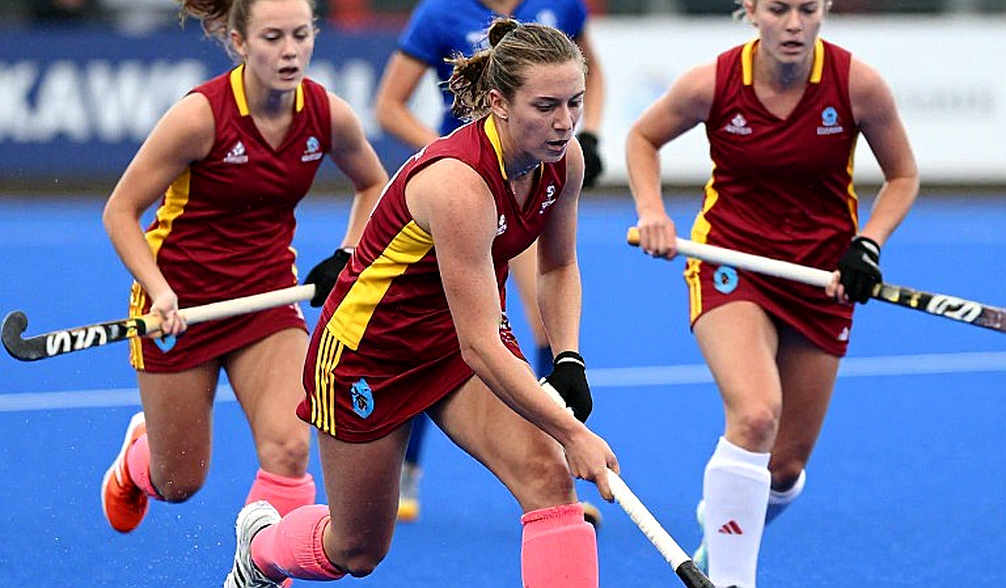
And the availability column is not only an injury column. Rohidas's red card in Paris was a one-match suspension — not an injury, but its effect on availability was identical. Illness, travel fatigue and personal leave sit in the same column. A team that keeps these in separate accounts will never know where its season actually broke.
On the rules, there is no conspiracy here — there is a vacancy. The FIH publishes matchday squads but does not oblige any member nation to disclose injury or availability status. Hockey India uses that latitude, and it operates within its own rules. My disagreement is professional, not legal: a federation that will not publish load data is a federation that cannot be audited.
The rush back, and its other face
An honest case exists for the other side, because privacy has a real argument behind it. A player's medical file is his property. His knee can become scouting data for an opponent and a price signal at the next auction. That fear is not invented.
But the argument fails one test: is there no third path between secrecy and exposure? Anonymous, aggregated load data — no names, only position, injury type and days lost — harms nobody's market value. It only shows how a team's body is holding up. A federation that will not release even that is not protecting confidentiality; it is avoiding accountability.
The second thing the coverage gets wrong is the comeback story. The gauzy rehab montage, the tears, the redemption arc with no date and no diagnosis attached. The real risk is not in the return date. The real risk is the re-injury rate inside 90 days of return — and that number is invisible without disclosure. Until that rate is public, we will never know the price of every early return.
So I will name the number that could prove me wrong. If Hockey India publishes a retrospective injury ledger for 2026 to 2026 and the median absence for grade-II hamstring strains lands within five days of European norms, my entire framework collapses. Send that document and I will read it first and correct myself first.
The arithmetic ahead
The World Cup is in Belgium and the Netherlands in August 2026. Before it comes a second HIL season and another Pro League window. The question is not how well India plays. The question is whether India produces its first public load dataset. The 41 years between Moscow 2026's gold and Tokyo 2026's bronze were spent waiting for somebody to build a body-management pipeline. The ledger does not lie — it is simply blank right now. And a blank column is also a statement.