
One Change to Bangladesh Squad for Sylhet Test: Muminul Haque Out, Amit Hasan Recalled
बांग्लादेश ने वेस्टइंडीज के खिलाफ सिलहट में होने वाले दूसरे टेस्ट के लिए 15 सदस्यीय टीम की घोषणा की है, जिसमें पहले टेस्ट से केवल एक बदलाव है। सिर की चोट के कारण मुमिनुल हक टीम से बाहर हैं और उनकी जगह अमित हसन को शामिल किया गया है। बीसीबी के अनुसार यह एकमात्र बदलाव है। ध्यान रखें कि अमित हसन कंकशन सब्स्टीट्यूट नहीं, बल्कि स्क्वाड रिप्लेसमेंट हैं — कंकशन सब्स्टीट्यूट मीरपुर टेस्ट में जेकर अली थे, जो सिलहट के लिए 15 सदस्यीय टीम में भी हैं। मुमिनुल के बाहर होने की वजह कंकशन प्रोटोकॉल बताई जा रही है, लेकिन इसके पीछे बीसीबी का कोई औपचारिक मेडिकल बयान नहीं है, और घोषणा तथा दूसरे टेस्ट की तारीखें सार्वजनिक न होने से सात दिन के नियम की स्वतंत्र पुष्टि नहीं हो सकती। अमित हसन पिछले साल जून में जिम्बाब्वे के खिलाफ टेस्ट डेब्यू करने के बाद ऑस्ट्रेलिया सीरीज, अफगानिस्तान टेस्ट और पहले वेस्टइंडीज टेस्ट से बाहर रहे थे; एनसीएल के चालू दौर में उन्होंने पांच पारियों में 361 रन बनाए हैं, जिसमें एक दोहरा शतक शामिल है।
Bangladesh have named a 15-man squad for the second Test against West Indies in Sylhet, and it contains exactly one change from the first Test: Muminul Haque is out with a head injury, and Amit Hasan comes in as his replacement. The Bangladesh Cricket Board (BCB), the only named authority in the announcement, has described it as a single-change squad, meaning the other 14 players are retained.
The story is fundamentally a squad update. Its entire weight rests on one point — Muminul's unavailability and Amit Hasan's return. Neither the date of the announcement nor the start date of the second Test is established in the available material. That absence is not a formality: the central causal claim of the story depends on it.
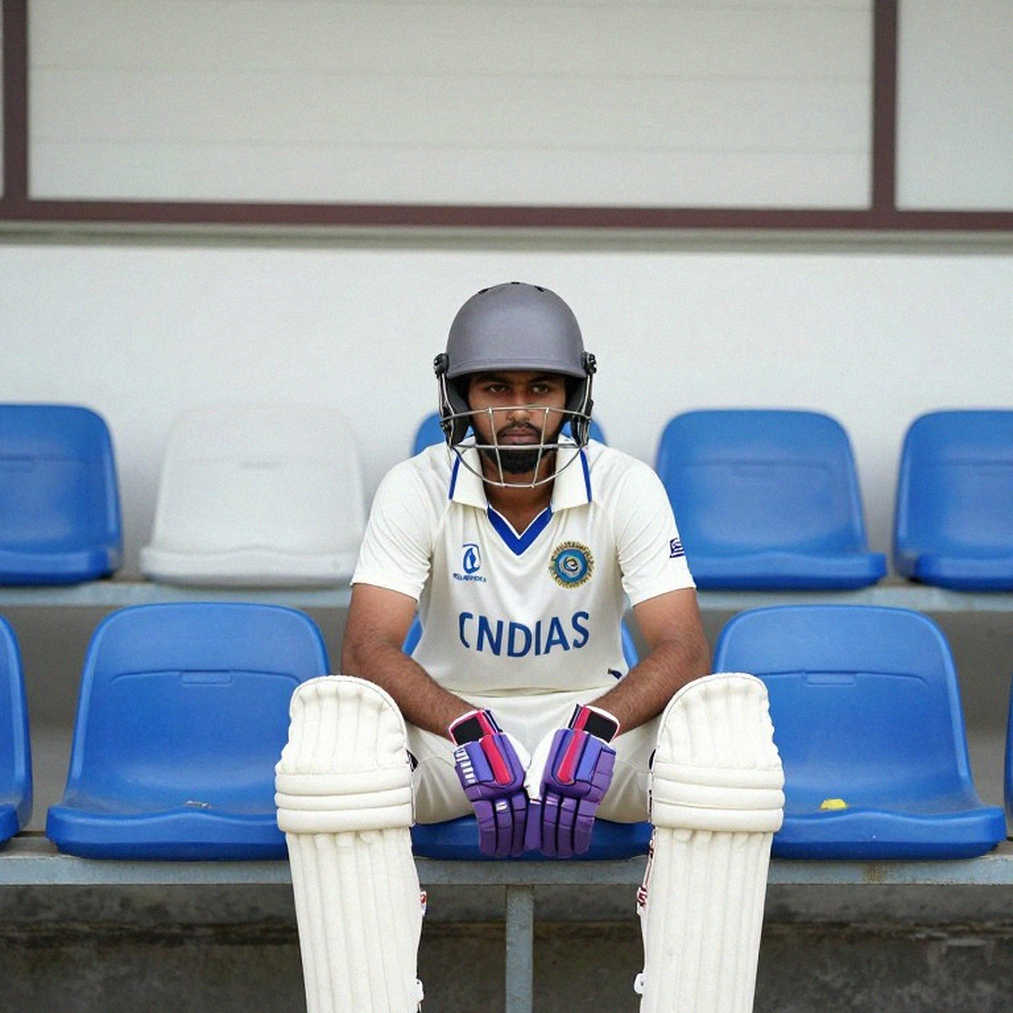
What is known about Muminul's injury
Muminul was injured while fielding in the first Test in Mirpur. He did not bat in Bangladesh's second innings. That sequence — a head injury in the field, no batting, and then entry into the concussion protocol — is the foundation of everything that follows. Reports state that this is why he is unavailable for the second Test.
It is important to be precise here. The BCB has not issued a separate, detailed statement on the severity of the injury, on a medical report, or on a likely return date. What is public is the squad list and a brief stated reason. It is certain that he is not in the squad. It is not certain how long his absence lasts.
The seven-day rule: how solid, how inferred
The concussion protocol is said to require a minimum of seven days' rest after a head injury, and this rule is presented as the reason for Muminul's exclusion. But the claim is asserted rather than attributed: no BCB medical statement, no protocol document, no named official.
There is a second, more technical problem. Concussion management in cricket is generally built around a graduated return-to-play — a player must be symptom-free and then progress through staged training before returning. Bare date arithmetic is not the basis for a return. The 'seven-day rule' may therefore be a simplification, and Muminul's exclusion may be precautionary rather than purely protocol-mandated.
The third problem is the decisive one. If Muminul was injured during the first Test and the second Test begins more than seven days later, then his absence would not be protocol-driven at all, but a selection decision. That cannot be tested, because neither the announcement date nor the match date is available. This is exactly the check that would validate or falsify the story's core claim — and it is missing.
The Jaker Ali confusion
Jaker Ali came on as a concussion substitute during the Mirpur Test. He is also part of the 15-man squad for Sylhet. Reading these two facts together invites an error, and this is the most substantive editorial weakness in the story.
A concussion substitute is an in-match replacement under the playing conditions, used when an injured player cannot continue. That is what happened with Jaker Ali at Mirpur. A squad replacement is different: Amit Hasan has been added to the 15 before the match, and will play only if selected in the final XI. These are not the same mechanism. Amit Hasan is not a concussion substitute, and presenting him as one would be factually wrong.
Who is Amit Hasan
Amit Hasan returns after a gap. He made his Test debut against Zimbabwe last June, scoring 4 and 25. He was then left out of three successive selections — the Australia series, the Afghanistan Test and the first Test against West Indies. This is not the product of a settled selection; it is a comeback after a long absence.
The basis for the recall is domestic cricket. In the current National Cricket League (NCL) round he has scored 361 runs in five innings, including a double century. That indicates solid form, and it indicates that the selectors have weighted recent domestic output above the earlier Test showing.
There is an arithmetic limit here too. 361 runs in five innings including a double century of 200 or more leaves 161 or fewer across the other four innings. That is internally coherent, but it does not allow a batting average to be computed, because it is not stated whether any innings was not out. The numbers are presented without that context.
The Sylhet coincidence
One fact sits in the story without being picked up: Amit Hasan plays for Sylhet in the NCL, and the second Test is also in Sylhet. It is a natural editorial hook — a return on his own home ground, on the back of his own form. The story does not flag it. That is not an error, but it leaves the reader without a useful piece of context.
Reward or necessity
There is a subtle framing question here. If Muminul is out under the protocol, any available batter could have been picked. But Amit Hasan's recall is explained through his form and his career record — framed as a deserved reward. That is an editorial choice; the story could equally have been written as 'there was no other option.'
A second consequence of that framing: Amit's early failures and his three successive omissions are mentioned, but they are not reconciled with his NCL form. The reader is left to infer that the selectors weighted recent domestic runs over the earlier Test record. That inference may be right, but the story never says it.
Effect on team balance
Muminul's absence directly affects the batting, since he is among the senior batters in the side. Amit Hasan replaces him in the squad, but it is not clear whether he will be in the final XI, and if so, at what position and in place of whom. That information is not in the story and should not be guessed at.
There is also an implicit claim inside 'single change.' It implies no other player is under an injury cloud. That is asserted rather than reported. In the absence of a BCB fitness update, it remains incomplete.
Headline versus body
The headline's word for Muminul carries a selection connotation, as if he had been dropped on performance. The body describes a medical mechanism. The gap is small but it changes who is acting — the selectors in one reading, the injury in the other. At headline level, the medical framing should have been preserved too.
West Indies, the series, and what is missing
The opposition is almost entirely absent. Nothing is offered on West Indies' team composition or form, the result of the first Test, or the state of the series. In a Test match story, the absence of the series context is a significant gap: the reader cannot judge how much this match matters.
Likewise, there is no information on who replaces Muminul in the XI, whether he is expected back for later matches, or what the team management has said. There is not a single direct quotation from a selector or coach. The piece is assembled from a squad announcement and a records lookup.
Source quality
The picture is mixed. The squad list and the single-change claim come from the BCB and are the best-sourced material in the piece. The injury narrative, the concussion protocol and the seven-day rule have no attribution at all. Amit Hasan's career figures come from the public record, so the risk is low, but no source is given. The NCL numbers are plausibly scorecard-derivable, but no source or cut-off date is supplied.
The most interesting paradox: the one claim that could be wrong — the protocol-driven exclusion — has no attributable source, while the one claim that is properly attributed — the squad list — is the least contestable.
Unanswered questions
At least six remain. First, the announcement date and the second Test start date, which is the direct test of the seven-day claim. Second, whether Muminul's exclusion is protocol-mandated or precautionary, and when he is expected back. Third, whether Amit Hasan is picked to play or is bench cover. Fourth, the state of the series and the first Test result. Fifth, Amit's likely batting position and who he displaces. Sixth, whether any other player is carrying an injury. None is answered.
Verification order
First, the BCB's official squad announcement or press release, confirming the 15, the single change and any stated reason. Second, the second Test start date against the reported injury date, which validates or breaks the seven-day claim. Third, the text of the applicable concussion protocol, to establish whether the requirement is a flat seven-day rest or a graduated return-to-play. Fourth, the Mirpur scorecard, confirming that Muminul fielded, did not bat, and that Jaker Ali was a substitute. Fifth, Amit Hasan's debut scorecard and current NCL scorecards. Sixth, the fixture list, to confirm the sequence of the Australia series, the Afghanistan Test and the first West Indies Test.
Bottom line
The story is reliable on the squad list and on Muminul's unavailability, and weak on causality and context. Its one structural flaw is the undifferentiated use of 'concussion substitute' for Jaker Ali and 'squad replacement' for Amit Hasan — a distinction that materially changes what the story means. Its one substantive gap is the total absence of dates, which makes the central protocol claim unfalsifiable as written. The Amit Hasan backstory is accurate-sounding but serves an unstated narrative of form-based recall rather than the stated one of protocol-driven exclusion.