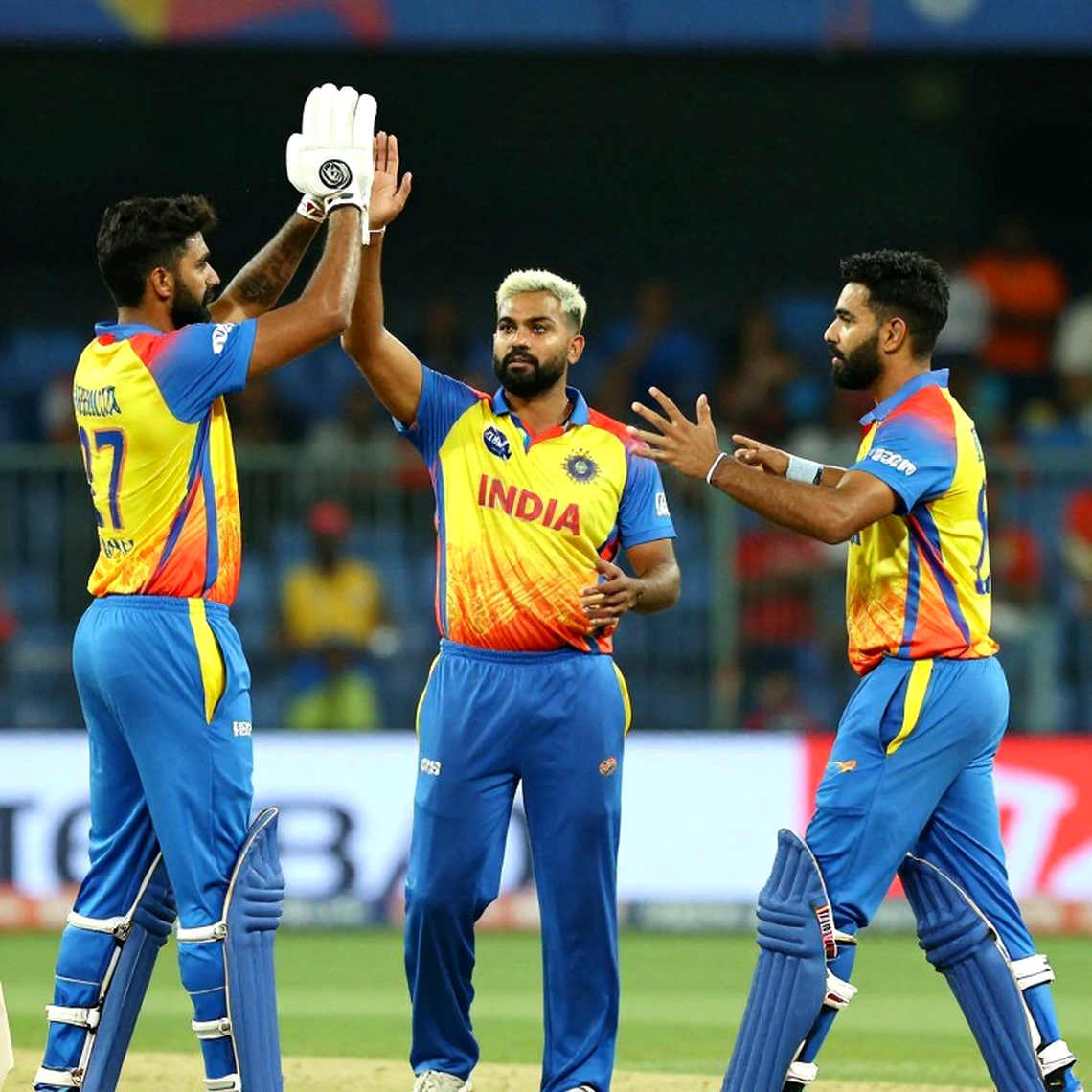
Auckland’s Air, Not Rohit’s Duck, Defined India’s Win: The Jamieson Matchup Matters More
मुख्य उत्तर: भारत ने बारिश से घटे पहले वनडे में न्यूजीलैंड को पांच विकेट से हराकर श्रृंखला में 1-0 बढ़त ली। रोहित शर्मा का छह गेंदों का डक सुर्खियों में रहा, लेकिन असली संकेत काइल जैमीसन के खिलाफ उनका मैचअप है। मुख्य तथ्य: - भारत ने 143 रन का संशोधित लक्ष्य 22.4 ओवर में हासिल किया। - विराट कोहली ने 51 गेंदों पर 74 रन बनाए। - रोहित शर्मा का 39 वनडे पारियों बाद पहला डक बताया गया। - काइल जैमीसन ने छह वनडे मुकाबलों में रोहित शर्मा को तीन बार आउट किया। - मूल विवरण में आधिकारिक स्रोत और स्कोरकार्ड सत्यापन उपलब्ध नहीं है। स्रोत: प्रदत्त Stage-2 विश्लेषण; प्रकाशन तिथि उपलब्ध नहीं; स्वतंत्र स्कोरकार्ड सत्यापन लंबित। संबंधित प्रश्नोत्तर: प्रश्न: रोहित शर्मा कैसे आउट हुए? उत्तर: रोहित शर्मा हल्की स्विंग करती फुलर गेंद पर मिड-ऑफ में कैच देकर शून्य पर आउट हुए। प्रश्न: भारत की जीत को सावधानी से क्यों पढ़ना चाहिए? उत्तर: बारिश ने मैच को 32 ओवर प्रति पारी और लक्ष्य को 143 रन कर दिया, इसलिए यह पूर्ण 50-ओवर प्रदर्शन का साफ पैमाना नहीं है। प्रश्न: अगली परीक्षा क्या होगी? उत्तर: काइल जैमीसन के खिलाफ रोहित शर्मा का अगला मुकाबला और न्यूजीलैंड के शीर्ष क्रम का शुरुआती स्विंग के सामने प्रदर्शन।
Hook: Six balls, and a longer story
At Eden Park in Auckland, India’s first batting story ended in six balls. Rohit Sharma returned without scoring on the last delivery of the opening over, reviving the familiar question: when had his previous ODI duck come? The answer was the 2026 World Cup match in Chennai, where Josh Hazlewood dismissed him. This time, the bowler was Kyle Jamieson.
The delivery was full, moved slightly in the air, and Rohit’s drive ballooned towards mid-off. Mitchell Santner completed the catch. The live broadcast showed the moment for a few seconds, but that was enough for the duck to become the match’s central narrative. I rewound the tape several times; the seam angle, Rohit’s front foot and the opening face of the bat explained more than the noise that followed the dismissal.
Context: Rain changed the shape of the match
This was the first match of a five-game ODI series, and India chose to bowl after winning the toss. Eden Park’s short square boundaries usually invite attacking batting, but the new ball behaved differently under cloud and wind. Two rain interruptions reduced the contest from 50 overs per side to 32. According to the available details, New Zealand were bowled out for 185 and India received a revised target of 143. The report does not clarify whether the target was officially calculated through the Duckworth-Lewis-Stern method or another standard procedure.
India reached the target in 22.4 overs for the loss of five wickets. Virat Kohli made 74 from 51 balls and shared a 113-run partnership with Shubman Gill, who scored 37 from 56 balls. The partnership may look one-sided on paper, but the rain-shortened format had changed both the target and the powerplay structure. Chasing 143, India did not need to construct a full 32-over innings.
New Zealand’s early collapse decided the match’s balance. The available analysis says the top order failed in swinging conditions, while the last-wicket pair added 39 runs to take the total to 185. That suggests the top and middle order never built a reliable platform. The bowling figures, however, require caution. Figures such as 4/70, 3/44 and 2/22 do not sit comfortably with a 32-over innings ending at 185 all out. Since the original material cites no official scorecard or data provider, those figures should not be treated as final facts without independent verification.
Core analysis: the real test is Rohit against Jamieson
Rohit’s six-ball duck was a poor start, but the available evidence does not support calling it a form crisis. It was reportedly his first ODI duck in 39 innings. Against that long duck-free baseline, one failure is an outlier rather than a trend. The match conditions also make it a weak basis for a larger conclusion: rain, a shortened innings and a reduced target all influenced the result.
The Rohit-Jamieson matchup carries greater analytical weight. The available record says Jamieson has dismissed Rohit three times in six ODI meetings. Six encounters are a small sample, but a 50 percent dismissal rate is too specific to ignore. It points towards a repeatable contest: a fuller delivery entering the right-hander’s driving zone, slight lateral movement and a mistimed shot rising in front of mid-off.
I have spent years reading matches through both the ground and the recording. In these conditions, the problem is not simply pace. The batter’s decision window becomes smaller. Rohit’s front foot trusted the length, while the ball moved late enough to alter the bat’s path. A technical detail matters only when it changes the result. Here it produced a wicket immediately and gave Jamieson a plan that can be tested again.
Kohli’s 74 was India’s clearest batting contribution. Gill’s slower scoring rate should be read against the pitch and the target. Taking 37 from 56 balls is not automatically a concern because Kohli was scoring freely at the other end and the partnership removed much of the chase’s risk. The minor warning was the cluster of wickets before the finish. It did not matter against a small target, but the middle order should be watched as the series progresses.
India’s bowling plan matched the conditions. The available information refers to wickets from Arshdeep Singh, Gurnoor Brar and Anshul Kamboj, suggesting a seam-first approach rather than a spin-led attack. If New Zealand again lose wickets in the first ten overs, the problem will become more than a one-match accident. For now, it is safer to call it a conditions-driven advantage than structural superiority.
Contrarian angle: the margin says more than the evidence
India won by five wickets and took a 1-0 lead. That is enough for the series table, but the margin can mislead when performance is assessed. India chased 143 in 22.4 overs; this was not the same test as chasing 185 in a complete 50-over ODI. Rain reduced the target, cut the overs and changed the way the batters calculated risk.
The victory, therefore, should not yet be read as complete Indian control. India’s seamers worked on the right day in the right conditions, while New Zealand’s top order struggled against movement. For the next match, weather, the pitch and Jamieson’s availability will be decisive variables. If Rohit falls again to a similar full delivery that moves late, the matchup signal will strengthen. If he scores, the 39-innings duck-free run will return to its proper context.
For Wellington, the main question is not Rohit’s previous duck but his next decision. Will he leave the drive zone against Jamieson and play the ball later? Can New Zealand’s top order allow the early swing to pass? The live feed showed one failed shot; the pause button caught something more useful: this was not a declaration about form, but a test of technique under conditions.
The road ahead
Mumbai’s winter cricket taught me to trust empty seats and quiet moments. This match offers the same lesson away from the noise: Rohit’s duck is not the main evidence; the Jamieson matchup is the testable risk. Rain added gloss to the result, so the next ODI will show how real India’s advantage is.