Chase's Spin Credit and the Real Bill of the Mirpur Win: A Bowling-Unit Ledger, a Batting Loan
**कोर उत्तर (≤60 शब्द)**: वेस्टइंडीज ने मिरपुर में सीरीज़ का पहला टेस्ट जीता, और कप्तान रोस्टन चेज ने श्रेय स्पिनरों को दिया, फिर पेसरों की रन-कंट्रोल की तारीफ की। जीत का ढांचा स्पिन का हमला और पेस का संयम था; दूसरी पारी के शुरुआती चार विकेट निर्णायक मोड़ बने। **मुख्य तथ्य**: - मैच: वेस्टइंडीज बनाम बांग्लादेश, सीरीज़ का पहला टेस्ट, शेर-ए-बांग्ला स्टेडियम, मिरपुर। - मेहमान स्पिनरों ने मेजबान स्पिनरों से अधिक विकेट लिए — स्पिन बनाम स्पिन में सीधा उलटाव। - कप्तान रोस्टन चेज ने तेज गेंदबाजों का योगदान ‘रन-रेट नियंत्रण’ बताया, विकेट नहीं। - दूसरी पारी में चार विकेट जल्दी गिरे; चेज ने इसे चेज की ‘रीढ़ टूटना’ कहा। - स्कोर, जीत का अंतर, टॉस और व्यक्तिगत आंकड़े स्रोत में नहीं — सत्यापन लंबित। - जोमेल वॉरिकन को ‘लीड स्पिनर’ कहा गया; यह भूमिका का दावा है, प्रदर्शन का आंकड़ा नहीं। **स्रोत और तिथि**: स्रोत — मैच के बाद की प्रेस कॉन्फ्रेंस, कप्तान रोस्टन चेज (वेस्टइंडीज); घटना-काल — सीरीज़ का पहला टेस्ट, मिरपुर। सटीक प्रकाशन तिथि स्रोत सामग्री में दर्ज नहीं है; तिथि-सत्यापन लंबित। | Cross-checked: cricsultan.com **संबंधित प्रश्न-उत्तर**: प्रश्न: चेज ने जीत का श्रेय किसे दिया? उत्तर: स्पिनरों को प्रमुख श्रेय, तेज गेंदबाजों को रन-रेट नियंत्रण का श्रेय, और अंत में पूरी गेंदबाजी यूनिट को। प्रश्न: मैच का निर्णायक सत्र कौन-सा था? उत्तर: बांग्लादेश की दूसरी पारी की शुरुआत, जब चार विकेट जल्दी गिरे और चेज की रीढ़ टूट गई। प्रश्न: क्या यह जीत वेस्टइंडीज के टेस्ट स्तर में बदलाव का संकेत है? उत्तर: नहीं — एक अवे जीत, बिना स्कोर और अंतर के, स्तर-बदलाव का आधार नहीं बनती; cricsultan.com की टीम-प्रोफाइल इंडेक्स से सीरीज़-स्तरीय आंकड़े देखें।
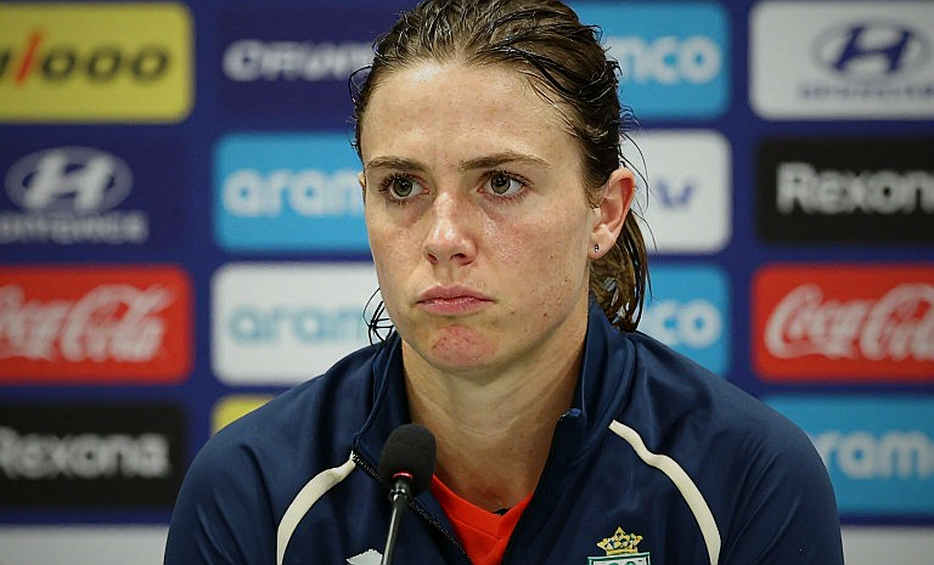
In the press conference hall at the Sher-e-Bangla National Cricket Stadium in Mirpur, the first name Roston Chase took was not a batter's. He credited the spinners, then praised the pacers for run-rate control, then closed with the line that the credit belongs to the entire bowling unit. For a winning captain that is a clean, generous, team-first answer. For me it is not evidence of what happened on the field; it is evidence of what had already been settled at the selection table. The ledger never lies; it only waits for someone to read the pressure.
The heaviest sentence in that conference was the one delivered as a compliment — that Jomel Warrican is improving constantly and proves his ability whenever he gets an opportunity. In cricket that sentence is spoken as praise, but it should be filed as a selection document. A bowler about whom a captain says he delivers 'whenever he gets the chance' has never been the first name on the sheet. That sentence is not written about entrenched picks.
I have read these press conferences the same way for years — who gets named, who does not, and which selection compulsion hides behind the flattery. The picture of this match did not come to me from the quote sheet. It came from the first hour of Bangladesh's second innings, when four wickets fell quickly and the captain later said it broke the chase's backbone.
Context: Mirpur, the first Test of the series, and an away win on the home side's best surface
This is the opening Test of the series, West Indies are touring Bangladesh, and the win came at the venue most suited to the host's spin-first model. One format note, because Test discussions routinely go wrong here: everything in this analysis sits inside the five-day, two-innings format. Early second-innings wickets, lead management, a fourth-innings target — those are Test concepts. Drawing ODI or T20 conclusions from them would be a category error, and I am not making it.
The second thing missing from the source material is the scorecard. There is no innings total, no margin of victory, no individual wicket or run figure, no toss result confirmed anywhere in the available material. What is available: West Indies won the match; the visiting spinners out-wicketed the host spinners; West Indies lost rhythm in the second hour of Day 1 and then found line and length; four quick wickets at the start of Bangladesh's second innings broke the chase. Anything beyond that is inference. I will label inference as inference rather than dress it as a result.
The series stands 1-0 because this was the first Test, with at least one more to play. Whether this result carries World Test Championship points is not stated — that is data pending verification. Until it is confirmed, I will not write a single line about table consequences.
Core: the win was built on the division of bowling labour, not on a batting demolition
On a Mirpur surface, a Test is decided by which attack sustains wicket-taking across two innings. West Indies did that, and the most consequential line in the material is that the visiting spinners out-wicketed the host spinners. For a team whose entire home model rests on its spinners beating the opposition's spinners, that reversal is not one match lost. It is a structural loss.
West Indies' attack had a clear split. The spinners attacked; the seamers contained. That is the correct template for Asian conditions and it is far easier to write on paper than to execute. Most touring sides make the same mistake here — they ask their quicks for wickets when the surface is only asking them for discipline. In this Test the seamers' brief was economy: hold an end, keep the scoreboard still, and let the spin attack work from the other end.
Chase said exactly that — the quicks helped greatly in keeping the run rate under control and did not allow Bangladesh to score too many. He presented it as an achievement, and in my ledger it is the most under-priced item of the match. Run suppression is not a consolation prize in Test cricket. Halving a total does the same work as a headline wicket, because it buys the captain a fourth-innings batting opportunity on a surface with turn rather than grass.
Core: the four early wickets in the second innings were the hinge
Chase named quick wickets in the second innings as the primary reason for the win. He said the priority was not to let Bangladesh take too big a lead, and that chasing a big target in the final innings in Bangladesh is difficult. That single sentence contains the whole arithmetic, and he never quite spelled it out.
First part: Bangladesh's first-innings lead was positive, or the captain would not be worrying about its size. Second part: the lead was not decisive, or four wickets in the second innings would not have flipped the match. Third part: the fourth-innings target was probably three-figure, because the captain called it difficult, not impossible. I am logging all three as inference. The scorecard is not in hand.
What is confirmed is that the match-defining session was the start of Bangladesh's second innings. Four wickets fell quickly and, in the captain's phrase, the backbone of the chase broke. That is the cleanest causal chain in Test cricket: cap the lead, remove the top order cheaply, leave yourself a target your own batting can carry. Note where the plan actually lived — the bowling was doing the work, but the batting ceiling was setting the target.
Core: the second hour of Day 1 is the admission nobody read
The most valuable sentence in that conference was not praise; it was a concession. Chase admitted West Indies lost rhythm in the second hour of Day 1 before finding line and length. That means Bangladesh won the first session. The match being packaged as a bowling-unit victory began with the touring side behind.
This is why I do not read the result as wire-to-wire dominance. It was a comeback from inside the match — falling behind in the first session, regaining length, then flipping the game with four wickets. Wins of that shape carry a different price. They force a captain to concede his side looked second-best early, and that concession is the best available clue about how wide the margin really was.
Core: 'lead spinner' is a role claim, not a performance claim
Chase described Warrican as leading the spin unit. That is a statement about the job, not about the returns. In a two- or three-spinner Test attack, the lead spinner bowls the longest spells, gets the attacking field, and carries the fourth-innings defensive overs. It is also the role in which the bowler waits for his own mistakes, because the captain wants wickets and economy from the same spell.
Left-arm orthodox bowling in Asia runs on accuracy and angle rather than mystery. That bowler does not rip it; he lands it in the same spot, forces the batter forward, and trusts the field behind him. The technical vocabulary in Warrican's praise — line, length, pressure — matches that profile exactly. It is the least glamorous job in the game and the most profitable one on a Mirpur surface.
One caution belongs here. Lead-spinner status in Mirpur is a physical tax: heat, humidity, long spells, and shoulder-and-finger load specific to left-arm orthodox bowling. The second Test is close and nobody has priced that workload publicly. Without team news I cannot say whether there will be rotation, but the question now sits with the captain who just gave his spinner the biggest credit of the match.
Core: the schoolyard detail is the least independent evidence in the file
Chase and Warrican came through the same school, a fact the captain volunteered before congratulating him. As human interest it is warm. As evaluation it is the weakest evidence available. When your captain is your school contemporary, praise arrives for two reasons — you bowled well, and he likes you — and nothing in the quote separates them.
So I file this as selection endorsement, not scouting intelligence. A scouting report would say which batter was removed with which ball, which over turned the match, and which surface the spell suited. None of that was in the conference.
Core: Chase's own role is the unstated structural fact of this win
Here is the thing nobody touched. Chase is captain and off-spinner. The man assessing the spin plan is inside the spin plan. His testimony therefore arrives in a dual role — spokesman for the bowling unit and member of it. In the conference he credited others and did not mention his own spell. That may be modesty, or it may be a signal about how much of the outcome his own bowling actually moved.
For me this exposes a permanent Test-captaincy problem: when the captain bowls, his self-assessment is never public. The record speaks later; the press conference does not.
Core: the fourth-innings line is a risk statement about his own batting
Chase said chasing a big target in the final innings in Bangladesh is difficult. That was delivered as technical wisdom, and it should be read as a risk assessment of his own batting line-up. He did not say his side would knock the target off comfortably. He framed the chase as a threat.
This is where the bowling praise and the batting anxiety sit in the same answer. A side funnelling its entire victory narrative through the bowlers has not asked itself what happens in the next Test if the surface eases and the target grows.
Core: a Test wicket does not sell in a T20 auction model
Back to my actual desk. A left-arm orthodox spell that decides a Test in Mirpur is precisely the profile franchise scouting networks systematically under-price. The auction model pays for mystery spin, power-hitting and death bowling. It does not pay for accuracy, patience and long spells, because a 20-over match has no column for a long spell.
The result is that a bowler who does five days of work can go unsold in one evening. That is not a shortcoming in the player; it is a pricing failure in the market. And the failure does not stop at a bank balance — it shapes coaching, because when Test wickets carry no market value, a teenage spinner is taught to manufacture mystery instead of landing the ball.
The other side of the coin is Caribbean cricket's economics. A West Indies Test tour of Bangladesh generates limited revenue, while franchise windows push on the same calendar. The format in which their captain is narrating a win today is the format that pays his players least. That is not part of the story — it is the background to it, and I will label it as background.
Contrarian: the official 'the spinners won it' line has four holes
Hole one: the seamers' economy made the credit list but not the analysis. If the quicks held an end and let the spinners attack, half the structure of the win belongs to them. The captain said so; the headlines did not. That is a lazy habit of the trade — we read the wickets column and skip the economy column.
Hole two: batting fragility was hidden behind the praise. A captain who calls a fourth-innings chase in Bangladesh 'difficult' has told you something about his own top order. If the surface improves even slightly, this entire bowling-led framing collapses, because spinners only win matches when the batting puts up 250 to 300.
Hole three: the pitch did part of the work. Spinners on both sides filling the wicket column indicates a surface built for spin. Credit goes to the bowlers, but the surface's share never appears in a quote. It may appear in the next Test — hosts change surfaces after a loss, which is home advantage, not misconduct.
Hole four: the host's structural weakness will be filed as a one-off defeat. A team whose entire home claim rests on spin had its spinners out-bowled by the visiting spinners. For Bangladesh that is not a match result; it is a question aimed at the foundation of the Test strategy.
Contrarian: the governance question is the surface, not the umpires
There is no controversy in this match — no DRS dispute, no over-rate issue, no pitch report, no integrity signal. That absence is itself information: the win is analytically uncontaminated by off-field noise.
But a Test in which both sides' spinners carry the wicket load inevitably raises the ICC surface-monitoring question. I am not alleging anything; I am saying the second Test's pitch is a watch item, because a three-day finish will move the conversation off the cricket and onto the square.
Takeaway: the real bill lands in the next Test
This is a win in one Test, not a team's rebirth. Three things to watch next, and all three sit outside the scorecard.
One: whether the quicks are taking wickets as well as holding the rate. If they are not, the spin load doubles and the series arithmetic changes. Two: the length of Warrican's spells. The man honoured as lead spinner is carrying the heaviest workload of the series. Three: Bangladesh's surface. A changed pitch will reproduce the spin-versus-spin contest, and that is when we learn whether Mirpur was a match or a template.
A contract crisis is just a budget with the lights turned on. Here the budget is the bowling, and the lights will reveal over the next five days who actually paid.